
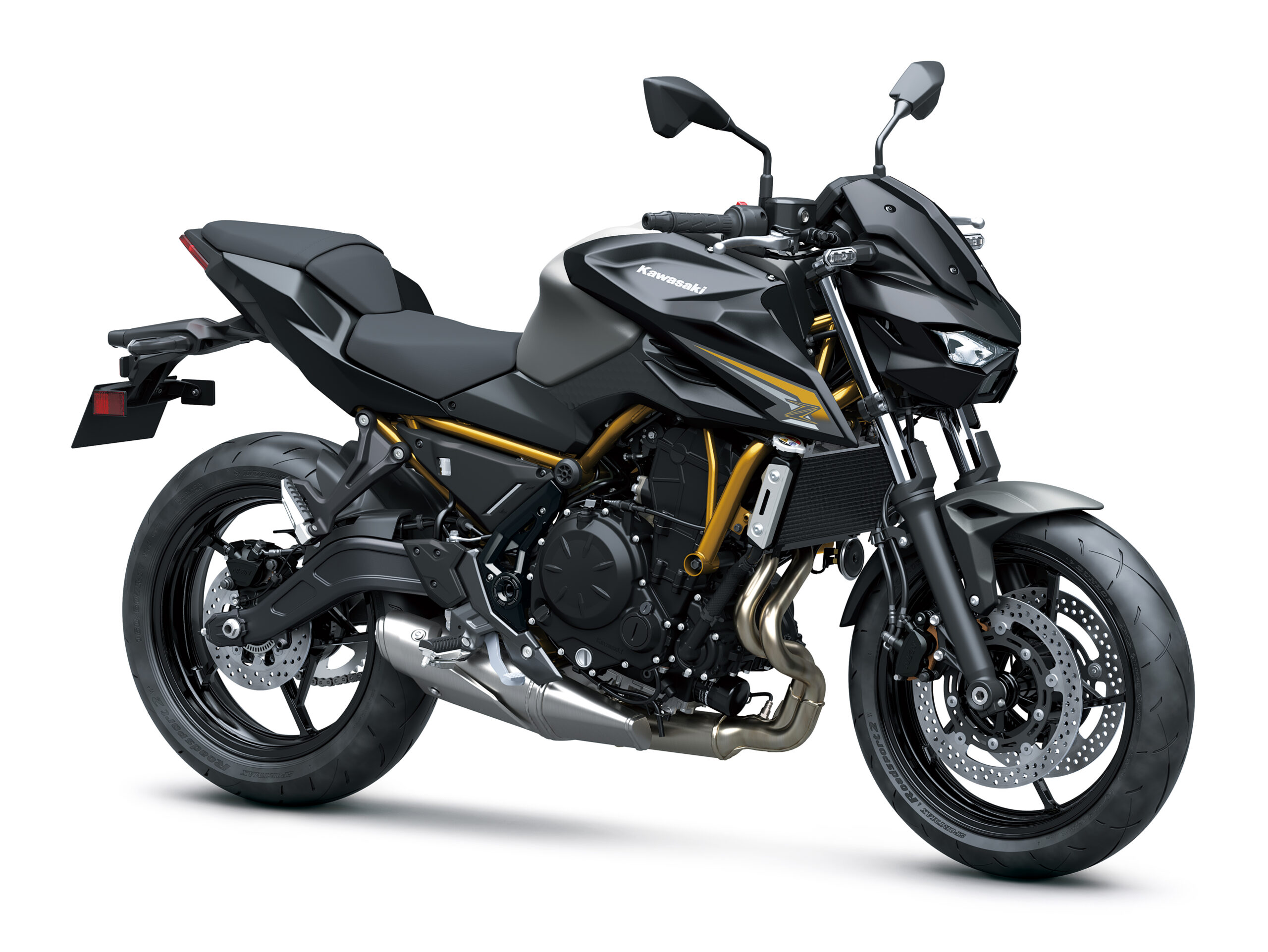
New Kawasaki Z650 S roadster launched for 2026, featuring new bodywork, tweaked brakes and Sugomi styling. Our man Alan Dowds went to Spain for the official press launch.
For some companies, the launch of a new variant in their ‘light middleweight roadster’ model range can be a fairly transactional process. They produce a well-engineered, economic product – a transport appliance, if you will – and argue their corner in terms of maintenance schedules, fuel consumption, costs and efficiencies.
They’re still proper motorbikes – and plenty of owners will love ‘em – but they’re generally not going to get the blood pumping too much.
That’s not quite the case for Kawasaki’s latest 650 twin though. Because this is a bike with a lot of heritage – and race success – for the Japanese brand, thanks to the powertrain within it. This, the latest ‘S’ version of the Z650 naked roadster, uses the current iteration of the parallel twin 649cc motor that’s been a mainstay of the firm’s light middleweights for more than 20 years now.
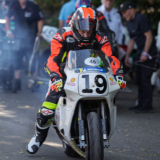
That’s right – this engine first appeared at the end of 2005 in the peppy little ER-6n, replacing the venerable ER-5 commuting stalwart with a bigger, sharper, faster unit. And it’s that same engine which has won a heap of MiniTwin and SuperTwin races around the globe since, including at the Isle of Man TT. It’s also powered the ER-6f faired roadster, the various generations of Versys 650 and the current Ninja 650, as well as the TT-winning Paton racebike ridden by the likes of Michael Dunlop.
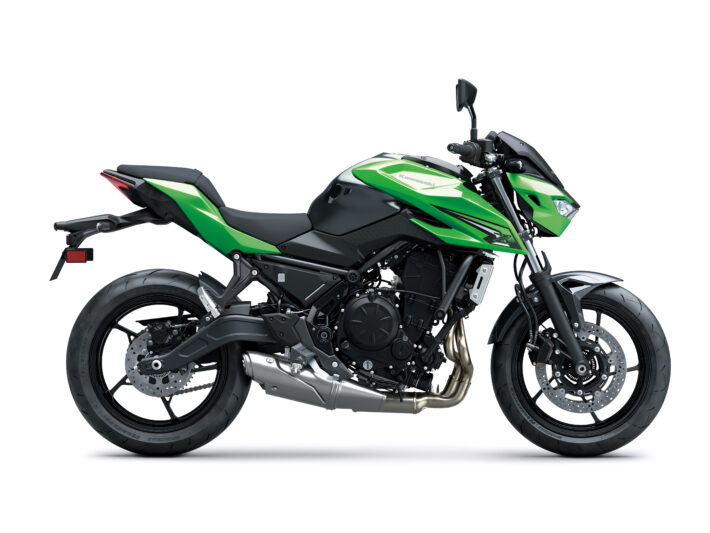
And we’re here in Girona, Spain, to check out its latest home: the 2026 Z650 S. It’s a slightly strange update: a mostly cosmetic revision of the standard Z650, a modern-style roadster, which shares much of its running gear with the RS retro machine.
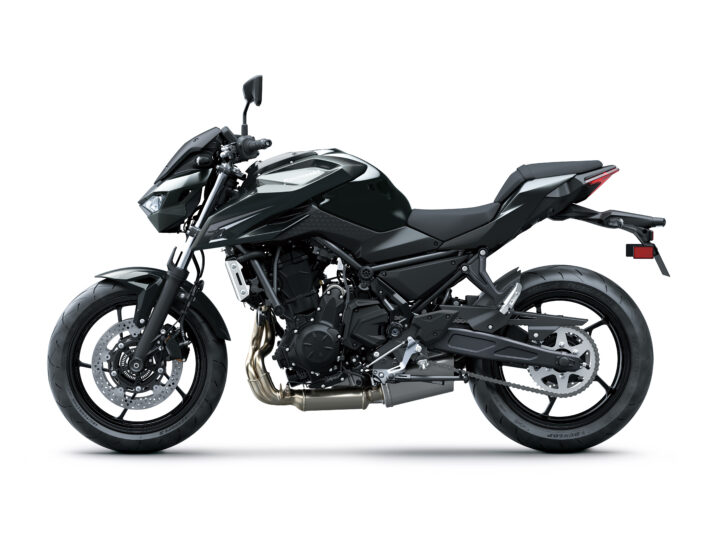
Kawasaki’s given it a new set of bodywork to match the other bikes in the Z range – with the so-called ‘Sugomi’ styling cues – and that, together with some minor tweaks to chassis and powertrain, makes for the new S model. We’ve got blue skies, sunshine, and amazing roads around Tossa and Lloret de Mar on the Costa Brava – let’s go and check it out…
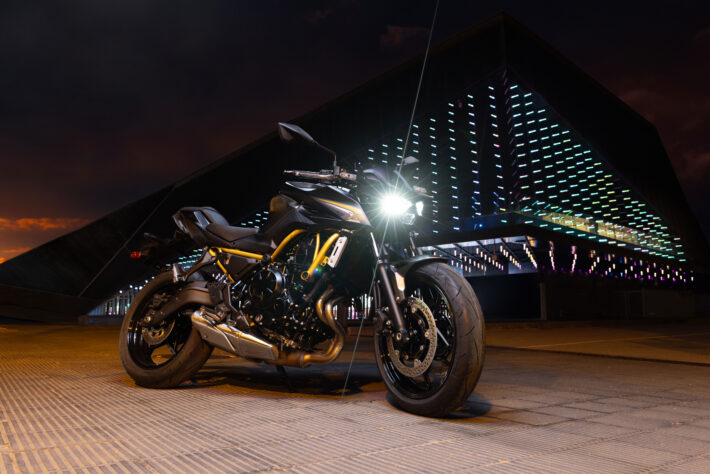
First impressions are more than decent: this is a handsome little bike, and when you climb aboard, there’s a premium feel thanks to stuff like the adjustable brake and clutch levers, and the colour LCD dash. The proven engine kicks into life instantly on the starter from cold and settles down into a thumping idle from the 180° crank twin.
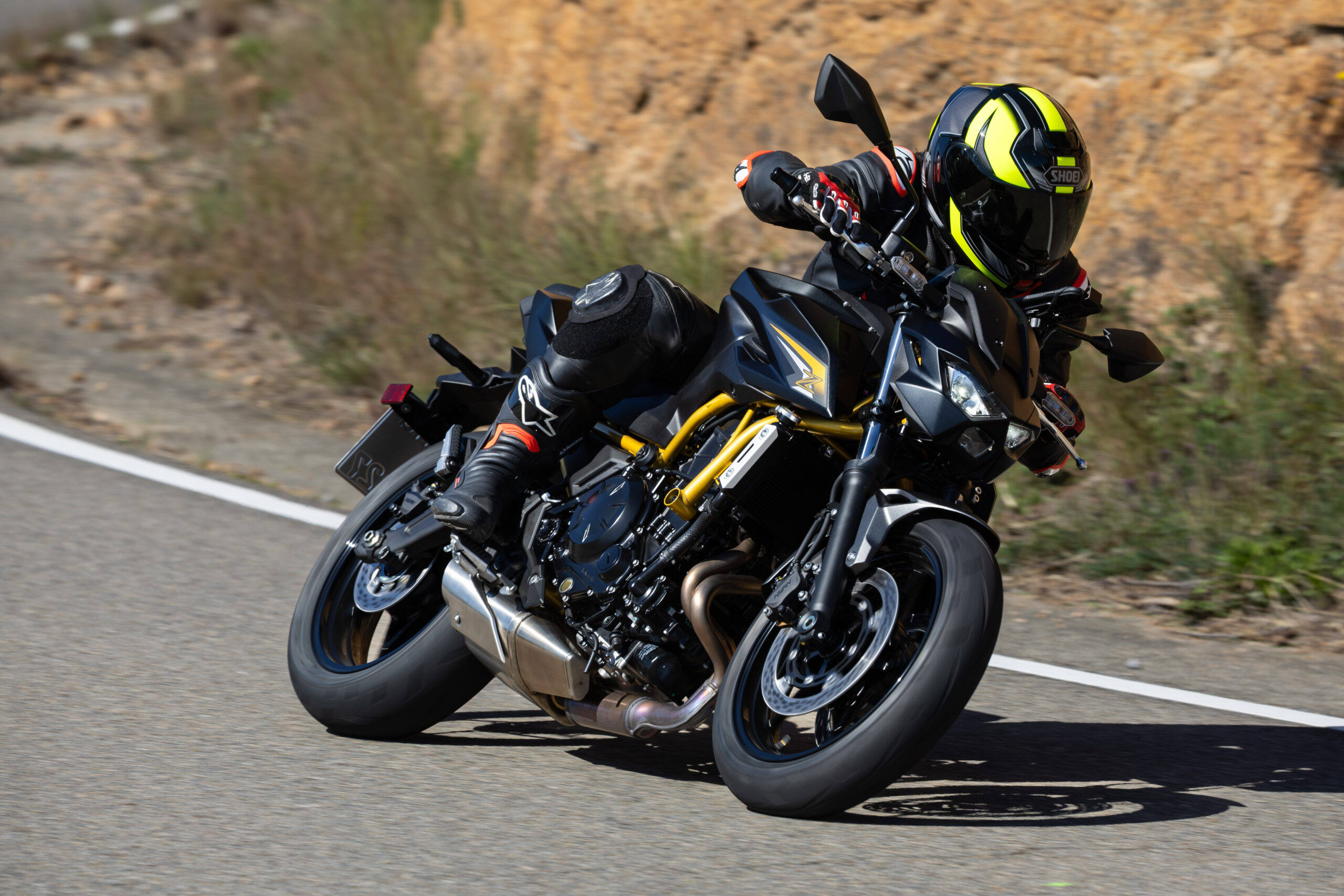
Kawasaki’s stuck with this layout where others have gone to a 270° ‘V-twin’ style parallel twin, and along with a balance shaft, it gives a distinct feel to proceedings. The lead rider waves us on, we click into first gear and head out from the hotel car park onto the cool Catalan asphalt.
It’s early spring, so the nights are chilly, but there’s not a cloud above us, and the sun soon warms things up nicely as we trundle through the small towns and villages near Girona and head for the hills.
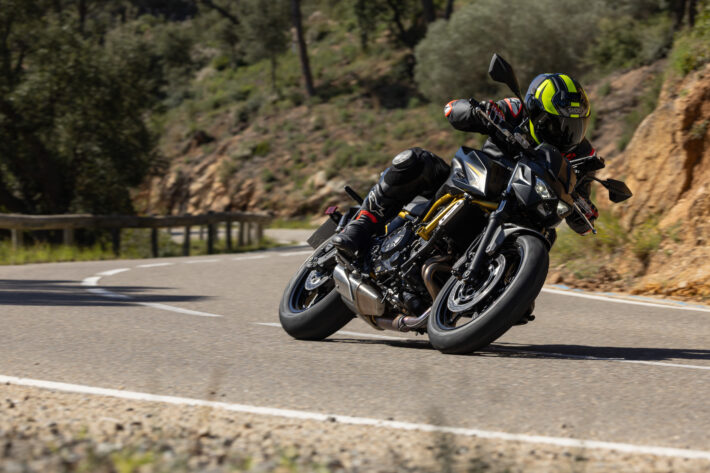
The Z650 S is pleasingly simple. In these days of multiple rider power modes, complex traction control setups and the like, there’s not too much to worry about here. The traction control is easily turned up, down, and off with the handlebar switches, and the up-only quickshifter works well enough.
That old-school shifter is an optional accessory, and it’s up-only because the Z650 is still using a cable-operated fuel injection system, with dual throttle valves rather than the latest ride-by-wire setup. It’s a little weird in 2026, but I soon adapt, and once you remember to have a little manual blip on downshifts, it’s all good, in a 2010 sort of way…
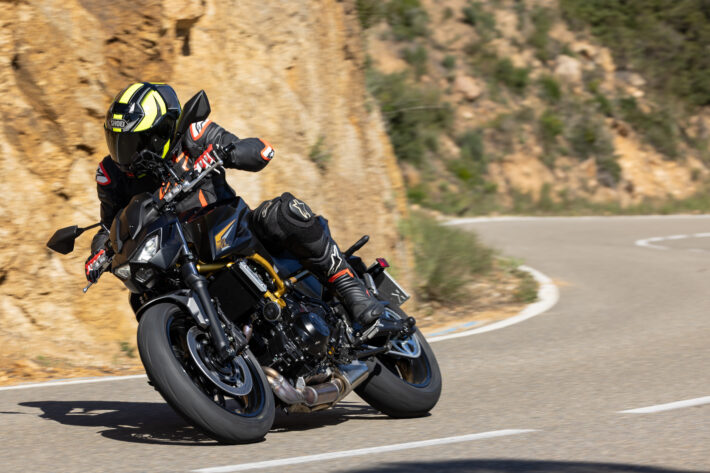
The throttle response itself is spot-on, and as we come off the busy morning commuting routes, and start to open up, you can see why the 650 motor has gained a reputation on the racetrack. It’s strong down-low, with decent midrange from around 3,000rpm, and drives right through the rev range.
Of course, the peak output of around 67bhp isn’t earth-shattering stuff nowadays, but on the super-twisty mountain roads we’re now hitting, it’s more than capable. Top speed (on the Autobahn…) should be easily over 125mph, and overall, despite its age and relatively low on-paper output, the Z650 motor is still a very pleasant little unit.
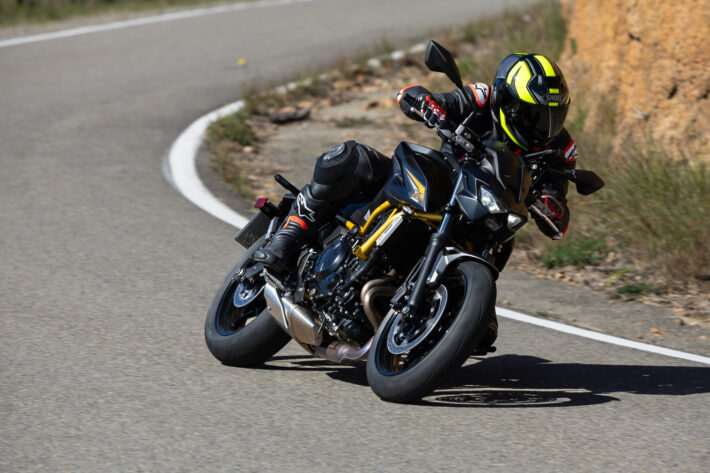
It has a chassis to match too. The suspension and brakes are fairly anonymous in terms of specification, with RWU 41mm forks, preload rear monoshock and sliding twin-piston front calipers. But those brakes are pretty sharp, with a strong bite and good power, and the front end is communicative enough to push hard on the street.
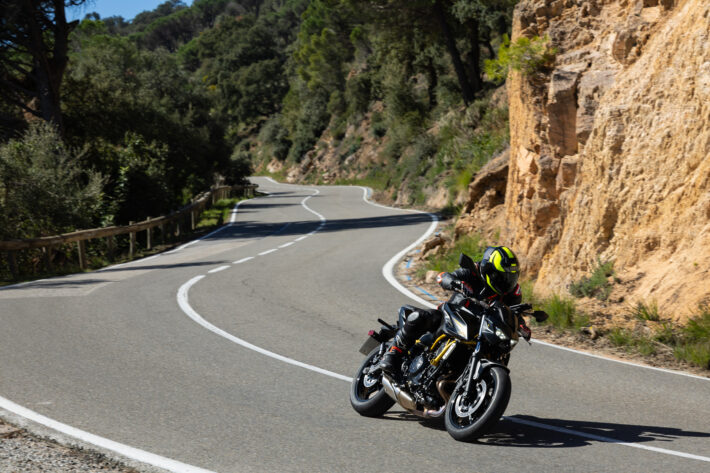
It’s a nimble machine too, thanks to the decent overall weight (around 190kg wet) and sharp steering. We hit some really quite tight hairpin-strewn roads up in the Costa Brava hills, and it was a breeze to throw the little Z around following the lead rider.
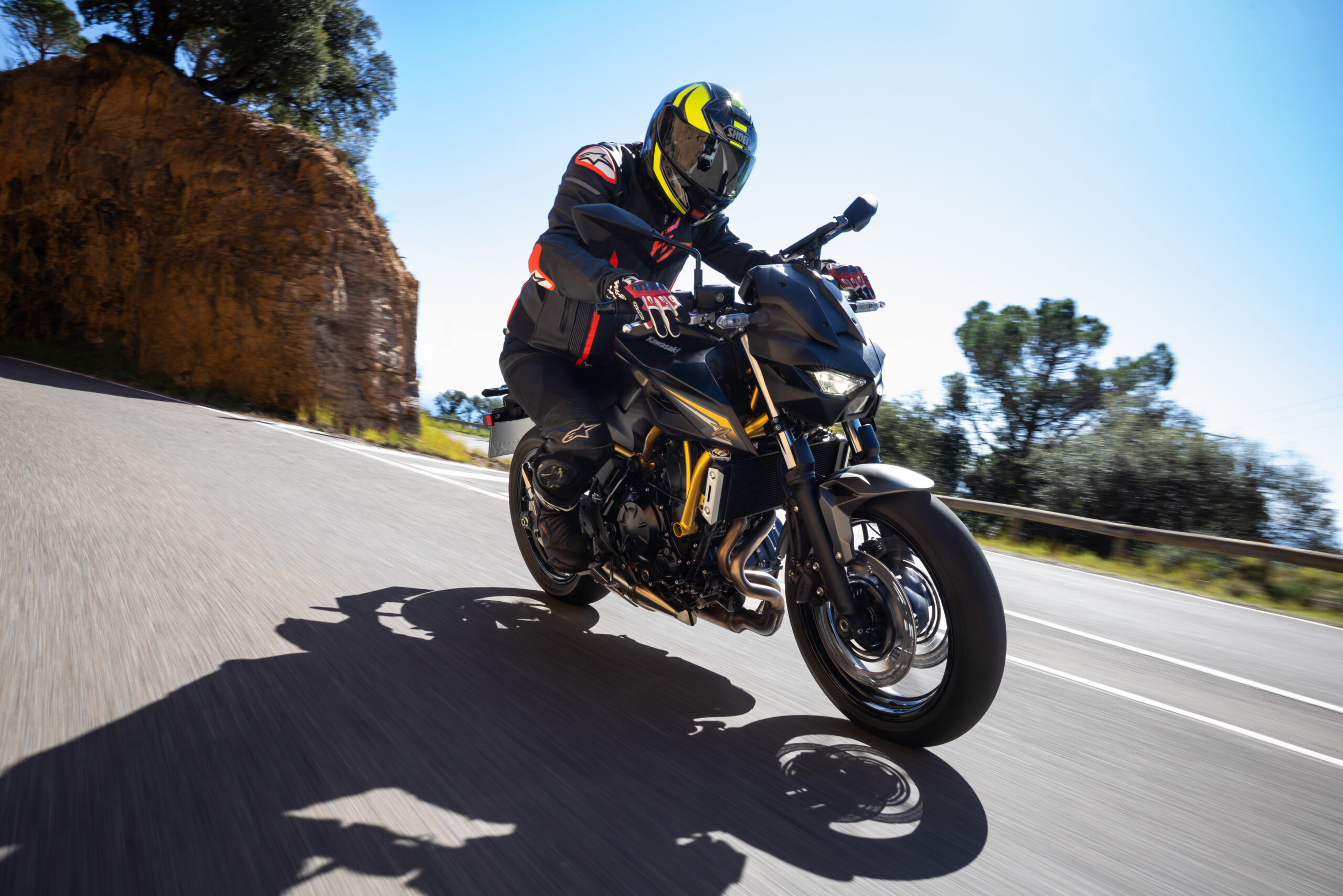
Then, later on when we hit some fast, sweeping roads, it felt stable and planted too. It’s no big surprise that Kawasaki can manage this, on such a mature platform, but it’s still really great fun to experience.
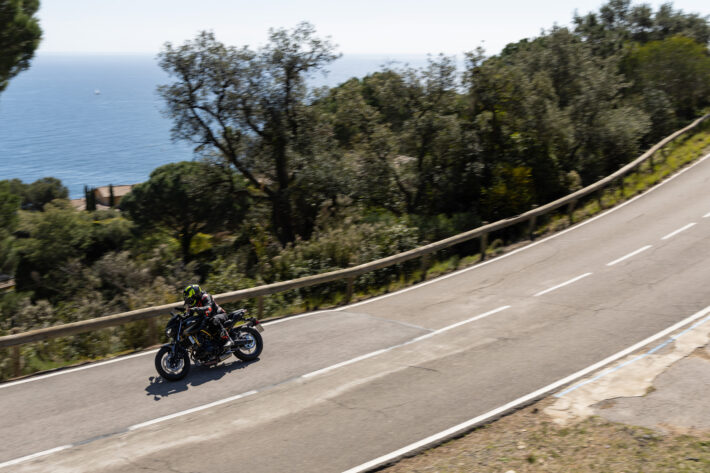
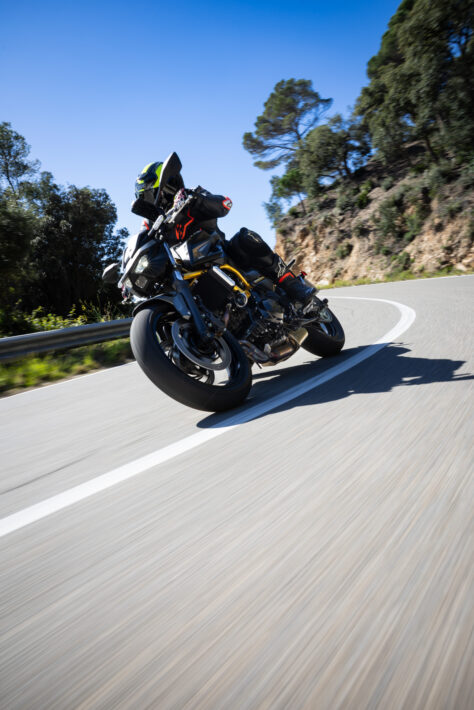
We’re a couple of hours into the ride now, and it’s time to stop for some pics up in the hills. The tracking shots are easy enough, with the low-down drive and clean throttle response making it a breeze to stick with the camera car through the bends. When we start the cornering pics though, there’s a bit of a commotion from the back end when you start to push on.
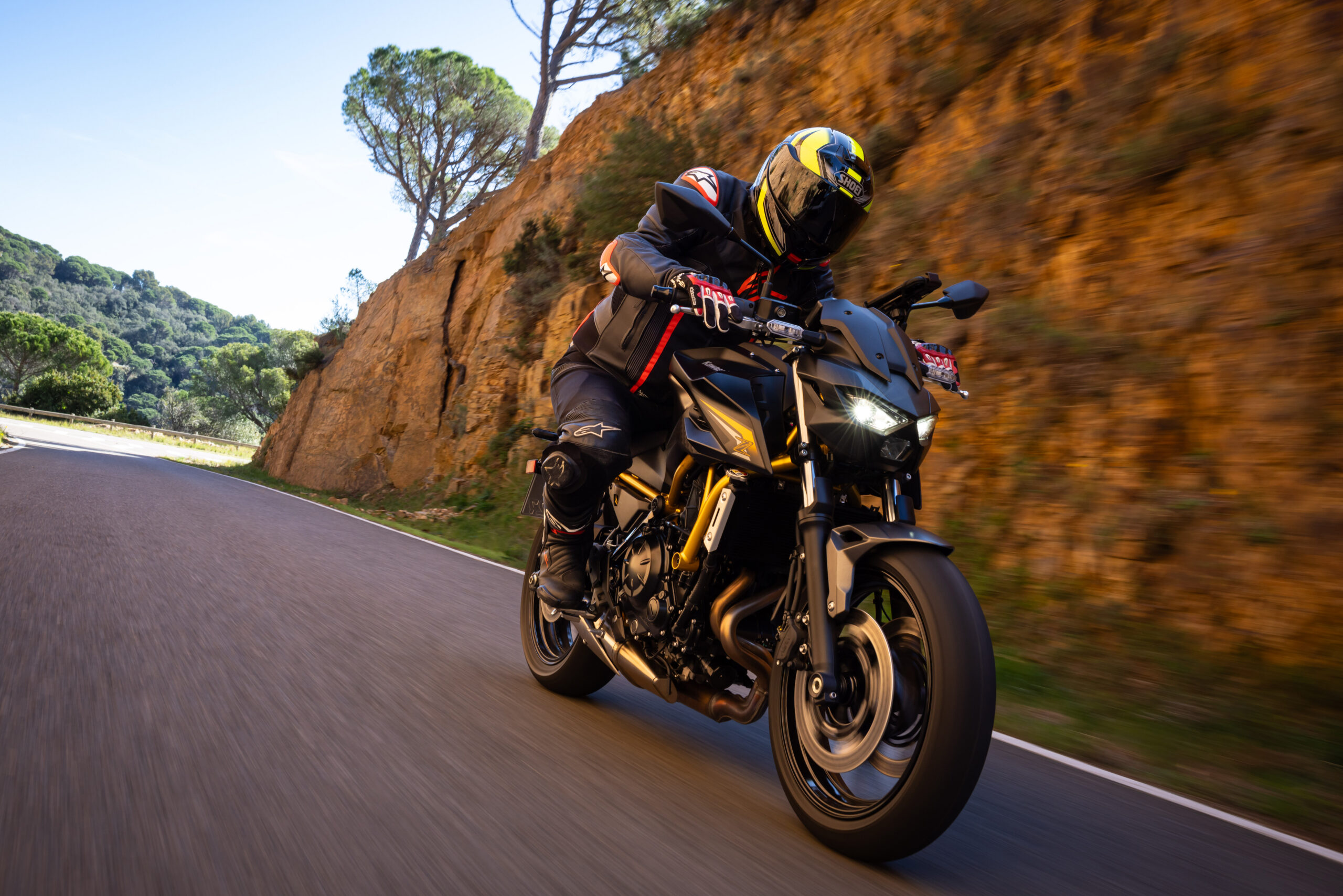
The sun’s out and I’m warm enough, but the road surface is still fairly cool, and the Dunlop Roadsport 2 tyres don’t seem to be getting enough heat into them. There’s one sharp right-hand bend on the photoshoot road where the back end steps out a little, almost as if the surface is a bit loose.
The traction control does its job, and there’s no real drama, but if you’re looking to do some hardcore scratching, or even the odd track session, you probably want to upgrade the stock tyres from the slightly elderly Roadsport 2 fitments.
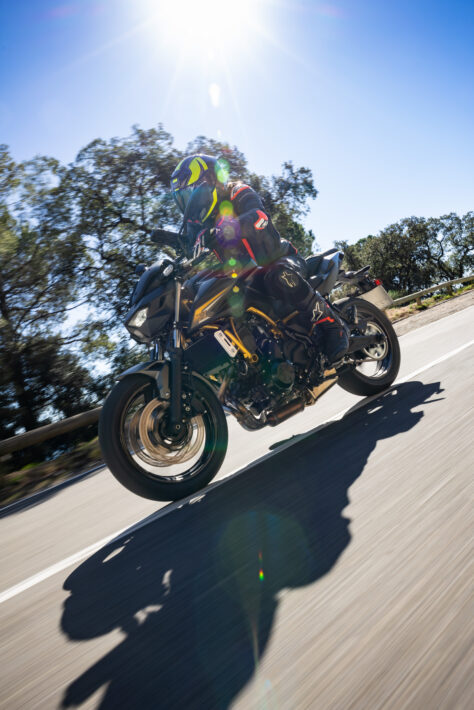
The pics are over now though, and after a quick bocadillo de queso, washed down with some agua con gas, we’re set free with a TomTom sat-nav to head back to the hotel on our own. Obviously this means an informal race, so I set off fast, aiming to be back sharp for a late lunch.
Now, I’m relying on the Z650 S at my own pace, and it responds very nicely indeed. The early part of the route back is intense: lots of tight turns, chicanes, downhill hairpins and blind horseshoe bends. Honestly, something like the Z H2 supercharged supernaked would have been a real handful on these roads, but the little 650 is right at home.
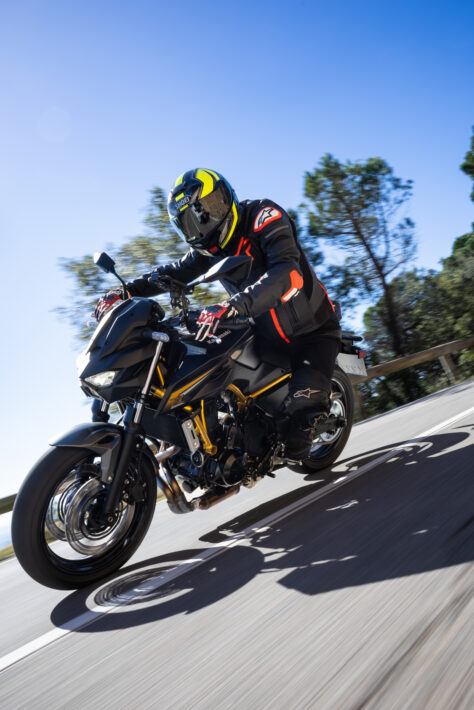
The old adage about having more fun riding a slow bike fast than riding a fast bike slow definitely applies here, and there’s no shortage of smiles per mile, as they say. You always feel in control, whether braking late into a tightening bend, or feeding in the power as the corner opens up in front of you.
Turn the traction off and you can ping a little wheelie up in first with ease, and the riding position is a great mix of commitment for control and comfort for relaxing.
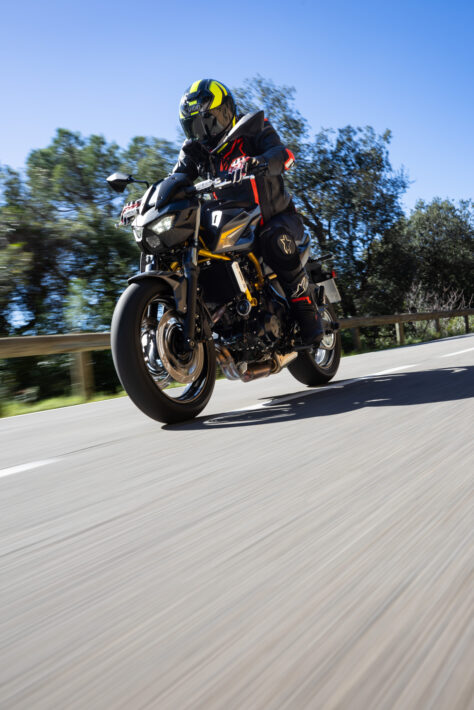
Later on in the route back, there are some much faster sections, and here you can tuck in nicely out of the breeze, despite the lack of a proper windscreen or top fairing. As an aside, if you do need more mile-munching skillz from your Z, then Kawasaki has a series of slick bolt-on accessories which will help: there’s a taller flyscreen, rear rack and top-box, semi-hard side panniers and tank bag, together with USB-C charging socket, crash bungs radiator protector and tank pad.
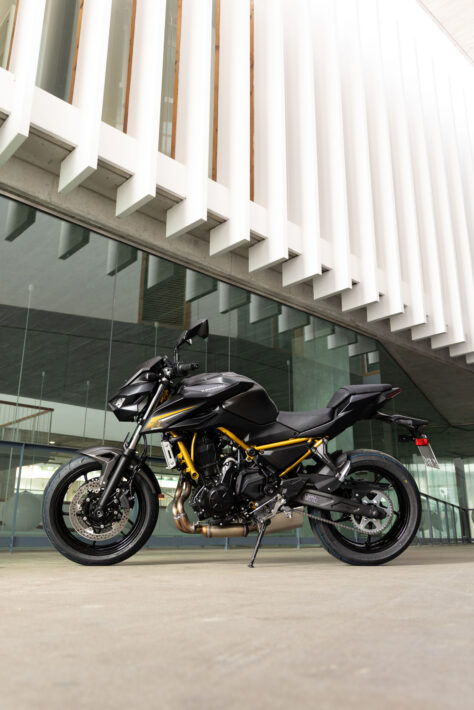
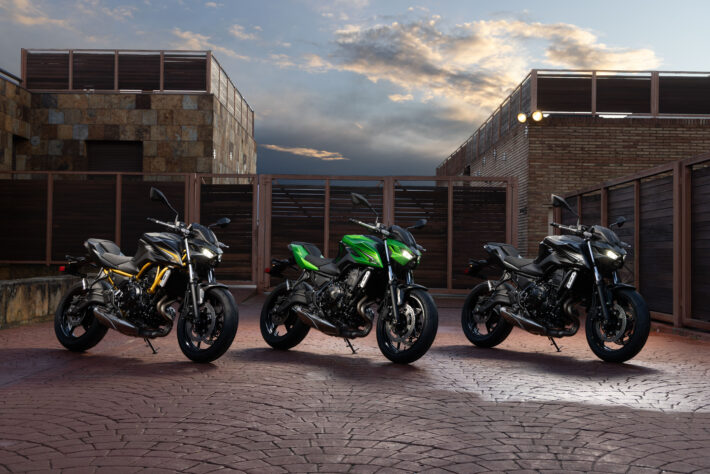
Back at the hotel, and we’re done for the day. Sipping a glass of crisp white local wine, I give the middleweight Kwaka the once-over once again. The bikes we rode look great with the black paint and gold frame, and there’s something quite classy about the style. I do have some questions mind.
As it is, the Z650 sits in a slightly unbalanced range of supernaked machines: Kawasaki currently has the Z125, Z500, Z650, Z900, Z1100 and Z H2 supercharged options, with RS retro versions of the 650 and 900 too. Being honest, the 650 is probably too close to the 500, and the 900 too close to the 1100, and the gap between 650 and 900 is a bit big.
You feel that a Z700 twin, with a new powerplant using the latest ride-by-wire throttle tech, would make a lot of sense, with light commuter fans directed to the 500 instead. Hell, make it a 750 and add a turbo to bring back the GPz750 (or Z750!) Turbo moniker.
The fact that this 2026 650 misses out on ride-by-wire tech might suggest that a bigger revamp of the range is on the horizon medium-term, along with more advanced rider aids, uprated chassis tech, and other 2026-27 options like an automated manual transmission as seen on the Yamaha MT-07 and Honda E-Clutch models.
Kawasaki folks were tight-lipped on anything like this mind, so it might all be fantasy island musings from me…
As it is though, the 2026 Z650 S is a great package, with a mature chassis and engine design, solid performance, enough tech to keep it interesting, and a decent price. At £7,199 it’s a couple of hundred quid cheaper than the £7,400 Yamaha MT-07 and £7,450 Honda Hornet 750, which are its most obvious competitors, albeit slightly bigger and more powerful machines.
Bikes are in dealers now, and Kawasaki’s got a national ‘Experience Tour’ demo ride programme going, so it should be easy to get a spin on one at your local dealer, to see if it’ll work for you.
Kawasaki Z650 S tech highlights
Bodywork
The biggest change on the S is the new plastic, which the firm says brings the 650 into line with other models in the Z range. It’s designed in the ‘Sugomi’ Japanese style, and has a new wider fuel tank with side shrouds, bigger headlamp fairing and revised seat unit.
The changes mean a more forward riding position, with extra weight over the front, thanks to the handlebars which are located further forward than the current model’s. There’s a new wider seat too, with extra padding, but the 805mm seat height is still pleasingly low. Kawasaki’s also very proud of the neat aluminium trim parts on the radiator cover.
Engine
Largely as you were for this veteran lump, which is doing its best to keep up with competition like the Yamaha MT-07 motor. It’s a little down on power and tech – it’s still using conventional cable-controlled fuel injection rather than ride-by-wire for example, and only has an ‘up’ quickshifter available as a £240 extra cost option.
No ride-by-wire also means no cruise control and more basic rider aids. There’s an extra O2 sensor in the exhaust system this year, to better comply with emissions regs too.
Electronics
A fairly basic setup for 2026: two-stage traction control which can be turned off, and standard Continental ABS system. No IMU assistance on either, and the optional quickshifter is up-only thanks to no ride-by-wire engine management. Maybe not a machine for the spec-sheet fetishists out there.
Running gear
Standard chassis fare, with conventional forks and twin-piston sliding calipers up front, and preload-adjust monoshock out back. It all works well, especially the brakes, but it’s a spec that lags a little behind the MT-07 in particular.
Brakes
Kawasaki’s switched from petal discs to a standard round semi-floating design. It’s a pure styling choice: the feeling seems to be that the petal discs are a little dated now, and most folk prefer the plainer discs.
Performance Edition
Kawasaki UK is offering a special ‘Performance Edition’ which comes with a full Akrapovic exhaust system, seat cowl, tinted flyscreen and tank pad. It’s quite a bit pricier: £1,400 more than stock at £8,599.
Other Z650 models
Kawasaki’s keeping the old Z650 on in its range as a cheaper entry-level option, without the sharper Sugomi style of this new ‘S’ model. It’s £100 less at £7,099 and comes in white only. Fancy this performance package in a retro format?
The Z650 RS is also still available, priced at £7,899, with multi-spoked cast wheels, round headlamp, dual analogue dial clocks and classic-style paint jobs. Plenty of options!
2026 KAWASAKI Z650 S SPECS
Price: £7,199 (Performance Edition £8,599)
Engine: DOHC 8v, parallel twin, l/c, 649cc
Bore x stroke: 80x63mm
Compression ratio: 10.8:1
Carburation: dual-valve fuel injection with 36mm throttle bodies, conventional cable operation
Electronic rider aids: traction control with two modes (and off), ABS, optional up-only quickshifter
Max power (claimed) 67bhp@8,000rpm
Max torque (claimed) 64Nm@6,700rpm
Transmission: six speed gearbox, wet slipper/assist clutch, chain final drive
Frame: steel tube trellis type
Front suspension: 41mm RWU front fork, non-adjustable
Rear suspension: dual-sided swingarm, preload-adjustable monoshock
Brakes: dual 300mm discs, twin-piston sliding axial-mount calipers (front), 220mm disc, single-piston caliper (rear), Continental ABS
Wheels/tyres: cast aluminium/Dunlop Roadsport 2, 120/70 17 front, 160/60 17 rear
Rake/trail: 24°/100 mm
Wheelbase: 1,410mm
Seat height: 805mm
Kerb weight: 190kg
Fuel capacity: 15 litres
Equipment: 4.3” TFT LCD dash with smartphone app support, voice control, different display modes, optional quickshifter (up only).
Disclaimer: the sole purpose of this article is to provide guidance on the issues covered. This article is not intended to give legal advice, and, accordingly, it should not be relied upon. It should not be regarded as a comprehensive statement of the law and/or market practice in this area. We make no claims as to the completeness or accuracy of the information contained herein or in the links which were live at the date of publication.
You should not act upon (or should refrain from acting upon) information in this publication without first seeking specific legal and/or specialist advice. Arthur J. Gallagher Insurance Brokers Limited trading as Devitt accepts no liability for any inaccuracy, omission or mistake in this publication, nor will we be responsible for any loss which may be suffered as a result of any person relying on the information contained herein.