

Riding your motorcycle in the rain can be inconvenient at best and hazardous at worst. However, if you’re a motorcyclist in the UK, riding in rainy conditions isn’t uncommon.
The good news is, with a careful approach, you can navigate wet riding conditions with confidence and safety. We’ll cover some tips you need to know in this guide.
Is it safe to ride a motorbike in the rain?
You can ride a motorbike in the rain as long as you’re safe and cautious. It’s worth noting that slippery roads surfaces can reduce tyre traction, hinder rider visibility, and increase stopping distances.

However, with plenty of preparation, the right gear, and good technique, you can reduce these risks when riding a motorcycle in the rain.
10 practical tips for riding in the rain
These practical tips explain how to navigate wet conditions in a way that’s safe, responsible, and even enjoyable.
Wear proper waterproof gear
Whether you’re riding in the city or countryside, investing in waterproof gear will help you cruise in rainy conditions more comfortably.
We recommend investing in high-vis clothing so you’re more visible to other road users. You should also wear a rainsuit, waterproof boots, and gloves to keep you dry when riding in the rain.
Invest in a clear or anti-fog visor
Ensure your helmet is equipped with an anti-fog visor for added visibility when riding in wet conditions.
If your current helmet doesn’t have one, you can buy reliable anti-fog inserts for a reasonable price.
Reduce your speed and increase following distance
When riding a motorcycle in the rain, you should reduce your speed to avoid slipping or skidding on wet road surfaces.
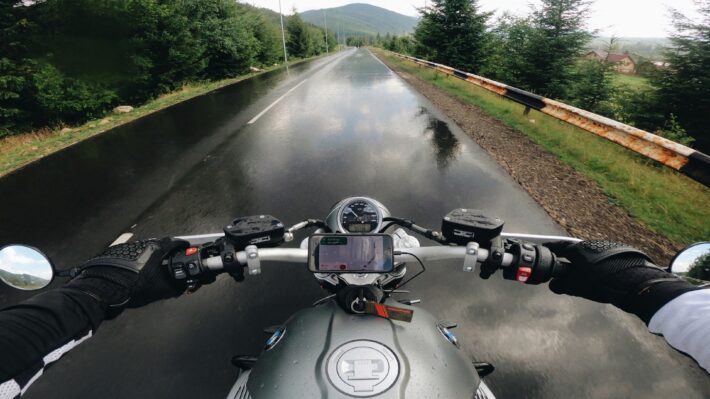
As you’ll have less tyre grip, you should also double your stopping distance from two seconds to four. Doing so will significantly reduce the risk of colliding with another vehicle in rainy conditions.
Be smooth with your throttle, brakes, and steering
When it’s wet outside, any sudden movements can cause you to lose traction, so cornering and handling your throttle smoothly and deliberately is essential.
You should also use your rear brake more and apply it gently in wet road conditions to avoid skidding or losing traction on slippery road surfaces.
Watch for road hazards
When navigating rainy conditions, it’s important to keep a keen eye out for potential hazards. These include:
- Metal covers on the road surface that can cause you to lose grip
- White lines or road markings that may be less visible and could be deceiving to the eye
- Large puddles that could cause skidding
- Potholes that could cause you to lose control of your motorcycle
Check your tyres before every wet ride
For maximum motorcycle safety, check your tyres before every wet ride. Ensure each tyre has a good tread depth and meets the minimum legal requirement of 1mm (but deeper is better in wet conditions).
It’s also important to check your tyre pressures regularly to ensure they’re not over or underinflated, as this can be dangerous when road surfaces are wet.
Use engine braking to stay in control
You should use engine braking as much as possible to keep control and maintain grip.
Use the engine to decelerate, gently apply the brake level when necessary, and you’ll increase your chances of staying safe in wet riding conditions.
Stay upright when cornering
When riding your motorcycle in the rain, staying upright when you’re cornering is a wise move.
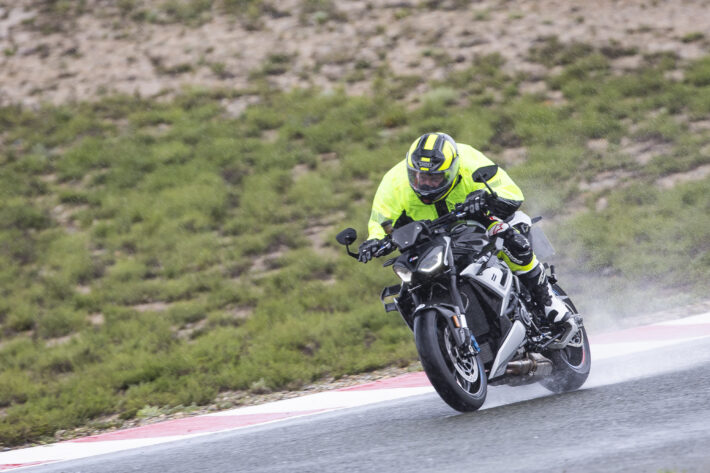
Keeping as upright as possible while entering corners slower and aiming for smoother lines will help to keep you in control. Doing so can also reduce your chances of losing tyre grip or skidding on the road surface.
Keep electricals and chain maintained
Wet weather can expose mechanical or electrical faults and significantly reduce your road safety.
To keep your motorcycle as safe and reliable as possible in the rain, you should:
- Check all of your vehicle’s lights are working correctly
- Test your brake switches to ensure they’re functional
- Keep your chain clean and lubricated
Top tip: Apply dielectric grease to your electrical connectors to help protect them and avoid corrosion if you ride in the rain frequently.
Stay calm and mentally alert
Last but certainly not least, it’s important to ride with patience, making sure that every move you make is smooth and intentional.
Remember, rushing will increase your likelihood of making mistakes. Don’t let your nerves take over – stay focused, be aware of your surroundings, and you can stay safe when riding in the rain.
Final thoughts: ride prepared in all weather
Rain riding is a skill that comes with experience and smart habits. With high-quality waterproof equipment, a solid technique, and the right level of awareness, you can tackle wet or challenging conditions more confidently.
If you’re searching for motorbike insurance, we can help. We’ve arranged motorbike insurance for UK riders since 1936, so you’re in safe hands.
Whether you ride for leisure, work or business, we have a choice of policies so you can get a level of cover that suits your requirements.
Request a quote online or call our friendly team on 0345 504 0395. We look forward to helping you.
Disclaimer: The sole purpose of this article is to provide guidance on the issues covered. This article is not intended to give legal advice, and, accordingly, it should not be relied upon. It should not be regarded as a comprehensive statement of the law and/or market practice in this area. We make no claims as to the completeness or accuracy of the information contained herein or in the links which were live at the date of publication.
You should not act upon (or should refrain from acting upon) information in this publication without first seeking specific legal and/or specialist advice. Devitt, a trading name of Devitt Insurance Services Limited, accepts no liability for any inaccuracy, omission or mistake in this publication, nor will we be responsible for any loss which may be suffered as a result of any person relying on the information contained herein.
Disclaimer: the sole purpose of this article is to provide guidance on the issues covered. This article is not intended to give legal advice, and, accordingly, it should not be relied upon. It should not be regarded as a comprehensive statement of the law and/or market practice in this area. We make no claims as to the completeness or accuracy of the information contained herein or in the links which were live at the date of publication.
You should not act upon (or should refrain from acting upon) information in this publication without first seeking specific legal and/or specialist advice. Arthur J. Gallagher Insurance Brokers Limited trading as Devitt accepts no liability for any inaccuracy, omission or mistake in this publication, nor will we be responsible for any loss which may be suffered as a result of any person relying on the information contained herein.