

Chrome can look great on a motorcycle, but it doesn’t take much for rust to appear.
Rain, road salt, and winter storage can all damage the protective layer, especially on parts like exhausts, handlebars, rims, and mirrors.
This guide shows you how to remove rust from chrome safely at home, what tools you’ll need, and when it’s best to call in a professional.
Why does chrome rust on motorcycles?
Chrome plating is a thin protective layer applied over steel. While it’s designed to resist corrosion, it can be damaged over time, and once that barrier breaks down, moisture reaches the metal underneath and rust sets in.
Common causes include:
- Road salt, which accelerates corrosion during and after winter rides
- Stone chips that crack or lift the chrome surface
- Condensation in garages where air can’t circulate
- Neglected cleaning that allows moisture and grime to sit on the surface
It’s worth understanding the difference between surface rust and deeper corrosion.
Surface rust appears as light orange or reddish discolouration, which is oxidation sitting on or just beneath the chrome, and it’s generally treatable at home.
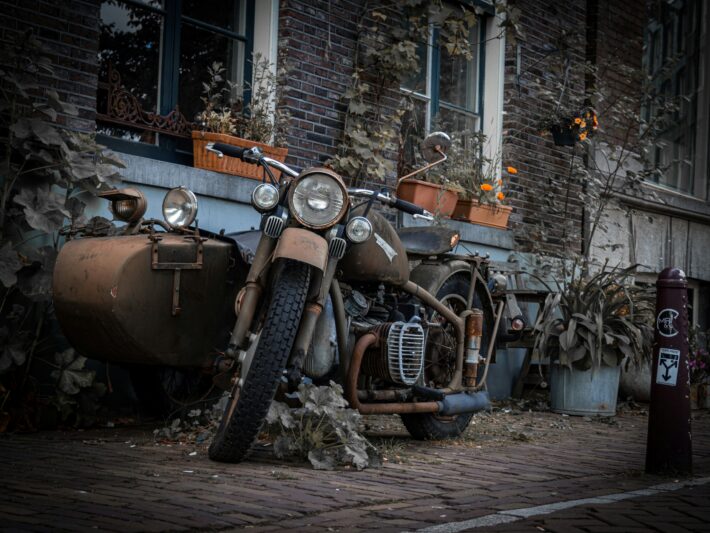
Pitting, on the other hand, occurs when the chrome plating itself has failed, leaving visible craters in the metal. That’s a different challenge, which we’ll cover below under how to get pitted rust off chrome.
What you’ll need to clean chrome rust safely
Before you start, it helps to have the right materials to hand. Here’s what you’ll likely need:
- Microfibre cloths
- Warm, soapy water
- Aluminium foil
- White vinegar
- Chrome polish
- Very fine steel wool (0000 grade)
- Protective gloves
Avoid harsh abrasives or general-purpose cleaning products, as these can scratch or strip the chrome plating and make things worse. If you’re trying a new product or method, test it on a small, less visible area first.
How to remove rust from chrome: a step-by-step guide
If you’ve spotted rust on your motorcycle’s chrome, it’s worth acting quickly. The steps below cover a straightforward method that works well for light to moderate surface rust.
Step 1: Wash the area thoroughly
Start by removing any dirt, grime, or road debris from the affected area. Use warm water and a mild detergent, and work gently to avoid scratching the surface.
Once clean, dry the area fully with a microfibre cloth. This gives you a clear view of the rust and helps you judge how much work is needed.
Step 2: Removing rust with aluminium foil
Aluminium foil is one of the most effective and low-risk methods for tackling surface rust.
It works through a combination of a mild chemical reaction and gentle mechanical abrasion, soft enough not to damage the chrome but effective at lifting light oxidation.
Tear off a small piece of foil and dip it in water or white vinegar. Rub it over the rusted area using gentle, circular motions.
You should see the rust begin to lift fairly quickly. Wipe the area clean with a microfibre cloth and inspect the surface. Repeat if needed.
Step 3: Removing rust using chrome polish
Once you’ve cleared the surface rust, a specialist chrome polish can help restore shine and add a layer of protection.
Apply a small amount to a clean microfibre cloth and work it into the chrome in small sections, buffing as you go.
This approach works well for light to moderate rust.
It’s less suited to areas where the plating has already started to lift or pit, in which case see the section below on how to get pitted rust off chrome.
How to get pitted rust off chrome
Pitting is a step beyond surface rust.
You’ll recognise it by the small craters or rough patches visible in the chrome, which are signs that the plating has broken down and the steel underneath has corroded more deeply.
For pitted rust, 0000 grade steel wool used carefully with WD-40 or a dedicated chrome cleaner can help smooth the surface.
Work gently and in small sections, wiping regularly to check progress. This method is ideal if you want to remove rust from chrome plating that has started to pit.
That said, deep pitting may be beyond home treatment. If the chrome is heavily pitted, flaking, or bubbling, professional re-chroming or part replacement is likely the more practical route.
Avoid aggressive sanding, as this removes the remaining chrome plating entirely and can make re-chroming more difficult or expensive.
Alternative methods to clean chrome rust
If you don’t have chrome polish or aluminium foil to hand, there are a couple of other approaches worth knowing about.
These are handy ways to clean chrome rust without specialist products.
White vinegar soak
White vinegar is mildly acidic and can dissolve light rust. Soak a cloth in vinegar and hold it against the rusted area for 15–30 minutes, then wipe clean.
It’s inexpensive and widely available, though it may need several applications and might not be as effective on heavier rust.
Baking soda paste
Mix baking soda with a little water to form a paste, apply it to the rust, leave it for a few minutes, then scrub gently with a soft cloth.
It’s a gentle option suitable for very light surface rust, though it’s less effective on anything more established.
Preventing rust on motorcycle chrome
A bit of regular maintenance can go a long way in keeping your chrome in good condition:
- Wash your bike regularly, particularly after winter rides or journeys on salted roads
- Apply a protective wax or chrome sealant to create a barrier against moisture
- Store your bike in a dry garage with a breathable cover to prevent condensation build-up
- Consider applying an anti-corrosion spray to vulnerable areas like exhausts and wheel rims
- Inspect chrome parts routinely so you can catch surface rust early, before it becomes a bigger problem
When to repair or re-chrome motorcycle parts
There are some signs that rust has moved beyond a cosmetic issue:
- Chrome plating that is visibly flaking or bubbling
- Deep pitting that can’t be improved with home treatment
- Corrosion on safety-critical components such as brake parts or structural fixings
If rust has compromised any safety-critical components, it’s advisable not to continue riding until these have been properly assessed.
Professional repair services can help evaluate the extent of damage and advise on whether parts can be restored or should be replaced.
Help keep your motorbike protected with specialist motorbike insurance from Devitt
Keeping your chrome in good condition is part of looking after your bike, but it’s just one aspect of responsible ownership. Having suitable insurance in place is another important part of the picture.
Devitt offers a range of specialist motorbike insurance options, from everyday commuter bikes to classic machines and touring motorcycles.
With over 90 years of experience in the industry, we can help you find a policy that suits your riding and your bike.
Get a quote online or contact our UK-based team to find out more.
Disclaimer: the sole purpose of this article is to provide guidance on the issues covered. This article is not intended to give legal advice, and, accordingly, it should not be relied upon. It should not be regarded as a comprehensive statement of the law and/or market practice in this area. We make no claims as to the completeness or accuracy of the information contained herein or in the links which were live at the date of publication.
You should not act upon (or should refrain from acting upon) information in this publication without first seeking specific legal and/or specialist advice. Arthur J. Gallagher Insurance Brokers Limited trading as Devitt accepts no liability for any inaccuracy, omission or mistake in this publication, nor will we be responsible for any loss which may be suffered as a result of any person relying on the information contained herein.