
Indian firm puts its trusted 650 twin engine in a premium retro styling package, with relaxed cruising chassis
The Bullet was, for a long time, what Royal Enfield was all about – and it’s been building Bullet bikes since 1932. According to the firm, its original Bullet range was a true pioneer back in the day.
With then-radical innovations like a foot-operated gear change and a four-valve cylinder head on the 500cc model, it set new benchmarks for its time, and was capable of touching 90mph straight from the factory: serious performance back then.
The design took another major leap forward in 1948 with Royal Enfield’s revolutionary swinging-arm rear suspension debuting on the Bullet 350 Trials prototypes. After several competition victories, it was adopted on road-going Bullets, making these the first full-production motorcycles in the world to sport this innovative rear suspension setup.
When the Indian Army sought a machine to patrol its remote frontier tracks in Kashmir and Rajasthan, the Bullet, with its flexible engine, trail-proven stamina and ground-breaking suspension design, was the first choice. Then, in the 1990s and 2000s the firm fitted upgrades like an electric starter and five-speed gearbox.
The Bullet started gaining a loyal following in international markets, from the UK to the United States, France, Italy and Australia. In 2010, it shifted from the old cast iron motor to the aluminium UCE unit construction engine while keeping its hallmark features such as the upright commanding stance and hand-painted Madras pinstripes. Some impressive history, then.
The first Royal Enfield I ever rode was a 500 Bullet Electra (with the aforementioned electric starter), nearly 20 years ago in 2007, and it was the firm’s flagship machine back then.
Built in Chennai, then imported to the UK where the distributor would replace the tyres, swap indicators and upgrade various other parts, its performance and build quality was marginal at best for the UK market. The 1950s engine made 25 extremely vibey horsepower, which was still enough to overwhelm the hilariously wobbly chassis, but struggled to keep up on the motorways of SE England.
It looked great though, and as a gentle sunny Sunday cruising bike, it was pretty good for the (commendably low) purchase price.
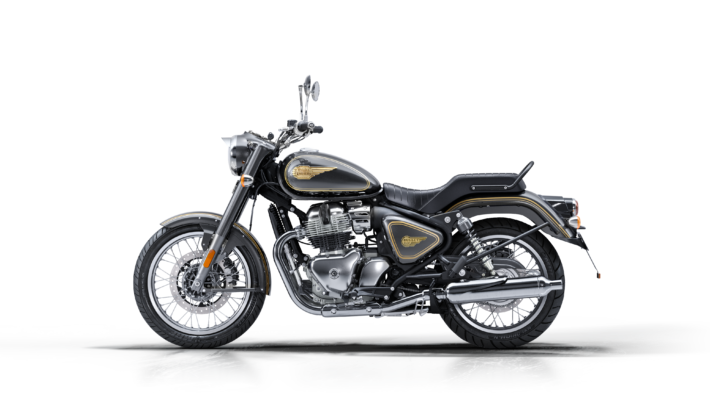
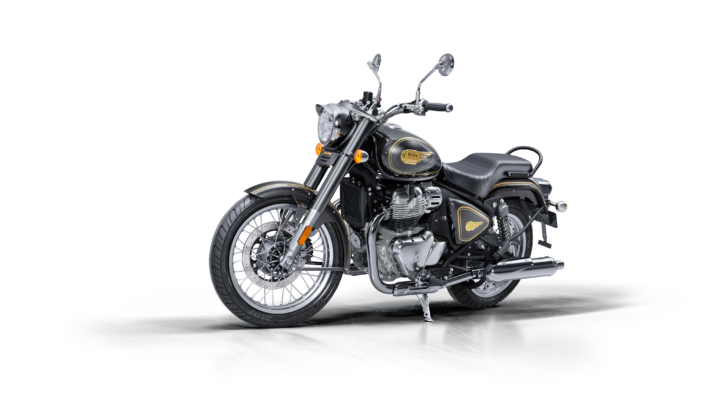
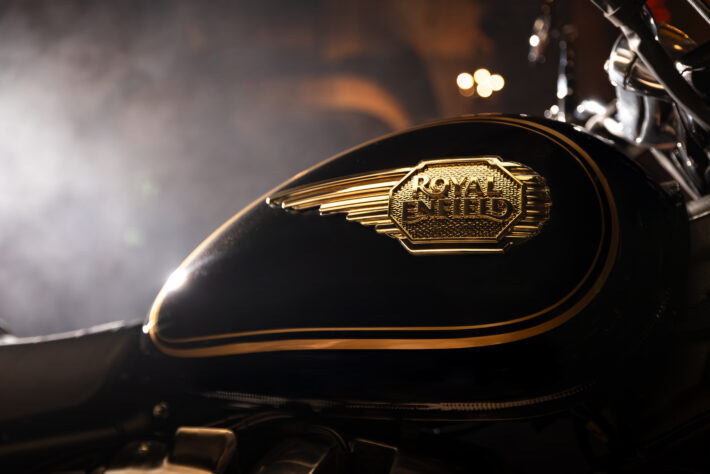
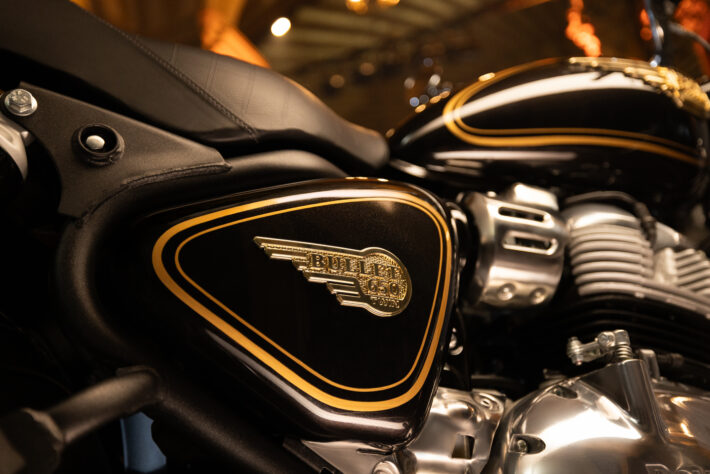
Fast forwards two decades, and I’m on the latest full-calibre Bullet from Enfield, the 2026 650. The styling is on par with the 2007 bike, with the same old-school 1950s roadster design. It’s even got the same classy black paint scheme and elaborate tank badges with gold graphics.
The performance is other-worldly in comparison though. The latest 650 twin cylinder motor is a peach, and we’ve tried it on a load of modern Enfields over the past eight years since it launched in 2018.
It’s not super powerful, making just under 47bhp (almost double what the old 500 single made, mind) but has a pleasing delivery, with super economical running. We’re on a ride out with the UK importer, from Buckinghamshire up to Redditch, which is Enfield’s spiritual home, and the location of the firm’s main factory before the move to India.
The straight road would involve a flat-out run up the M40, but that would be madness on the Bullet 650, with its unfaired, low-slung design and unhurried character. Instead, we trundle along some green and pleasant country roads, taking in the scenery and imbibing pure Royal Enfield character without the grim distractions of 95mph Audis and 56mph HGVs that makes up the modern motorway milieu.
The Bullet has plenty in common with some of the other 650s in the firm’s range. It’s closer to the likes of the Classic, Shotgun and Meteor models than the likes of the Bear, Interceptor and Continental GT, which is to say it tends to the heavier, more cruising side rather than the sportier feel of the ‘light’ 650s.
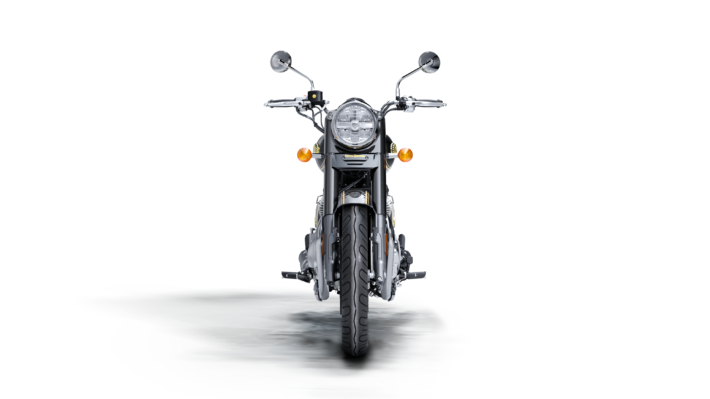
The big difference with the Bullet 650 is the 19” front wheel, which is commendably retro (lots of bikes had a giant front hoop back in the day), and makes a subtle yet definitive tweak to the looks.
It was also responsible for a lot of work on the chassis development side according to Enfield head of development, test rider and ex-racer Glen Corbett: getting that big hoop on the front meant several subtle-yet-definitive tweaks were needed to the geometry, to keep the friendly handling and easy, stable nature of the 650 twins despite the larger, heavier wheel and tyre.
It’s worked well too: the Bullet is as relaxed a retro roadster as you could want, but also responds accurately to your inputs. There’s a nice balance at slow speeds – you seldom need to put a foot down when trickling through traffic – and matched to the low seat and comfy riding position, it’s a charming place to sit yourself.
We stop off for some pics at the halfway point, then it’s a bit of a racier ride up to Redditch. That’s relative of course, but I find myself chasing the lead rider through a series of fast B-road bends, only stopping for the red lights at the roadworks surrounding the various HS2 railway building sites en route.
As usual with the Enfield 650s, you’re using all the power most of the time when in a hurry. The motor is grunty enough low-down and the throttle response is smooth and clean – there’s just not quite enough oomph though, especially with more than 320kg of combined Bullet and Dowds to cart about the Cotswold backroads.
That also applies to the brakes: one solitary 320mm disc with a dual-piston caliper is your whack up front, and it needs a hefty squeeze on the lever, along with a big stamp on the back pedal, to reign in the classy Enfield with any zeal. The suspension is anonymous but sufficient in this role, while the Indian-made MRF tyres worked well on the hot, dry early-September asphalt.
None of this is really the point of the Bullet of course. The main part of the appeal comes when we park up outside the Royal Enfield pub in Redditch (a branch of Wetherspoons named for the local Enfield links).
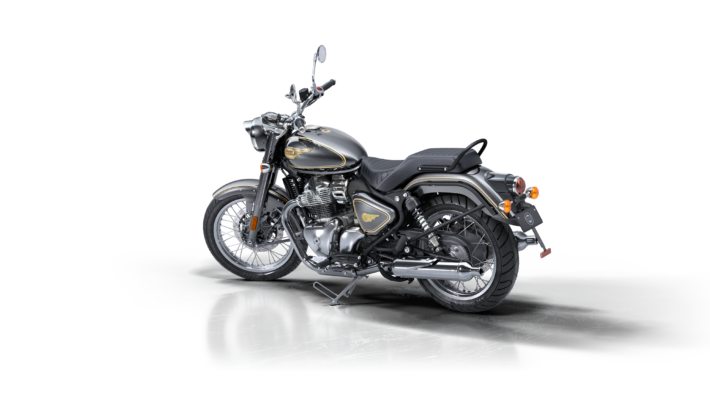
The Bullet looks really smart: the paint has a high quality finish complete with hand-painted coachlines, the gold embossed tank badges are really premium, and the headlight nacelle with ‘Tiger Eyes’ sidelights lends a classy feel.
Add in details like the chromed headlight peak, peashooter exhausts, fork shrouds, polished engine cases and full mudguards and you have a really attractive neo-classic package that grabs the eye for sure.
In many ways it does much of the job that a Harley-Davidson cruiser used to do before they all started to cost £30k: look good, carry an air of authenticity, sound the part, and give you something to polish on the long winter nights in your man- (or woman-) cave.
Alternatively, it could replace a ‘proper’ classic machine, fulfilling the role of some piece of 1960s British-built nonsense without the faff of regular breakdowns, oil leaks or having finding obscure spare parts. Best of all, it does that job for a very decent price: around £6,750 list price brand new with a full warranty.
So, it seems to me that the Bullet is set to be a feature of the Royal Enfield range for quite a while yet… Get down to your local dealer now and check one out!
2026 Royal Enfield 650 Bullet specifications
Price: £6,749
Engine: SOHC 4v, parallel twin, a/c, 648cc
Bore x stroke: 78×67.8mm
Compression ratio: 9.5:1
Carburation: fuel injection
Electronic rider aids: ABS
Max power (claimed) 46.4bhp@7,250rpm
Max torque (claimed) 52.3Nm@5,650rpm
Transmission: six-speed gearbox, wet slipper/assist clutch, chain final drive
Frame: steel tube backbone type
Front suspension: Showa 43mm RWU front fork, non-adjustable, 120mm travel
Rear suspension: dual-sided box-section swingarm, preload-adjustable Showa twin shocks, 90mm travel
Brakes: single 320mm disc, twin-piston sliding axial-mount caliper (front), 300mm disc, twin-piston caliper (rear), dual-channel ABS
Wheels/tyres: wire spoked/MRF Nylohigh, 100/90 19 front, 140/70 18 rear
Rake/trail: na°/na
Wheelbase: 1,475mm
Seat height: 800mm
Kerb weight: 243kg
Fuel capacity: 14.8 litres
Equipment: Round LCD dash with fuel gauge, trip, gear display, USB-C charge point.
Disclaimer: the sole purpose of this article is to provide guidance on the issues covered. This article is not intended to give legal advice, and, accordingly, it should not be relied upon. It should not be regarded as a comprehensive statement of the law and/or market practice in this area. We make no claims as to the completeness or accuracy of the information contained herein or in the links which were live at the date of publication.
You should not act upon (or should refrain from acting upon) information in this publication without first seeking specific legal and/or specialist advice. Arthur J. Gallagher Insurance Brokers Limited trading as Devitt accepts no liability for any inaccuracy, omission or mistake in this publication, nor will we be responsible for any loss which may be suffered as a result of any person relying on the information contained herein.