

Motorbike hand signals might seem old-fashioned, but they’re still a vital part of safe riding. If your indicators fail, conditions make your lights hard to spot, or you’re out on a group ride, clear hand signals help other road users understand exactly what you’re doing.
Signals are recognised in the UK’s Highway Code and form part of Compulsory Basic Training (CBT), so they’re also a legal expectation while you’re on the road. In this guide, we’ll go through the essential motorbike hand signals for UK riders so you’re ready for your next trip.
Why motorbike hand signals are necessary
The Highway Code includes requirements for hand and arm signals as part of its safety on the road guidance. If your indicators or brake lights aren’t working, or if weather conditions make them hard to see, a clear hand signal can help others on the road understand your next move.
Hand signals are useful in many other situations too, including:
- Poor visibility such as fog, heavy rain or low light, when your indicators may be harder to spot.
- Broken or blocked lights, if indicators or brake lights fail or are covered in dirt or spray.
- Dense traffic where your brake lights might be hidden by other vehicles, and an arm signal reinforces your intention.
- Group riding where signals need to be obvious to your riders as well as other road users.
- Roadside emergencies when slowing down or pulling over unexpectedly, giving others more time to react.
Essential motorbike hand signals for UK riders
Hand signals can be a real lifesaver when your indicators fail, or your brake lights aren’t visible. Here are the key signals every rider should know.
Left turn
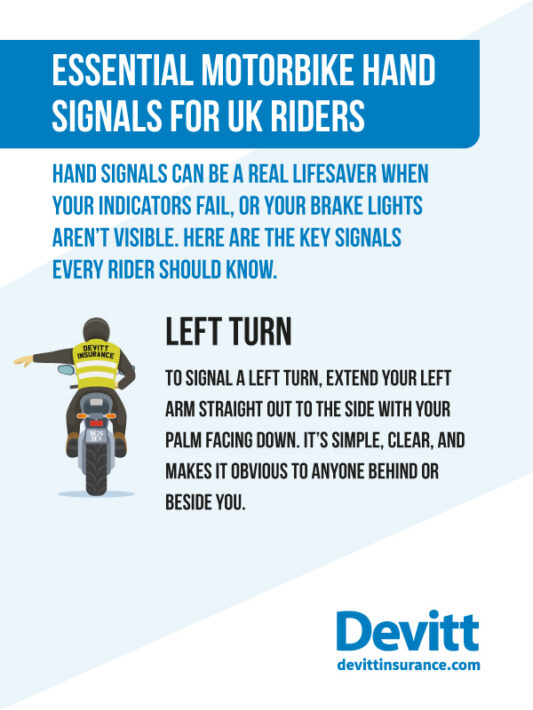
To signal a left turn, extend your left arm straight out to the side with your palm facing down. It’s simple, clear, and makes it obvious to anyone behind or beside you.
Right turn
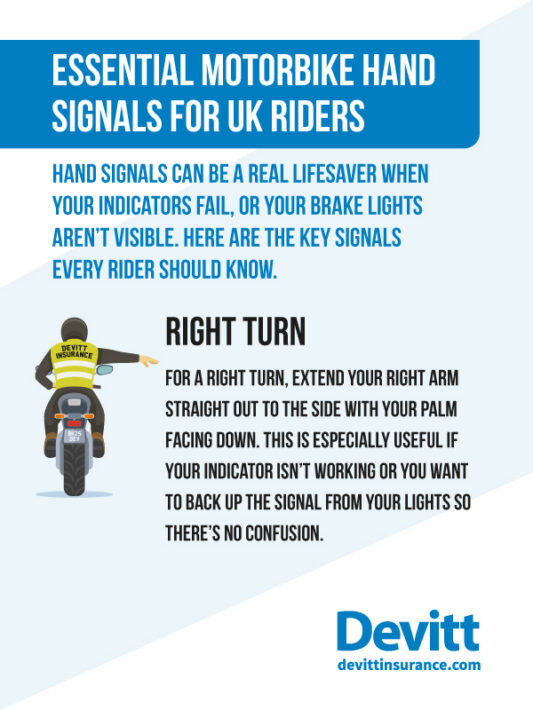
For a right turn, extend your right arm straight out to the side with your palm facing down. This is especially useful if your indicator isn’t working or you want to back up the signal from your lights so there’s no confusion.
Slow down
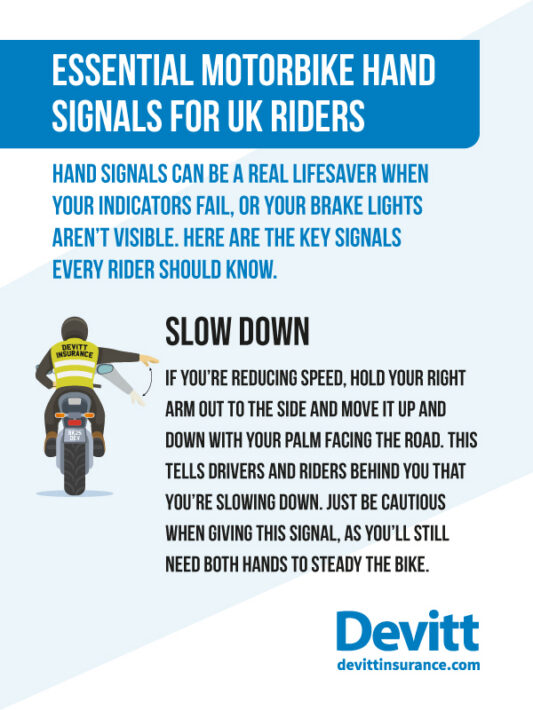
If you’re reducing speed, hold your left arm out to the side and move it up and down with your palm facing the road. This tells drivers and riders behind you that you’re slowing down. Just be cautious when giving this signal, as you’ll still need both hands to steady the bike.
Stop
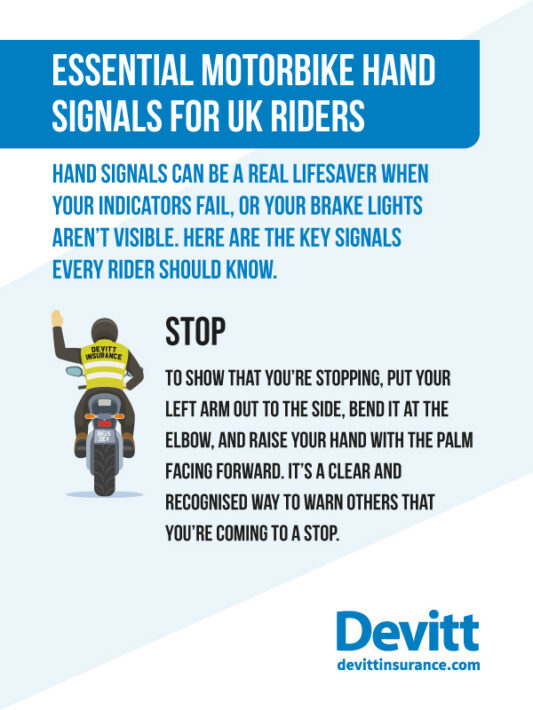
To show that you’re stopping, put your left arm out to the side, bend it at the elbow, and raise your hand with the palm facing forward. It’s a clear and recognised way to warn others that you’re coming to a stop.
Group riding signals for motorcyclists
When you’re riding in a group, communication is key. Hand signals let you share messages quickly and clearly so everyone knows what’s happening and can ride safely together. These are the most common group riding signals you’ll come across.
Follow me
Raise your left arm straight up with your palm facing forward. This is an easy way to show the group you’re taking the lead and that they should follow you.
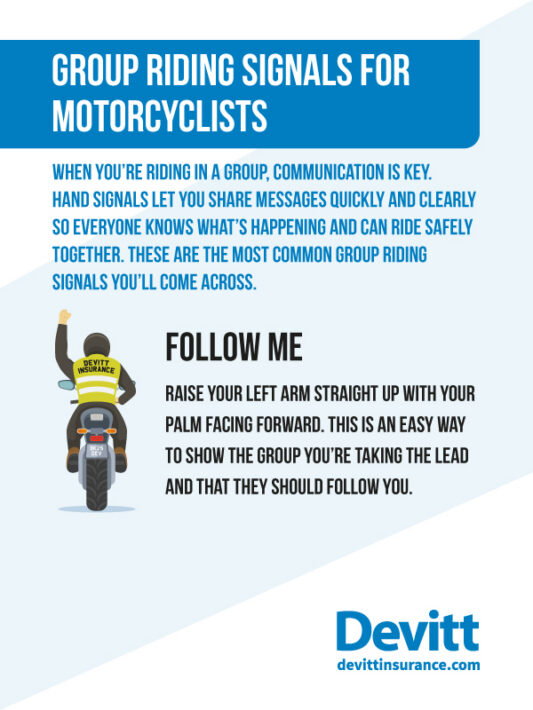
Single file/double file
To ride in single file, hold your left arm up with your index finger pointing straight up. For double file, raise your index and middle fingers together. Both of these signals can quickly and safely get everyone into the right formation.
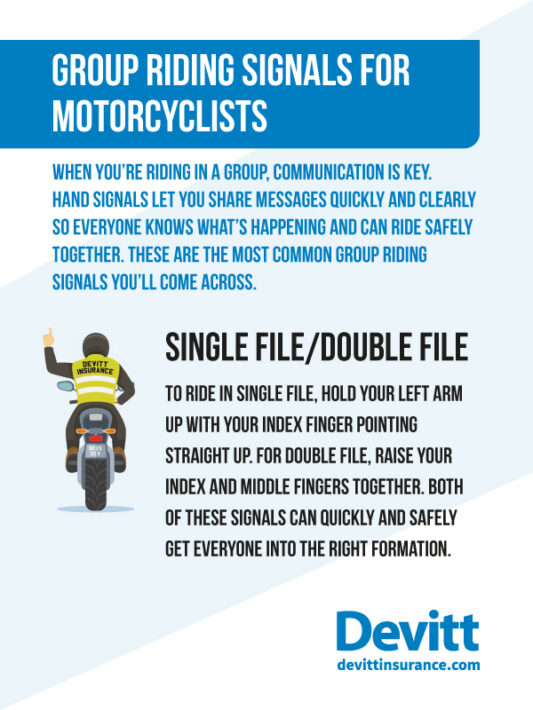
Pull over
Swing your left arm over your shoulder and point to where you want the group to stop to make sure everyone pulls over safely in the same place.
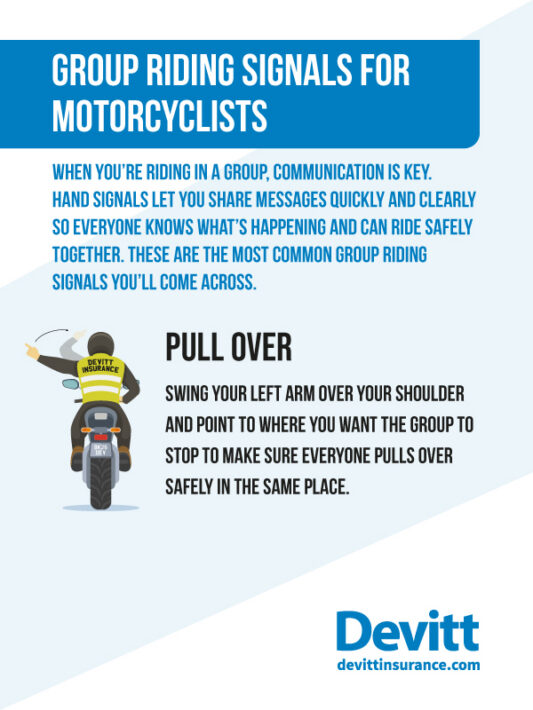
Hazard ahead
Point with your hand or foot on the same side as the hazard. For example, use your left side if there’s gravel, debris, or a pothole on the left of the road. This makes sure riders behind you have extra time to avoid it and helps to keep your group riders safe.
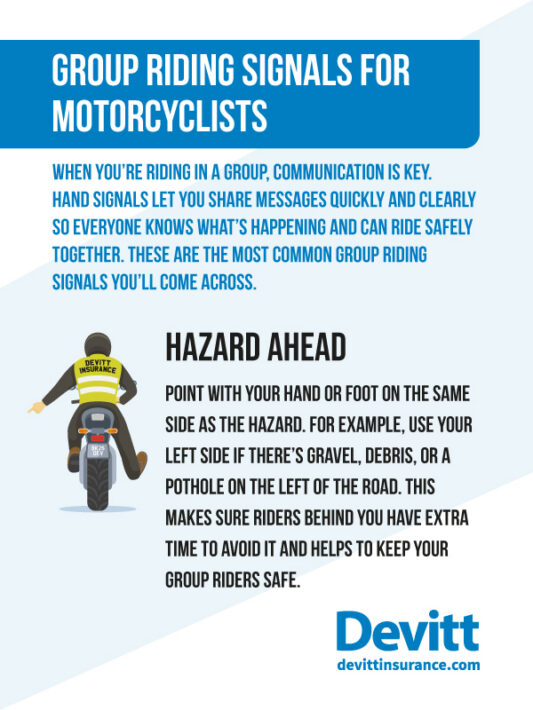
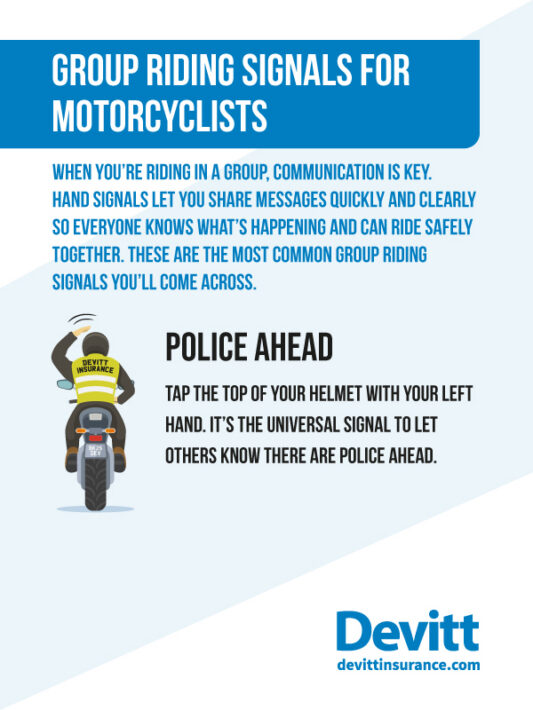
Police ahead
Tap the top of your helmet with your left hand. It’s the universal signal to let others know there are police ahead.
When and how to use hand signals safely and legally
Hand signals are a great backup, but they only work if you use them safely and at the right time. Here are a few best practices to keep in mind:
- Make sure you’re visible: Hand signals are most effective in daylight or in low-visibility conditions, like fog or heavy rain. Always make the gesture big and clear so there’s no confusion.
- Use them in groups: When riding with others, hand signals help keep the group together and aware of what’s happening ahead. Pass signals back so everyone gets the message.
- Combine with indicators: If your lights are working, use them as well as a hand signal. The extra confirmation reduces the risk of being missed by drivers who aren’t paying full attention.
- Stay legal: The Highway Code warns against any gestures that could be unsafe or misleading. Stick to recognised signals only and always signal in plenty of time.
Stay safe, be seen, and keep yourself and your bike safe
Bike hand signals might seem simple, but they’re an essential part of your road safety. Whether you’re riding solo, in a group, or dealing with poor visibility, these gestures make sure other road users know what you’re doing.
Staying safe on the road isn’t just about knowing the rules. It’s about being visible, predictable, and prepared.
At Devitt, we’ve been arranging motorbike insurance for UK riders since 1936. Our cover is built to suit all types of riders, wherever your bike takes you. We can offer cover for classic bikes, custom builds, scooters, superbikes and more, plus optional extras like breakdown cover, legal expenses and helmet and leathers protection. Call us on 0808 503 4747 or fill in our online form to get an instant quote.
Disclaimer: The sole purpose of this article is to provide guidance on the issues covered. This article is not intended to give legal advice, and, accordingly, it should not be relied upon. It should not be regarded as a comprehensive statement of the law and/or market practice in this area. We make no claims as to the completeness or accuracy of the information contained herein or in the links which were live at the date of publication.
You should not act upon (or should refrain from acting upon) information in this publication without first seeking specific legal and/or specialist advice. Devitt, a trading name of Devitt Insurance Services Limited, accepts no liability for any inaccuracy, omission or mistake in this publication, nor will we be responsible for any loss which may be suffered as a result of any person relying on the information contained herein.
Disclaimer: the sole purpose of this article is to provide guidance on the issues covered. This article is not intended to give legal advice, and, accordingly, it should not be relied upon. It should not be regarded as a comprehensive statement of the law and/or market practice in this area. We make no claims as to the completeness or accuracy of the information contained herein or in the links which were live at the date of publication.
You should not act upon (or should refrain from acting upon) information in this publication without first seeking specific legal and/or specialist advice. Arthur J. Gallagher Insurance Brokers Limited trading as Devitt accepts no liability for any inaccuracy, omission or mistake in this publication, nor will we be responsible for any loss which may be suffered as a result of any person relying on the information contained herein.