

A helmet is an important piece of safety equipment for all motorcycle riders to wear. Motorcycle helmet laws in the UK require riders and passengers to wear an approved safety helmet when riding on public roads, subject to a small number of exemptions, such as for turban-wearing Sikh riders. Understanding these rules, along with motorcycle helmet safety standards and safety ratings, may help riders make informed decisions when buying a suitable helmet. Meeting the legal requirements is essential, but riders should also think about comfort, fit, and safety performance when choosing their helmet.
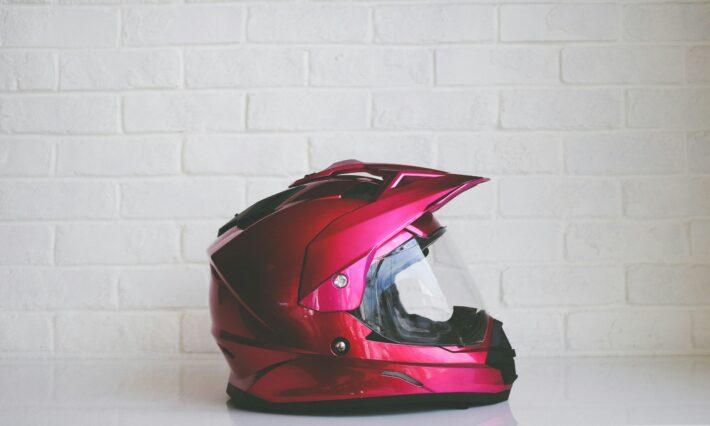
This guide explains the motorcycle helmet laws UK riders should be aware of, along with the standards a helmet should meet and how ratings work. This guide also covers the motorcycle helmet safety standards linked to fines and enforcement in the UK, so riders understand the consequences of non-compliance.
Why Motorcycle Helmets Matter
Motorcycle helmets play a vital role in reducing the risk of serious head injuries and are widely recognised as an effective motorcycle safety measure. Modern helmets incorporate advanced safety materials and designs that are engineered to absorb and disperse impact forces, helping to protect the skull, brain, and face during a collision.

No helmet can eliminate the risk of injury entirely. However, wearing a properly fitted helmet that meets recognised motorcycle helmet safety standards may significantly improve protection in the event of a crash.
Alongside wearing suitable protective gear, riders may also wish to review their motorcycle insurance options as part of staying safe and prepared on the road.
Motorcycle Helmet Laws UK: What the Rules Cover
Motorcycle helmet laws in the UK set out the core legal requirements for riders and passengers. Under this legislation, riders and passengers should wear a safety helmet when riding on public roads, and that helmet should meet the legal standards recognised in UK law. It should also be securely fastened while riding. A small number of exemptions apply in specific circumstances.
All legal requirements should be checked against current GOV.UK guidance, as motorcycle helmet laws in the UK may be updated over time. The main points to be aware of include the following.
- Who must wear a helmet: riders and passengers on motorcycles and mopeds used on public roads.
- Approved helmet requirements: the helmet should meet the recognised UK safety standards and should be correctly fastened.
- Passenger requirements: passengers are subject to the same helmet requirements as riders under the UK motorcycle helmet laws.
- Exemptions: limited exemptions apply, including a religious exemption for turban-wearing Sikh riders.
- Potential penalties: under motorcycle helmet laws in the UK, non-compliance may result in a fine, and in some circumstances, penalty points.
Are There Any Exemptions to Motorcycle Helmet Laws?
A small number of legal exemptions exist within motorcycle helmet laws in the UK.
The religious exemption for turban-wearing Sikh riders is the most widely recognised, introduced under the Motor-Cycle Crash Helmets (Religious Exemption) Act 1976. This means a Sikh rider wearing a turban is not required to wear a helmet while riding a motorcycle or moped.
Exemptions of this kind are limited and specific within the wider framework of motorcycle helmet laws UK, so riders should always refer to current GOV.UK guidance to check whether their particular circumstance qualifies.
What Standards Are Approved in the UK?
Motorcycle helmet laws in the UK link closely to the safety standards a helmet should meet. Helmets sold for road use should meet a recognised motorcycle helmet safety standard, which acts as the legal benchmark for road use, and approval markings help riders identify helmets that comply.
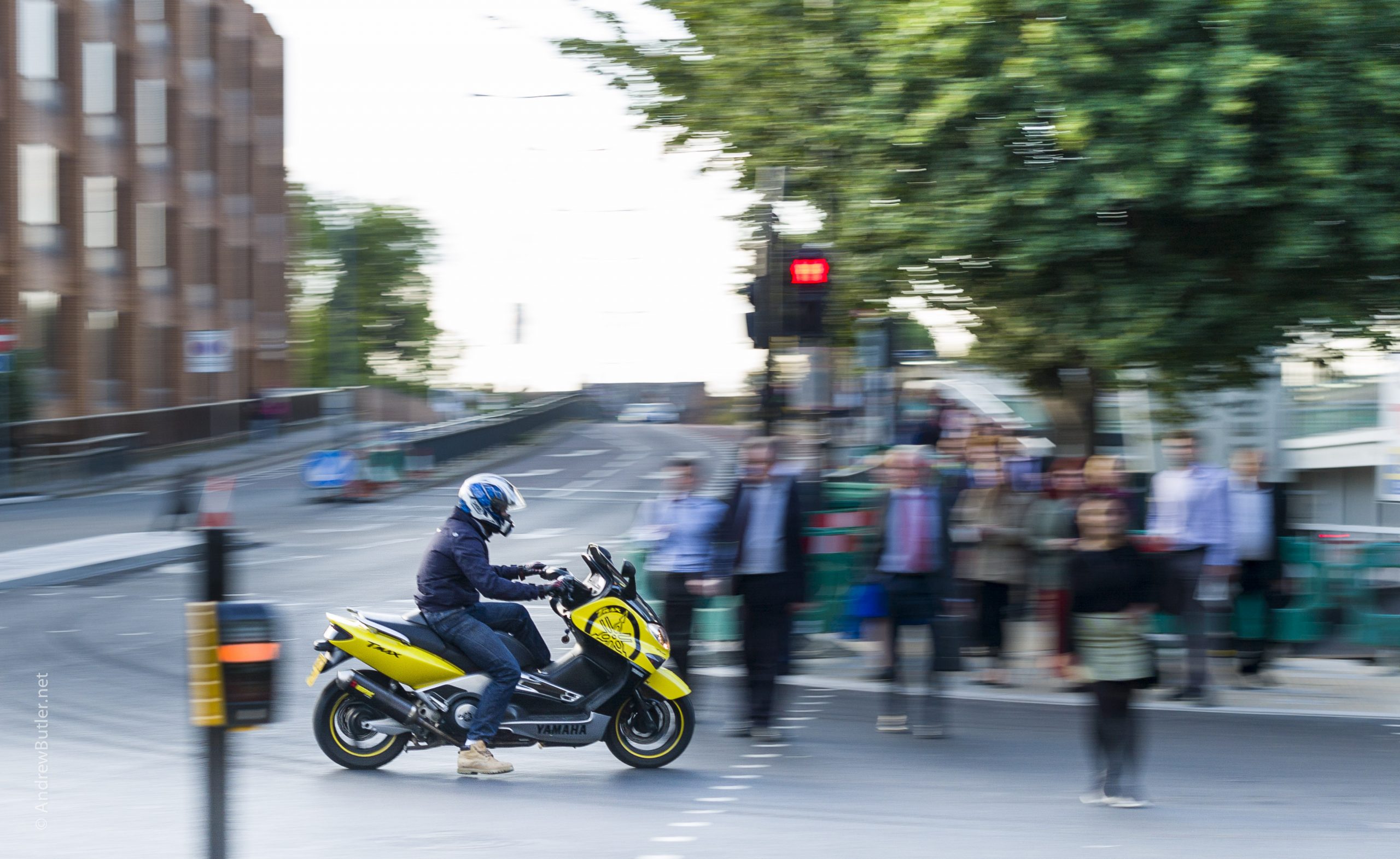
Regulators review these standards periodically as testing methods evolve.
Under current UK guidance, a helmet should meet one of the following standards:
- British Standard BS 6658:1985 and carry the BSI Kitemark.
- UNECE Regulation 22.05.
- UNECE Regulation 22.06.
- A European Economic Area member standard offering at least the same safety and protection as BS 6658:1985 and carrying a mark equivalent to the BSI Kitemark.
Riders can find further detail on approved motorcycle helmet safety standards via GOV.UK’s safety advice on helmets, visors, and goggles.
Understanding Motorcycle Helmet Safety Standards and Ratings
Motorcycle helmets are assessed in two different ways: through safety standards and through safety ratings. These are not the same thing, and riders should understand the distinction.
Motorcycle helmet safety standards determine whether a helmet is approved for road use. A helmet either meets a recognised standard or falls short of it.
Motorcycle helmet safety ratings provide further information about how helmets compare to one another once they have already met the legal standard. In the UK, this is where motorcycle helmet safety ratings schemes such as SHARP come in.
Riders who are unsure whether a specific helmet meets these standards can refer to GOV.UK’s safety advice on helmets, visors, and goggles for further confirmation.
What Does ECE 22.06 Mean?
ECE 22.06 is the latest motorcycle helmet certification standard recognised in the UK and much of Europe, as confirmed in SHARP’s explainer on ECE R22-06. It builds on the earlier ECE 22.05 standard by introducing a wider range of enhanced impact testing, including tests carried out at more points across the shell and at a broader range of speeds. It also introduces rotational impact testing, which assesses how well a helmet manages the twisting forces that can occur in a glancing blow, alongside more thorough accessory testing for features such as visors and communication units.
ECE 22.06 replaced ECE 22.05 to reflect a wider understanding of how head injuries occur in real-world collisions. It is worth noting that ECE 22.06 is a certification standard, not a rating system. It confirms whether a helmet is approved, rather than comparing how different approved helmets perform against each other.
What Are SHARP Motorcycle Helmet Safety Ratings?
SHARP, the Safety Helmet Assessment and Rating Programme, is the UK’s independent motorcycle helmet safety ratings scheme. It rates approved helmets on a scale of one to five stars, based on the level of protection they offer in testing.
SHARP only awards safety ratings to helmets that already meet the legal approval standards described above. This means a helmet with a lower SHARP star rating may still be fully road legal. The rating exists to help riders compare performance between approved helmets, not to determine legal compliance.
Safety Standards vs Safety Ratings: What’s the Difference?
| Feature | Motorcycle Helmet Safety Standards | Motorcycle Helmet Safety Ratings |
| Purpose | Determine whether a helmet meets the legal requirements for road use. | Compare the safety performance of helmets that have already been approved. |
| Example | ECE 22.06. | SHARP. |
| Requirement | Required for legal road use. | Optional purchasing decision tool. |
| Assessment | Pass or fail. | Star-based performance rating. |
How to Check Whether a Motorcycle Helmet Is Road Legal
Riders should verify a helmet’s approval status before using it on public roads. This may help support compliance with motorcycle helmet laws in the UK and may also help riders choose a helmet that is suitable for their needs. Steps to consider include the following.
- Checking approval labels and markings inside the helmet.
- Identifying the certification information, such as an ECE 22.05 or ECE 22.06 marking.
- Inspecting manufacturer documentation that accompanies the helmet.
- Buying from reputable retailers who are able to confirm a helmet’s approval status.
A helmet check may also be a useful moment to think about wider road-legal compliance, including making sure your motorcycle’s MOT is current and valid, alongside staying within motorcycle helmet laws in the UK.
What Are the Penalties for Not Wearing a Motorcycle Helmet?
Motorcycle helmet laws in the UK carry potential legal consequences for non-compliance. Riders who do not wear an approved, correctly fastened helmet may face a fine, and in some cases, penalty points may also apply, where applicable under current legislation. Where a collision occurs, a lack of proper headgear could also be considered in any subsequent legal proceedings.
Penalties connected to non-compliance with motorcycle helmet safety standards may change over time, so riders should refer to current GOV.UK guidance for the latest position on fines and enforcement.
Complying with motorcycle helmet laws in the UK is not only a legal matter. It also plays a part in helping to reduce the risk of serious injury.
How to Choose a Safe Motorcycle Helmet
Safety should be a primary consideration when choosing a helmet, alongside compliance with motorcycle helmet laws in the UK. Riders may wish to consider the following factors.
- A correctly fitted helmet – as an ill-fitting helmet may reduce rider protection.
- Approved safety standards – to help support compliance with motorcycle helmet laws in the UK.
- Helmet type – such as full-face, flip-up, open-face, modular, off-road, or dual-sport.
- Comfort – particularly for longer rides.
- Visibility – including colour and reflective detailing.
- Weight – may affect comfort over time.
- Ventilation – to help manage temperature and visor fogging.
- Retention system quality – to help keep the helmet securely in place.
Where applicable, riders should check the helmet’s homologation code, a safety certification label usually sewn into the helmet chin strap. This code confirms the country of approval, the ECE regulation series, the helmet type, and unique production number.
A typical code follows this structure: the letter “E” followed by a number identifying the approving country, the ECE series (for example, “06” for ECE 22.06), a letter denoting helmet type, a four-digit approval number, and a production serial number after a hyphen. For example, a code reading E11 [country] 06 [ECE series] P [helmet type] 1234-5678 [approval and serial numbers] (illustrative only, not a real registered code) would represent a full-face helmet approved under ECE 22.06. The number “11” specifically identifies the UK as the approving country, so riders are able to use it to confirm a helmet was tested and approved under UK-recognised standards.
Under ECE approval, the letters used to denote helmet type are as follows:
- J denotes an open-face (jet) helmet, with no part covering the lower face.
- NP denotes a jet-style helmet with a detachable or moveable lower face part that does not protect the chin.
- P denotes a full-face helmet, with a fixed, moveable, or detachable part covering or protecting the chin.
- PJ denotes a modular helmet, approved for use with the chin bar in both the open and closed positions.
A helmet that fits correctly and that riders wear properly is generally considered the more suitable choice, regardless of price or styling.
For a closer look at helmet types, sizing, and how to check a helmet is genuine, our guide to motorcycle helmets covers this in more depth.
When Should You Replace a Motorcycle Helmet?
Motorcycle helmets do not last indefinitely. Riders should consider replacing a helmet in the following circumstances.
- After a significant impact or crash, even if damage is not visible.
- Where there are visible signs of damage, such as cracks or a loose lining.
- Where age-related deterioration has affected the materials.
- Where general wear and tear may have affected safety performance.
- In line with the manufacturer’s recommended replacement guidance.
Damage is not always visible from the outside. Internal foam may be compromised in a way that is not obvious, which is why manufacturer guidance and a cautious approach to replacement matter.
Checking your helmet regularly should sit alongside other routine checks, such as those covered in our basic motorcycle maintenance guide.
Protect Yourself and Your Bike with Motorcycle Insurance from Devitt
Understanding motorcycle helmet laws in the UK, along with the safety standards and ratings behind them, may help riders make more informed choices about the gear they wear. Wearing a properly fitted, approved helmet remains an important step for riders to take.
Devitt provides motorcycle insurance to suit a range of riders and motorcycles and has been for more than 90 years. If you are looking to explore your motorcycle insurance options, get in touch with our team or get a quote for motorcycle insurance based on your needs.