

In the UK, lane splitting and motorcycle filtering on UK roads are two techniques many riders use when moving through slow or stationary traffic. Yet the legalities around both can cause confusion, particularly regarding what is and is not permitted on UK roads, and the behaviours and precautions riders must follow when filtering to comply with the Highway Code. A common question among riders is “Is lane splitting legal in the UK, and is filtering permitted?”
What Is Lane Splitting?
Lane splitting refers to a motorcycle travelling between two lanes of moving or slow-moving traffic. Unlike filtering, which typically occurs alongside stationary or very slow queues, lane splitting tends to happen when traffic is still in motion, often at a reduced speed.
The term is sometimes used interchangeably with filtering, which adds to the confusion. Key points to be aware of:
- It typically occurs when traffic is moving slowly but has not stopped completely.
- It is more commonly associated with riding between vehicles on multi-lane roads, such as dual carriageways or motorways.
- The technique is often confused with filtering, though the two are not identical.
- When carried out carefully, it can reduce congestion and journey times.
An example of lane splitting is a rider travelling between lanes on a busy dual carriageway where traffic is crawling at around 15mph. Understanding what lane splitting involves provides useful context for the legal considerations that apply to it on UK roads and how it differs from filtering.
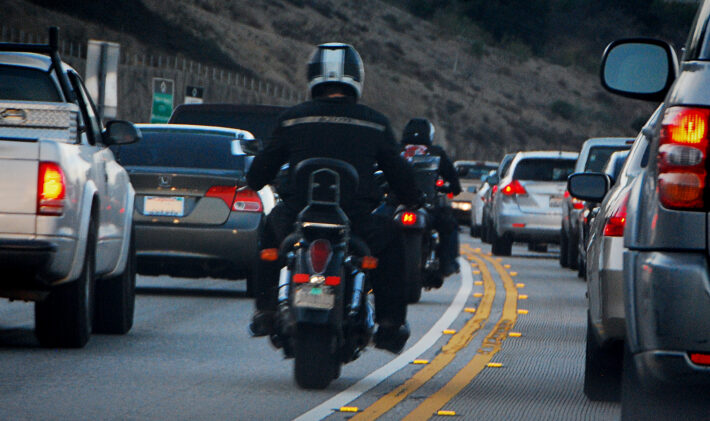
What Is Motorcycle Filtering?
Motorcycle filtering on UK roads generally refers to passing slow-moving or stationary traffic. It is one of the more recognised riding practices among UK motorcyclists and is commonly used in urban environments where congestion is frequent.
- Filtering may occur between lanes or alongside queues of traffic.
- It is commonly used on congested urban roads and at traffic lights.
- It is recognised within the UK riding guidance and training programmes.
- It requires careful observation and anticipation of hazards at all times.
Many riders use filtering to improve traffic flow and reduce time spent in congestion because it allows motorcycles to safely pass slow-moving or stationary traffic when conditions permit. A typical example would be a rider moving steadily past a queue of stationary vehicles at a junction, maintaining a pace that allows for safe stops if needed.
Is Lane Splitting Legal in the UK?
For riders searching “Is lane splitting legal in the UK?”, there are no specific UK laws that explicitly ban it. However, the way the manoeuvre is carried out remains important.
Whether a manoeuvre is considered lawful depends largely on how it is carried out. Riders remain responsible for riding safely and within the law at all times. If lane splitting is performed in a way that is considered dangerous or careless, a rider may face penalties under existing road traffic legislation. Likewise, police and insurers may consider rider behaviour if an incident occurs.
The distinction is important for anyone asking whether lane splitting is legal in the UK, as legality often depends on how the manoeuvre is carried out. It may not be expressly illegal yet could still result in a prosecution if it is judged to have been performed recklessly or without due care.
Is Lane Filtering Legal in the UK?
Lane filtering is a recognised riding practice in the UK, and when in busy cities, you’re just as likely to see police motorcyclists filtering as you are commuters and couriers.
It is generally permitted when carried out safely and in line with Highway Code guidance.
Key points to consider:
- Filtering is generally permitted when performed with care and at a suitable speed.
- The Highway Code provides relevant guidance for motorcyclists on this topic.
- Riders should remain aware of surrounding traffic conditions at all times.
- Other road users may not anticipate motorcycles filtering through traffic.
For example, a rider filtering past a queue of stationary vehicles at a speed that allows a safe stop may be carrying out a manoeuvre that is generally permitted. The same action performed at an unsafe speed, or in circumstances where it creates hazards, could be viewed differently.
What Does the Highway Code Say About Motorcycle Filtering?
The Highway Code guidance for motorcyclists might not explicitly endorse filtering but acknowledges it as part of riding in traffic. Rule 88 (manoeuvring) of the Highway Code advises motorcyclists to be aware of what is happening around them at all times and to be ready to take appropriate action. Riders should be familiar with, respect, and follow the official guidance.
Riders should be aware of the following hazards when filtering:
- Driver blind spots, particularly when passing larger vehicles.
- Hazards such as vehicle doors opening unexpectedly into the rider’s path.
- Vehicles changing lanes without signalling.
- Pedestrians crossing between stationary or slow-moving traffic.
- Road markings, junctions, and emerging side roads.
Anticipation and defensive riding are central to safe filtering. Following Highway Code guidance can help riders reduce risk in these situations.
Lane Splitting vs Filtering: What’s the Difference?
The two terms are often used interchangeably, but a clear definition of both helps riders understand when each manoeuvre may be suitable, and when the circumstances of carrying it out may lead to prosecution. The table below sets out a clear comparison.
| Factor | Lane Splitting | Filtering |
| Definition | Riding between lanes of moving traffic. | Passing slow-moving or stationary traffic. |
| Typical Traffic Conditions | Slow-moving but still in motion. | Stationary or very slow-moving. |
| Common Locations | Multi-lane roads or dual carriageways. | Urban roads, traffic lights, or roadworks. |
| UK Legal Considerations | No specific prohibition; legality depends on the execution. | Generally permitted when carried out safely. |
| Associated Risks | Higher due to moving traffic on both sides. | Lower, although hazards still present. |
Risk levels can differ depending on traffic speed and road layout. Lane splitting in faster-moving traffic carries a higher risk profile than filtering past a stationary queue.
When Is Motorcycle Filtering on UK Roads Most Appropriate?
There are situations where filtering may be safer and more effective than remaining stationary in traffic. These include:
- Stationary traffic queues at junctions or traffic lights.
- Congested urban roads where traffic movement is very slow.
- Traffic approaching temporary roadworks with a reduced speed limit.
- Slow-moving motorway congestion where gaps are clear and consistent.
Before filtering, riders should assess several factors:
- Available space between vehicles.
- Vehicle positioning and potential for movement.
- Road surface conditions.
- Visibility ahead and through gaps in traffic.
- The speed of surrounding traffic.
If any of these factors raise concern, it may be more suitable to wait in the traffic queue rather than attempt to filter.
Common Hazards When Lane Splitting or Filtering
Hazard awareness is central to safe riding in any conditions. When filtering or lane splitting, riders should be particularly alert to the following:
- Vehicles changing lanes without signalling.
- Drivers opening doors unexpectedly.
- Pedestrians stepping out between stationary vehicles.
- Cyclists filtering through queues.
- Road debris, potholes, or uneven surfaces between lanes.
- Large vehicles that restrict visibility and create wider blind spots.
- Vehicles making sudden U-turns in congested streets.
- Junctions and side roads where vehicles may emerge without warning.
To avoid harming themselves or others around them, riders should continuously scan ahead and to the sides, not simply focus on the gap immediately in front of them.
Tips for Safe Motorcycle Filtering
Practical techniques can make a meaningful difference to safety when filtering. Riders may find the following useful:
- Keep speed appropriate to conditions and no faster than necessary to make progress.
- Maintain a clear escape route in case a vehicle moves suddenly.
- Use observations and mirrors continuously, not just relying on looking ahead.
- Avoid aggressive or hurried filtering manoeuvres.
- Be prepared for sudden vehicle movements at all times.
- Use road positioning effectively to stay visible to other drivers.
- Avoid lingering in blind spots, particularly alongside larger vehicles.
- Stay as visible as possible through positioning and lighting.
Can You Filter on Motorways?
Just as riders often ask whether lane splitting is legal in the UK, filtering on motorways also carries important legal and safety considerations. Filtering on motorways may be carried out in certain circumstances but warrants particular care. Heavy motorway congestion, including stop-start traffic or standing queues, can create opportunities for filtering. However, conditions on motorways present specific risks.
Riders should be especially cautious around large vehicles such as lorries and coaches, where blind spots are considerably larger. Motorway-specific risks to consider include:
- Narrow gaps between larger vehicles.
- Limited escape routes if traffic moves suddenly.
- Driver fatigue leads to less predictable behaviour.
- Sudden lane changes by vehicles that may not expect a motorcycle to be filtering.
When traffic is moving at speed, filtering should not be attempted. For safety, it is only in genuinely slow-moving or stationary motorway conditions that filtering may be considered.
Could Filtering Affect an Insurance Claim?
Filtering itself might not automatically invalidate an insurance policy or prevent a claim from being considered. However, the circumstances surrounding an incident will be assessed by the insurer, and the outcome is dependent on a case-by-case basis.
Key points riders should know:
- Liability is assessed based on the specific circumstances of the incident, not simply the act of filtering.
- Rider behaviour and road conditions at the time may be considered.
- Evidence such as witness statements and dashcam footage may be reviewed.
- Each claim is assessed individually on its own facts.
If you have specific questions about your motorcycle insurance policy, speaking with your insurance provider directly is the most suitable course of action.
Common Myths About Lane Splitting and Filtering
Several widespread misconceptions exist around lane splitting and filtering, both amongst the rider and driver communities. Below are some of the more common ones, along with factual context.
Myth: ‘Filtering is illegal in the UK.’
Filtering is a recognised riding practice and is generally permitted when carried out safely. Rule 88 of the Highway Code (Manoeuvring) states that when filtering in slow-moving traffic, riders should take care and keep their speed low. Rule 160 further requires all road users to be aware of cycles and motorcycles that may be filtering through traffic, recognising that these riders are particularly vulnerable. These two references within the Highway Code confirm that filtering is an anticipated and permitted manoeuvre on UK roads.
Myth: ‘Motorcyclists always have priority when filtering.’
Motorcyclists have no automatic priority over other road users when filtering. All riders are subject to the same road traffic laws as other vehicles. There is no explicit mention of an entitlement to filter within the Highway Code. The official guidance sets out expectations around how the manoeuvre should be performed safely, not a right to be given precedence by other road users.
Myth: ‘Drivers must move aside for filtering motorcycles.’
Drivers are under no legal obligation to actively make way for a filtering motorcycle. Riders should not rely on other vehicles creating space for them. The Highway Code’s Rule 160 advises drivers to be aware of motorcyclists filtering through traffic, recognising their increased vulnerability. It informs drivers they should give motorcyclists ‘plenty of room, especially if you are driving a long vehicle or towing a trailer’ – this is an awareness requirement, not a duty to move aside.
Myth: ‘Filtering cannot be done on motorways.’
Filtering may be carried out on motorways in conditions of heavy congestion or standing traffic, though it requires careful judgement. Rule 88 of the UK Highway Code guidance emphasises that filtering must be executed safely and responsibly, with motorcyclists using their mirrors to look behind and positioning themselves so the driver in front can see them in their mirrors. Filtering is to be done without endangering other road users or violating traffic laws – this applies on motorways as it does on any other road.
Myth: ‘Insurance might not cover filtering accidents.’
Filtering alone might not invalidate a claim. How a claim is handled depends on the specific circumstances of the incident. If a motorcyclist was involved in an accident while filtering, an insurer may investigate whether the manoeuvre was performed safely and in accordance with the law – the act of filtering itself is not the determining factor. Riders with questions about how filtering may affect their own policy should speak directly with their insurance provider.
Stay Protected with Motorcycle Insurance from Devitt
In summary, motorcycle filtering is permitted on UK roads when carried out safely and responsibly. Riders asking whether lane splitting is legal in the UK should understand that there is no specific legal ban, but the manoeuvre may still be judged unlawful if carried out carelessly or dangerously. In either case, riders should focus on maintaining appropriate speeds, remaining alert to potential hazards, and following Highway Code guidance to help reduce risk and ride with confidence.
At Devitt, we have been helping riders arrange motorbike insurance for over 90 years, working to help riders find cover that is suited to their needs. To explore your motorcycle insurance options, contact our UK-based team on 0345 872 3614, or request your quote online in a matter of minutes.
Disclaimer: the sole purpose of this article is to provide guidance on the issues covered. This article is not intended to give legal advice, and, accordingly, it should not be relied upon. It should not be regarded as a comprehensive statement of the law and/or market practice in this area. We make no claims as to the completeness or accuracy of the information contained herein or in the links which were live at the date of publication.
You should not act upon (or should refrain from acting upon) information in this publication without first seeking specific legal and/or specialist advice. Arthur J. Gallagher Insurance Brokers Limited trading as Devitt accepts no liability for any inaccuracy, omission or mistake in this publication, nor will we be responsible for any loss which may be suffered as a result of any person relying on the information contained herein.