

Your pride and joy’s been resting over the winter months, and you’re itching to get back behind the handlebars.
But tempting as it may be, it’s best to give your bike a proper check before heading anywhere.
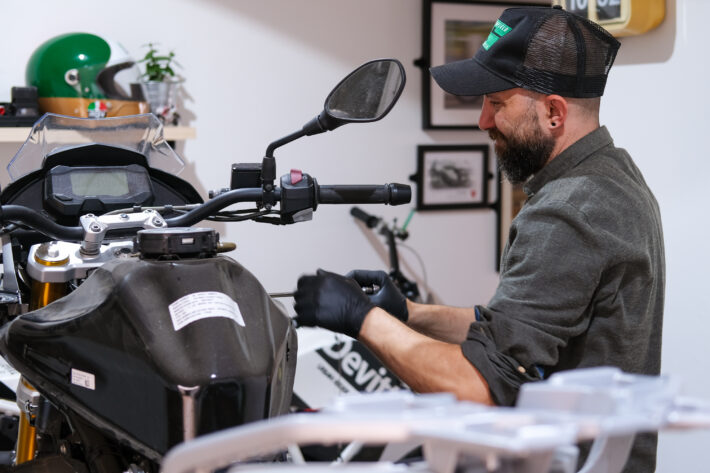
Without one, you could end up with worn brakes, a flat tyre, or a battery that gives up mid-journey. Not only could any of these situations cost you money, but they’re potentially dangerous too.
That’s why following a motorcycle start of season checklist is always worth considering. In this guide, we cover:
- Why a pre-season check matters
- A step-by-step motorcycle start of season checklist
- Extra spring maintenance tips
- When to book a professional service
Why a pre-season motorcycle check is important
It’s not just about peace of mind; there are several practical reasons to work through a start of season checklist before riding again:
- Safety: Brakes, tyres, and lights can all degrade when a bike is left standing. A quick check helps confirm they’re in working order
- Reliability: Fluids, chains, and electrics can all deteriorate over winter. Catching issues early can reduce the risk of a breakdown
- Cost savings: Spotting small problems now can prevent them from turning into more expensive repairs later in the year
- Legal compliance: Under the Road Traffic Act 1988, it’s an offence to use a vehicle on the road if it’s in a dangerous or unroadworthy condition
Motorcycle start of season checklist
From battery health to leaks or damage, here are the key things to look over before your first ride.

Check the battery
Batteries that have been sitting unused over winter may struggle when you try to start the bike. Signs of this include:
- Slow or laboured engine turnover
- Dim lights or display
- A clicking sound when you try to start the engine
If it’s flat, try recharging it with a smart charger. If it won’t hold a charge, it’s probably time for a new one.
Inspect tyres and tyre pressure
Tyres lose pressure when a bike sits unused, and the rubber itself can deteriorate too. Before you ride, look for:
- Cracks or dry rot in the sidewalls
- Flat spots from standing in one position for too long
- Tread depth – the UK legal minimum is 1mm across at least three quarters of the tread
It’s also advisable to check your tyre pressure against your manufacturer’s recommended settings. It shouldn’t take you too long and makes a big difference to how the bike handles and its overall safety.
Test brakes
Long periods of storage can take a toll on your brakes. Here’s what to look out for:
- Brake pads for wear: Pads thin down over time and with use. If the friction material looks thin or worn unevenly, they may need replacing
- Brake discs for surface corrosion: A thin layer of surface rust can develop on discs after a period of inactivity. Some light surface rust may clear after a few gentle brake applications, but deep pitting or heavy corrosion can affect braking performance
- Brake fluid levels: Fluid should sit between the minimum and maximum markers on the reservoir. Low fluid can sometimes point to worn pads or a leak elsewhere in the system, so it’s worth investigating the cause rather than simply topping up
If your brakes feel spongy when you apply them, there may be air or moisture in the system. That can reduce braking effectiveness, so it’s best to get them sorted before riding. A mechanic can bleed the brakes to remove any air and restore a firm feel at the lever.
Check engine oil and fluids
Fluids can degrade when a bike sits for months. Here’s what to check for:
- Engine oil level and condition: Use the sight glass or dipstick to check the level. Fresh oil should look amber or light brown. If it looks very dark, thick, or smells burnt, it may have degraded
- Coolant levels: If your bike is liquid-cooled, check the coolant reservoir sits between the min and max markers. Low coolant can lead to overheating, particularly on longer rides
- Brake fluid: Check levels and condition. Brake fluid can absorb moisture over time, which can lower its boiling point and affect braking performance
If the bike has been sitting for several months or more, a full oil change before your first ride is worth considering.
Inspect chain and drive system
Chain issues are a common problem riders find at the start of a new season. Before heading out, check:
- Chain tension: Too loose and it can slap around and wear unevenly. Too tight and it puts extra strain on the sprockets and bearings. Check your owner’s manual for the correct tension range for your bike
- Lubrication: A dry or sticky chain increases wear and can affect power delivery. If it looks dry, apply a suitable chain lubricant and work it in evenly across the full length
- Visible signs of rust or wear: A little surface rust doesn’t always mean the end of a chain, but heavy corrosion, stiff links, or visible wear on the sprocket teeth can suggest it’s time for a new chain and sprocket set
A well-maintained chain tends to last longer and helps the bike run more smoothly, so if it hasn’t been cleaned and lubricated over winter, now could be a good time.
Check lights and electrics
Working lights matter for visibility, but they’re also a legal requirement under the Road Vehicles Lighting Regulations 1989. Faulty lights can result in a fine or an MOT failure, so it’s worth a quick test of everything:
- Headlights (both high and low beam): Check both beams work and that the headlight is aimed correctly. A poorly aimed headlight can reduce your visibility at night and dazzle oncoming riders and drivers
- Brake lights: Get someone to help you check that both the front brake lever and rear brake pedal activate the brake light. A faulty brake light can make you far less visible to traffic behind you
- Indicators: All four should flash at a consistent rate. A very fast or slow flash can sometimes point to a failing bulb or an electrical fault worth looking into
- Horn: Give it a quick test. It’s a legal requirement, and it can be a useful tool when you need to make yourself known to other road users
If your bike uses traditional filament bulbs, it’s worth keeping a small selection of spares with you. They can fail without much warning, and it’s a straightforward fix if you’ve got the right bulb to hand.

Examine suspension and controls
How your bike feels under you depends a lot on the condition of its suspension and controls. Give these a check before your first ride:
- Forks for any signs of oil leaks: Look for oil residue or staining around the fork seals. Leaking forks can reduce suspension performance and, if oil reaches the front tyre or brake disc, can seriously affect handling and braking
- Rear suspension condition: Check for any signs of fluid leaks around the shock absorber, and make sure the suspension moves smoothly through its range. Worn or leaking rear suspension can make the bike feel unsettled, particularly over bumps or during cornering
- Throttle and clutch operation: The throttle should open freely and snap shut cleanly when released. The clutch lever should feel smooth and engage at a consistent point. Any stiffness, sticking, or unusual resistance can point to cables that need lubricating, adjusting, or replacing
If anything feels off, it’s best to get it looked at before committing to a longer ride.
Look for leaks or damage
Before you start the engine, take a few minutes to crouch down and have a proper look around the bike. Check for:
- Oil leaks: Look for dark staining or pooling beneath the engine, gearbox, or around gaskets and seals. Even a slow leak can worsen over time and may point to a seal or gasket that needs attention
- Fuel leaks: Check around the fuel tank, fuel lines, and carburettor or injectors. A fuel leak is a fire risk and should be taken seriously. If you can smell fuel when the bike is parked up, investigate before you ride
- Coolant residue: On liquid-cooled bikes, look for dried deposits or wet spots around hoses, the radiator, and the water pump. A coolant leak can lead to overheating if it’s left unresolved
Any leaks should be sorted. Even a minor one can worsen quickly once the engine’s running and up to temperature, and in some cases, it can become a safety risk out on the road.
Spring maintenance for motorcycles: extra tips
Once you’ve worked through the main checklist, these additional spring maintenance for motorcycles tips can help make sure you’re starting the season in good shape:
- Give the bike a thorough clean to shift any dust, grime, or corrosion that’s built up over winter
- Check that fasteners and bolts are secure, as vibration over time can work things loose
- Inspect the air filter and replace it if it’s clogged or worn
- Start the engine and let it warm briefly before riding off gently
- Take a short test ride close to home before committing to a longer journey
When to book a professional motorcycle service
Even if you’re confident working through a checklist yourself, some jobs are better left to a qualified mechanic. It may be worth booking a professional service if:
- Your bike has been unused for an extended period, such as over winter or longer
- You’ve spotted a fault during your checks that you’re not comfortable fixing yourself
- You’re unsure about any part of the maintenance process
A professional service can give your bike a thorough once-over, help confirm it’s roadworthy, and flag anything you might have missed.
Protect your motorbike with motorbike insurance from Devitt
Once your bike is road-ready, the next question is: have you got suitable insurance in place? If the answer is no, or if your policy is approaching its renewal date, we’re here to help.
At Devitt, we’ve been providing motorbike insurance for over 90 years, so we’re well-placed to help you find you a policy that suits how you ride. We’re also rated 4.7 on Trustpilot and include up to 90 days EU cover as standard*
*Up to 90 days EU cover is included in all our motorcycle policies. Please see your policy documents full details.
Trustpilot score correct as at May 2026
You can get a quote online or contact our UK-based team to find out more.
Disclaimer: the sole purpose of this article is to provide guidance on the issues covered. This article is not intended to give legal advice, and, accordingly, it should not be relied upon. It should not be regarded as a comprehensive statement of the law and/or market practice in this area. We make no claims as to the completeness or accuracy of the information contained herein or in the links which were live at the date of publication.
You should not act upon (or should refrain from acting upon) information in this publication without first seeking specific legal and/or specialist advice. Arthur J. Gallagher Insurance Brokers Limited trading as Devitt accepts no liability for any inaccuracy, omission or mistake in this publication, nor will we be responsible for any loss which may be suffered as a result of any person relying on the information contained herein.