

Motorbike boots aren’t just a nice-to-have, they’re essential for your safety. Especially when you consider they can provide up to 10 times as much protection as regular shoes.
To help you pick the right pair, we’ve put together a guide that covers safety considerations, the different styles available, and the materials commonly found on each type.
Why choosing the right motorcycle boots matters
First and foremost, motorcycle boots provide a level of protection you simply won’t get with everyday trainers.
If you’re involved in an accident, such as falling off your bike or suffering a burn from your exhaust pipe, motorbike boots reduce the risk and severity of injury, thanks to features like reinforced ankle support and abrasion-resistant leather.
But that’s not all. A well-made pair also provides many other benefits, including protection from the elements and long-lasting comfort. Not to mention the classic biker aesthetic.
The different types of motorcycle boots
Motorcycle boots come in all shapes and sizes. With each style made for a specific type of ride, the right pair for you will largely depend on how you’ll be riding.
Below, we outline the available styles and their pros and cons.
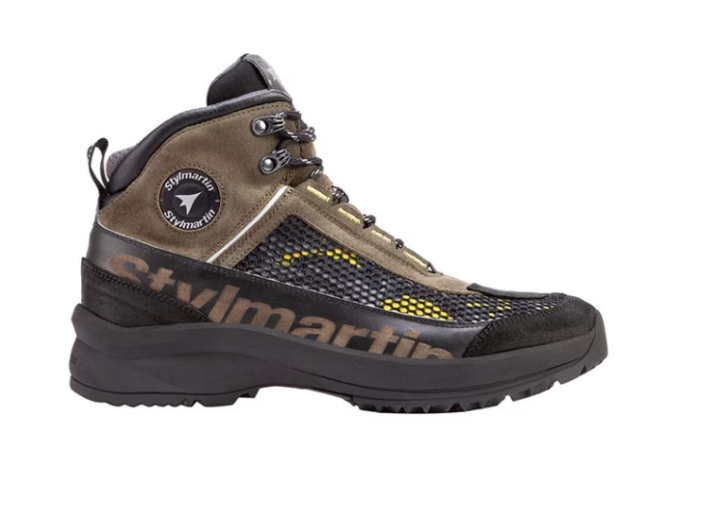
Adventure motorcycle boots
Looking to split your time between long road riding and off-road terrain? Adventure boots may be ideal. Sitting somewhere between touring and dirt motorcycle boots, they’re engineered to provide comfort and protection on mixed terrain and changing weather.
Pros
- They’re versatile, ideal for on-road and off-road riding
- Offer more protection than touring boots, usually around the ankle and shin
- A stiffer construction helps protect your ankle when putting your foot down on loose or uneven ground
- Flexible enough for road riding and walking during stops
- Can handle a wide range of weather, from the rain to cold and mud
Cons
- Heavier and bulkier than standard touring or casual motorcycle boots
- Not as flexible or lightweight as road-focused styles
- Often provide less protection than motocross or off-road motorcycle boots
- Can take a long time to break in because of their sturdy build
Touring boots
If you’re riding long-distance, consider touring boots. While they’re often more expensive and less comfortable than casual boots, they offer greater support, protection, and coverage from the elements.
Pros
- Mid- to full-height design provides plenty of protection for your foot, ankle, and lower leg
- Durable construction for spending long hours on your motorbike
- Can handle all kinds of weather, often boasting waterproofing and breathable membranes
- Comfortable and flexible enough for walking off the bike during stops
Cons
- Heavier and less comfortable than casual motorcycle boots
- Typically more expensive than everyday riding boots
- Less torsional and impact protection than race or off-road boots
- Styling tends to be more functional than fashionable
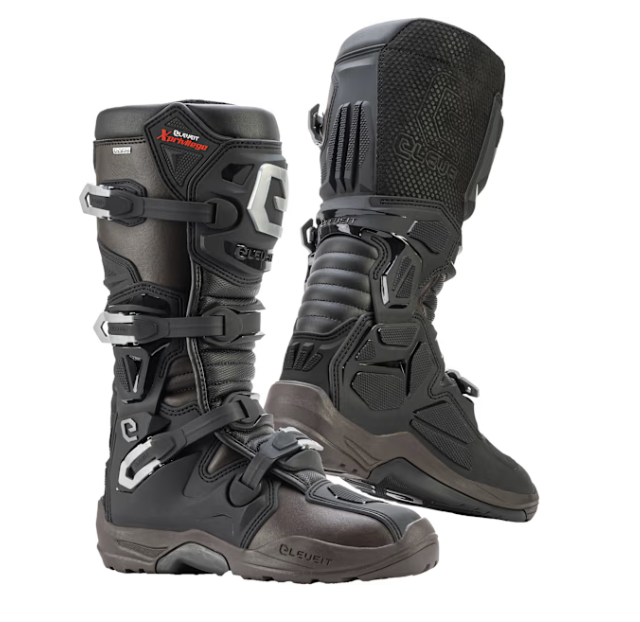
Dirt bike and off-road motorcycle boots
Dirt and off-road motorcycle boots have a similar size and construction to adventure boots. However, they feature harder outer shells and other protective features to keep your feet and shins guarded from gravel and other debris.
Pros
- A full-height build provides maximum coverage for your feet, ankles, and shins
- A very stiff and rigid build protects ankles when you’re putting your foot down on corners
- Hard, reinforced soles offer robust impact protection against rocks, ruts, and debris
- Multiple buckles keep the boot securely fastened and your foot firmly in place
- Often well-ventilated and breathable to help manage heat
- Plenty of bold graphics and colour options on the market
Cons
- A stiff build makes the boot uncomfortable when walking
- Heavy and bulky compared to other styles, which may cause leg fatigue
- While many come with breathable features, they’re not as ventilated as other styles
- May require a long break-in period due to their bulky build
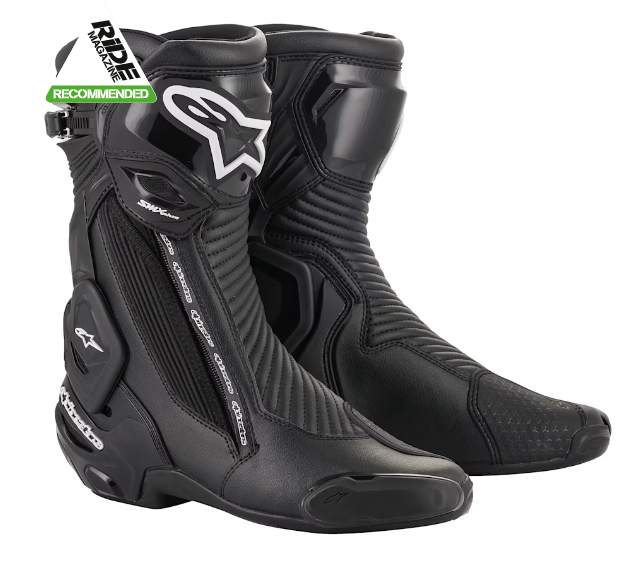
Sport and performance boots
Sport and performance boots protect you when riding at speed. This style goes over the ankle and typically features pull-tabs, laces, Velcro ankle straps, and hard plastic around the ankle for protection. They’re often built from Kevlar and tend to be more expensive than other options.
Pros
- Perfect for aggressive riding and track use
- Embedded with technology inspired by professional motorsport
- Generally lighter than off-road motocross boots
- Provide responsive feedback for foot controls
- High abrasion resistance to protect against slides at speed
- Toe sliders can protect boots during extreme lean angles and track riding
Cons
- Less comfortable for walking or everyday use
- Limited flexibility compared to touring or casual boots
- Usually more expensive
- Styling focused on track racing, not everyday riding
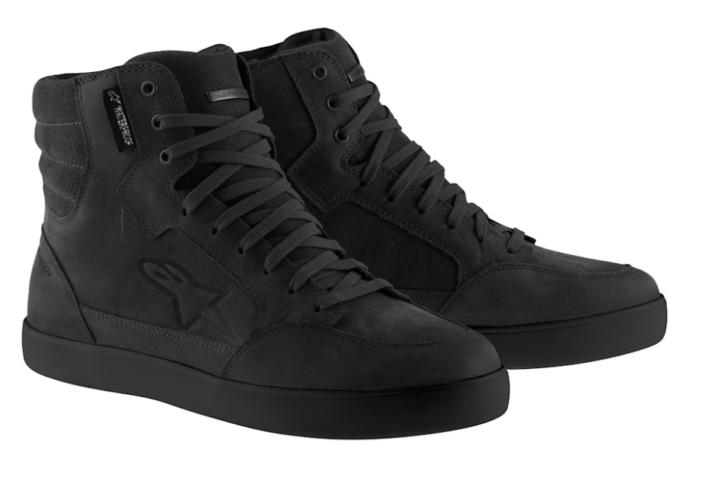
Casual or “street” boots
Casual or street motorcycle boots are ideal for shorter, everyday journeys. They’re comfortable and lightweight but offer less protection than touring or off-road boots.
Pros
- Usually comfortable enough for all-day wear
- Lightweight build makes it easier to walk around compared to other styles
- Can be more affordable than other motorcycle boots
- Casual styles can be paired with everyday clothing
- There’s no need to bring a second pair of shoes to your destination
Cons
- Limited protection compared to touring, adventure, or race boots
- Usually only offer ankle-height cover
- Not suitable for aggressive riding, long-distance touring or track use
- A laced design can be a safety hazard if the laces aren’t secured properly
Understanding safety ratings for motorcycle boots
Every motorcycle boot (and gear for that matter) should have a safety rating, which gives you an idea about the level of protection it provides.
Most motorcycle boots sold in the UK and Europe are tested and certified to the CE standard EN 13634. This is a compulsory benchmark for protective riding footwear and confirms a boot has been independently lab-tested to meet strict safety requirements.
How to read a CE safety label
Every CE-certified motorcycle boot has a safety label, which features a motorcycle icon and up to four numbers.
Each number represents one of four key areas the boot is assessed on. Boots are scored either Level 1 (basic protection) or Level 2 (superior protection).
The four key areas are:
- Height: Measured by how much of your leg is protected. Ankle-height boots score Level 1, shin-height boots score Level 2.
- Abrasion resistance: Assesses how long the boot’s materials can withstand sliding on rough road surfaces before wearing through.
- Impact cut resistance: Assesses how well the boot protects your foot from sharp objects during impact.
- Transverse rigidity: Assesses how well the boot will protect your foot from being crushed.
Each area is assessed individually. A higher overall score means the boot provides greater protection.
- A score of 1111 indicates basic protection across all areas
- A score of 2222 indicates the highest protection under EN 13634
Choosing the best material for your motorcycle boots
The best material for your motorcycle boots again largely depends on how and where you’ll be riding. Some materials are better suited to other terrains and conditions than others, so a great first step is understanding the strengths and limitations of each material.
Let’s go through them below.
Full-grain leather
Leather is one of the most popular and reliable materials for motorcycle boots. A big reason for this is comfort. Over time, leather softens and moulds to the contours of your foot.
It’s also highly durable and abrasion resistant. And although it’s not fully waterproof, leather is naturally water-resistant and can be treated or paired with a membrane to ensure your feet remain dry in wet weather.
Best for: touring, cruiser, and everyday riding.
Gore-Tex
Gore-Tex is a waterproof and breathable membrane that’s built into some motorcycle boots. It keeps rain and moisture out of your boot, while still allowing sweat to escape.
This helps keep your feet dry and comfortable in changing conditions. It’s a great option if you’re riding on the UK’s often rainy roads.
Best for: adventure riding, commuting, and all-weather use.
Synthetic leather (PU Leather)
Synthetic leather is a cost-effective, vegan-friendly alternative to natural leather. It’s usually flexible, water-resistant, and easy to maintain.
It’s also typically lighter than leather. And while it doesn’t match full-grain leather for durability or abrasion resistance, synthetic leather performs well when reinforced and is suitable for casual or short-distance riding.
Best for: budget-conscious riders and casual use.
Kevlar (Aramid Fibres)
Kevlar is a high-strength aramid fibre that improves abrasion resistance in high-risk areas, such as the ankles and sides of the boot. It adds extra slide protection without noticeably increasing weight or stiffness.
Best for: sport and racing boots where extra abrasion protection is required.
Thermoplastic polyurethane (TPU)
TPU is a lightweight and rigid plastic often located in high-impact areas like the shin, heel, toe box, and ankle. It enhances impact and crush resistance, which helps protect your foot if the bike falls or if you’re in a collision.
Best for: sport, adventure, and motocross boots.
Microfiber
Microfiber is a modern synthetic material that’s lightweight, flexible, and durable. Often used on sports and racing boots, it offers abrasion resistance, resists water absorption, and is easy to clean and maintain. Microfiber also holds its shape well over time, even under aggressive riding conditions.
Best for: sport, racing, and performance riding.
Rubber soles
Rubber soles are an essential component of any motorbike boot. They’re what provide grip on footpegs, the controls of your bike, and the pavement.
Top-quality rubber soles are usually oil-resistant and offer a good level of shock absorption too, which reduces the risk of slipping when stopping, manoeuvring your bike, or walking off it.
Best for: all motorcycle boots, as it’s a core safety feature.
Final tips for buying the best motorcycle boots for your rides
Before we wrap things up, below are some final tips to keep in mind:
- Think about how you’ll be riding: Different terrains call for different motorcycle boots. For instance, if you’re looking to take on the track, you’ll probably want a performance boot. If you mainly use your motorcycle for everyday journeys, a casual or street style may suffice.
- Think about comfort and fit: Your boots should fit snug while providing enough wiggle room for your toes, no heel lift, and robust ankle support. If you can, try the boots on while you’re sitting on your motorcycle. You’ll get a clear picture of how they work with your riding posture and how easy the controls are to operate.
- Think about the weather: If you live in the UK, you’ll want to factor in the weather, especially if you’re planning longer journeys. Waterproof membranes, such as Gore-Tex, are useful for wet climates, while breathable panels can keep you cool in sunnier climes.
- Think about your budget: The price of motorcycle boots can vary hugely. While they initially cost more, higher-end boots can be a worthwhile investment. They’re likely to offer more protection, a higher CE certificate, and long-term comfort.
Keep your bike, your gear and yourself protected on the road with motorbike insurance from Devitt
Motorbike boots are one way to stay protected. Another crucial way is by choosing a suitable insurance policy.
Not only is it a legal requirement, but it also ensures you’re not left to cover costly fees if you have an accident or someone makes a claim against you. That’s where we can help.
With over 90 years’ experience, we can find cover for many riders whether you’re using your motorbike for short commutes or taking it on the track.
Backed by a 5-star Defaqto rating, you’ll also be supported by our dedicated, UK-based team, ready to answer questions and support you through a claim if something goes wrong.
Request a motorbike insurance quote online or speak to one of our team on 0345 872 3614.
Disclaimer: The sole purpose of this article is to provide guidance on the issues covered. This article is not intended to give legal advice, and, accordingly, it should not be relied upon. It should not be regarded as a comprehensive statement of the law and/or market practice in this area. We make no claims as to the completeness or accuracy of the information contained herein or in the links which were live at the date of publication.
You should not act upon (or should refrain from acting upon) information in this publication without first seeking specific legal and/or specialist advice. Arthur J. Gallagher Insurance Brokers Limited trading as Lifesure accepts no liability for any inaccuracy, omission or mistake in this publication, nor will we be responsible for any loss which may be suffered as a result of any person relying on the information contained herein.
Disclaimer: the sole purpose of this article is to provide guidance on the issues covered. This article is not intended to give legal advice, and, accordingly, it should not be relied upon. It should not be regarded as a comprehensive statement of the law and/or market practice in this area. We make no claims as to the completeness or accuracy of the information contained herein or in the links which were live at the date of publication.
You should not act upon (or should refrain from acting upon) information in this publication without first seeking specific legal and/or specialist advice. Arthur J. Gallagher Insurance Brokers Limited trading as Devitt accepts no liability for any inaccuracy, omission or mistake in this publication, nor will we be responsible for any loss which may be suffered as a result of any person relying on the information contained herein.