
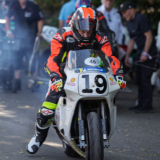
There’s a real appeal in ‘ultimates’ when it comes to bikes. People love the idea of having the most powerful superbike, the trickest track bike or the most aggressive motocross machine. Triumph’s Rocket 3 bases much of its appeal on having the largest-capacity engine in a series production motorbike.
And back in the 1990s and early 2000s, Honda, Kawasaki and Suzuki duked it out to see who could sell a bike with the highest top speed, with the Super Blackbird, Hayabusa and ZX-12R all claiming the bragging rights – and the increased sales that brought.
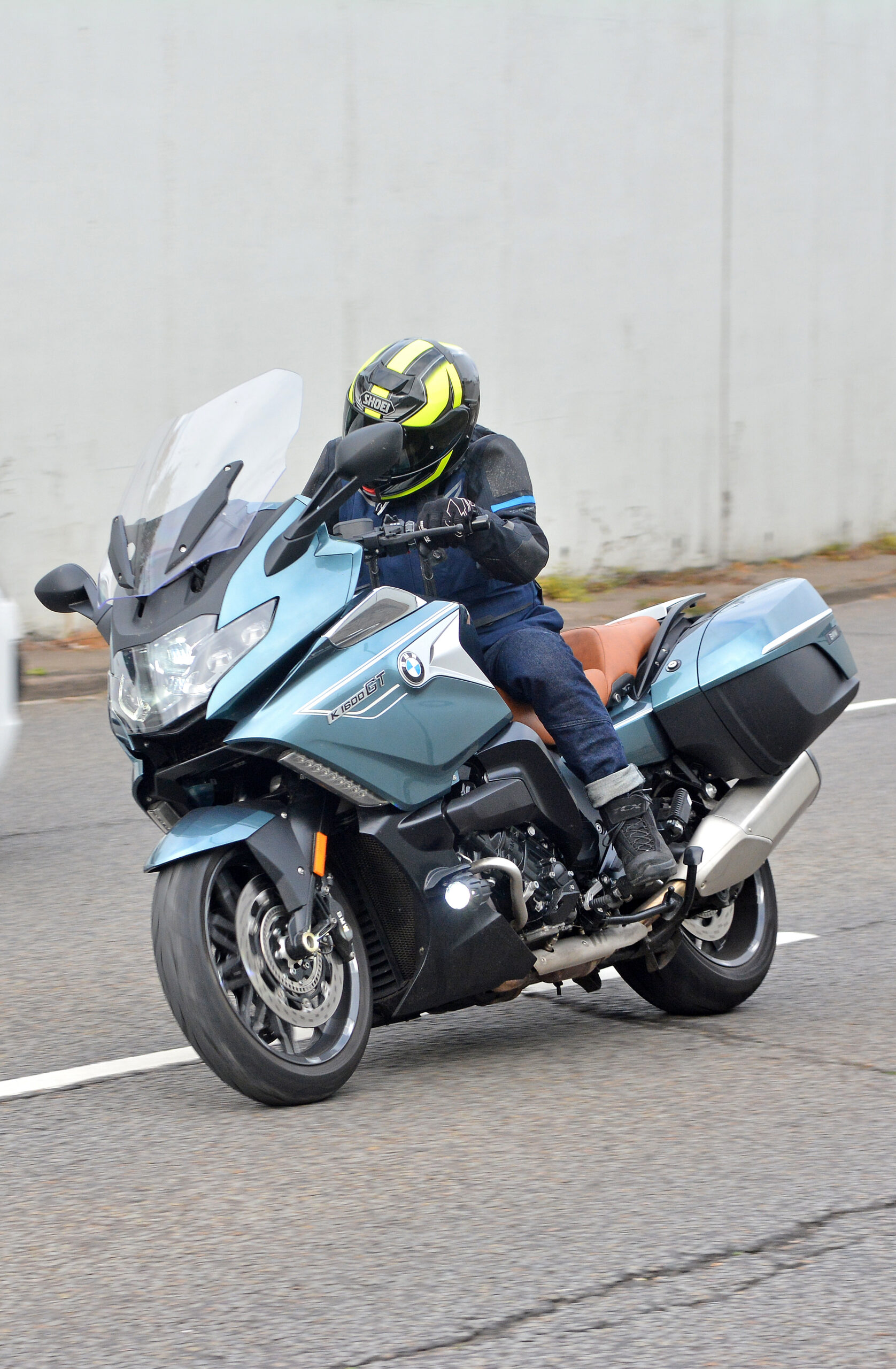
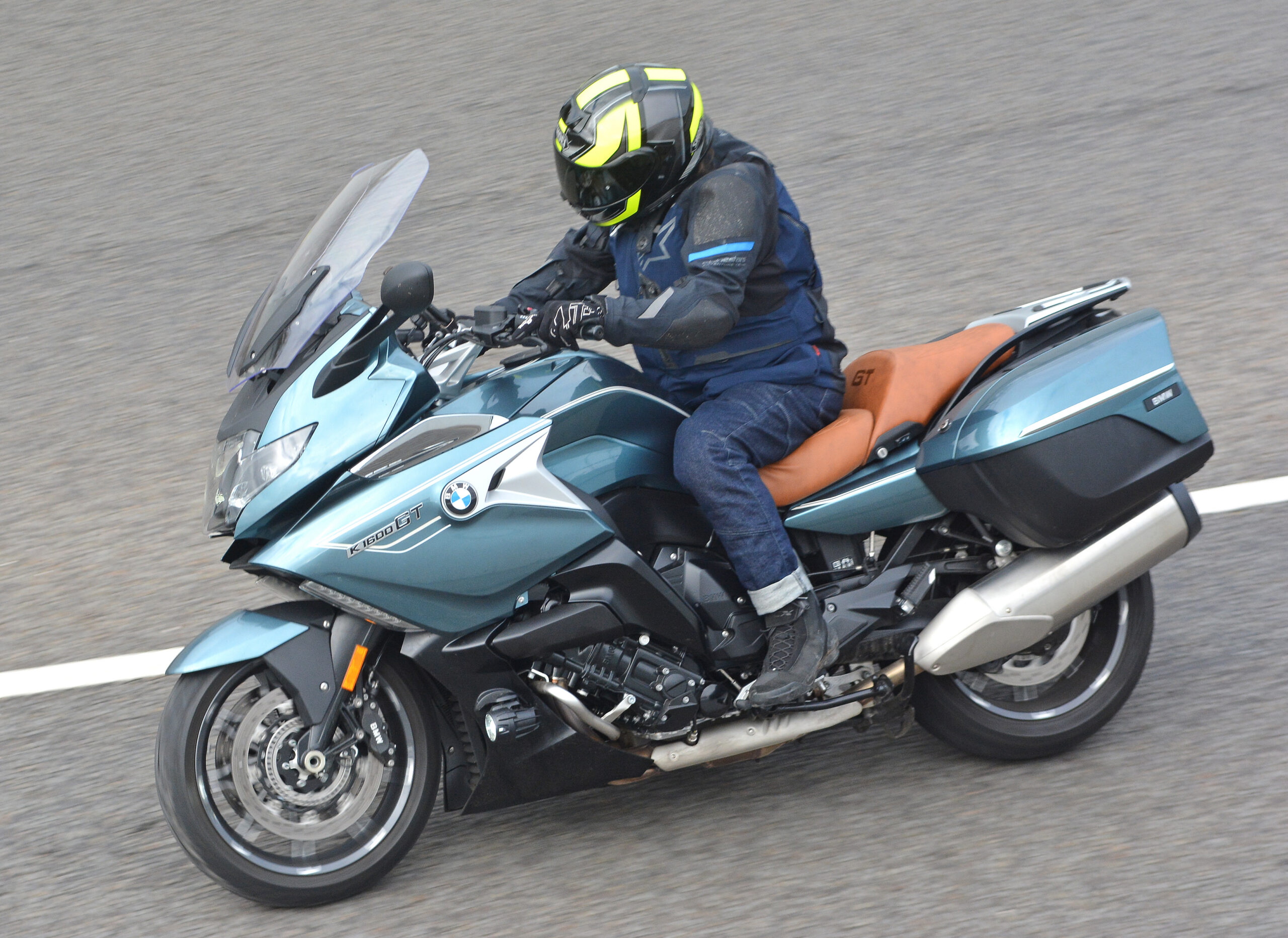
I’m riding one of these ‘ultimate’ machines today, though it’s not the biggest capacity, the fastest or most powerful bike. Rather, the BMW K1600 GT I’m muscling through Streatham and into Tooting is more of an ‘engineering’ ultimate.
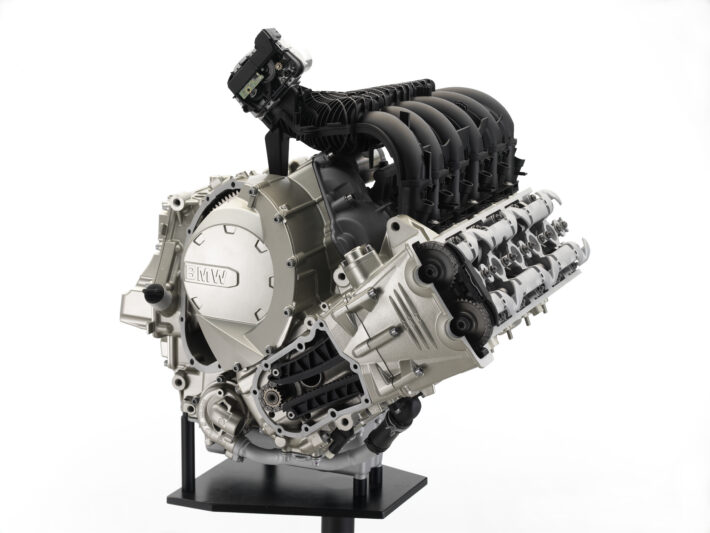
The German-built machine has the only straight-six bike engine in current production, and uses that unique 160bhp motor to power what is arguably the definitive fast touring bike available right now.
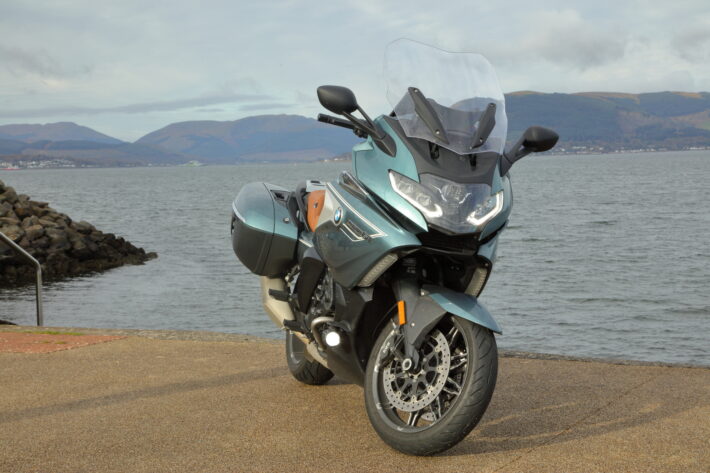
It’s a fair bit sportier than the other giant tourer on the market – Honda’s Gold Wing – but is a step above old-school medium-heavyweight tourers like the old Yamaha FJR1300, the Honda Pan European or BMW’s own RT touring Boxer models. It’s a bit like a rocket-powered sofa, as someone described it to me…
That comfy spaceship was at another journalist’s house in south London, so my first few miles were not quite in the sweet spot for a 343kg mega-tourer. Dicing with taxis, delivery riders on scooters, pedestrians, cyclists and Royal Mail vans was a bit of a stressor – but the vast velocipede is much nimbler than you might think, its considerable third-tonne bulk held low down, and the wide pullback bars giving loads of fine control.
I’m defeated by a couple of super narrow gaps in tight queues, but otherwise the big K makes a decent fist of the crosstown traffic. I’m soon back home, the mighty 1600 ensconced in my garage.
I’ve borrowed the K1600 for a couple of reasons. Firstly, I’ve not ridden the current variant much (I had an afternoon on the Bagger variant in Germany a couple of years ago) and I’m always keen to keep my bike experience current. Secondly, I’d actually booked an R1300 RT, then planned a Scottish touring trip to check it out, but the fancy new 1300 booking fell through at the last minute.
My Scotch trip was still on, BMW had a spare K1600, so the plan came together very nicely indeed. My plans were simple: head to Glasgow, stay with my family up there, and take in some autumn scenery on the big K. There was a slight complication when a job in Manchester came my way, but I could fit it in on the way north – indeed, I now had a proper road trip to manage.
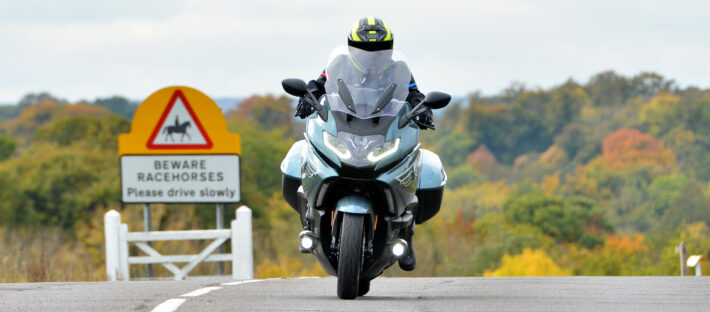
The K16 didn’t need a lot of pre-trip preparation. I was a bit sad that there was no standard top-box (you need the even bigger K1600 GTL for that), and I didn’t have time to get a fitting kit for one of my own cases, but a large strap-on dry-bag sat nicely on the pillion seat, with a Kriega tailpack clipped onto the standard rack.
Together with the massive stock panniers, I had enough space to cram in a fortnights’ worth of clothing, laptop, camera bag, spare riding kit and a solid selection of locks and chains. I added an SW-Motech tankbag ring which mounts a small day-bag for incidentals, and bolted on a handlebar bracket for my phone holder.
The BMW has a proper little storage cubbyhole for your phone, but I’m a weird old man and prefer just having my mobile accessible on the bars for navigation, music and radio functions, connected straight to my helmet intercom.
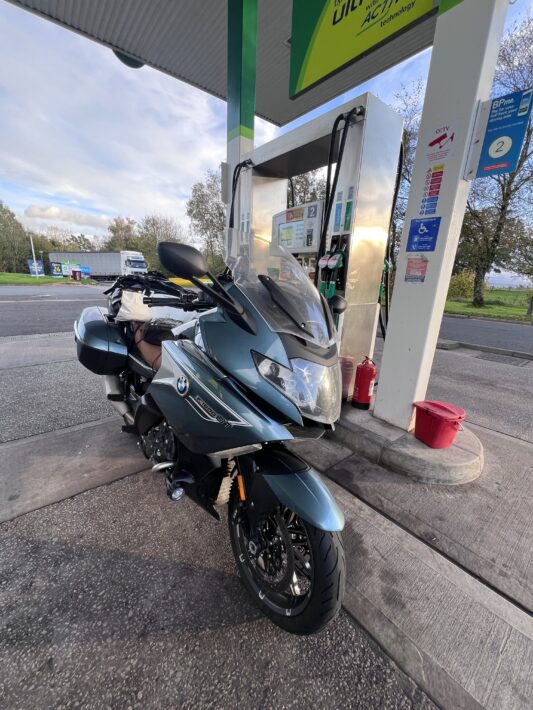
Finally, I wired a power cable into the battery for my KEIS heated jacket and gloves, in case the weather turned properly bad while I was up north. Pop out to the local Tesco Extra to brim the 26.5 litre tank with cheap E10 gas and I’m all set for the big jaunt north.
I’ve done the ride from the south of England to the central lowlands of Scotland plenty of times now, so didn’t need too much mental preparation. My house is a few miles from the A3, which takes me to the M25 south of London, then it’s a brief hop round the capital’s ring road, past Heathrow and onto the M40 to Birmingham.
Then, the M6 takes you into the north west of England, and on to Scotland’s M74. As a bike ride, it’s as appealing as a prostate exam from Captain Hook – but it’s by far the most efficient way to get to old Caledonia.
And the K1600 is proving pretty efficient so far too. It’s big of course – a little too big for daily use around the suburbs of south London – but not unwieldy in the way a Gold Wing or giant Harley-Davidson tourer can feel. The riding position is relaxed and comfy, but you still seem connected to a motorbike, rather than feeling like you’re sat on your front porch, riding the house around.
The pull-back bars are some distance from the front wheel, but they don’t feel remote from the road at all. Add in the sophisticated wheel control from the Duolever front end and electronic suspension, and you have a remarkably dynamic chassis, considering the mass and comfort.
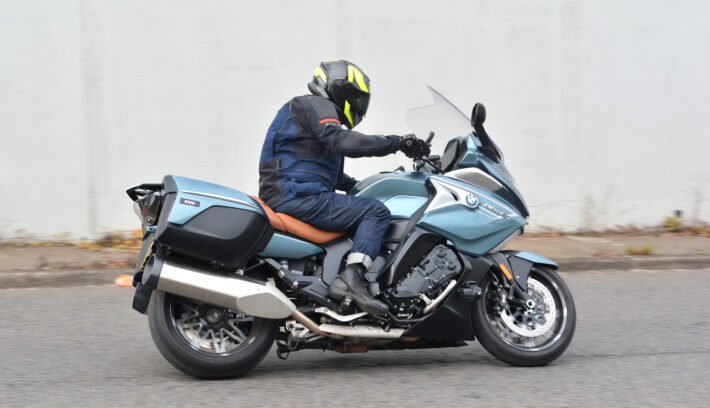
Dashing through the various roundabouts, slip roads and motorway junctions to get to the M40, the big BMW feels eager, keen, sharp even, helped by the excellent Metzeler Roadtec tyres. The brakes have a lot of work to do of course: this bike weighs 75 per cent more than an M1000 RR and ‘only’ has a pair of 320mm front discs with conventional axially-mounted four-piston calipers.
They do okay, but it’s one area where you could see the advantage of an upgrade – 330mm discs and radial calipers would earn their corn here I’d say. The back brake does a lot of work mind, and also has a full-sized 320mm disc with a twin-piston caliper, and that, plus the clever ABS, with hill-hold and cornering function makes for a solid stopping package overall.
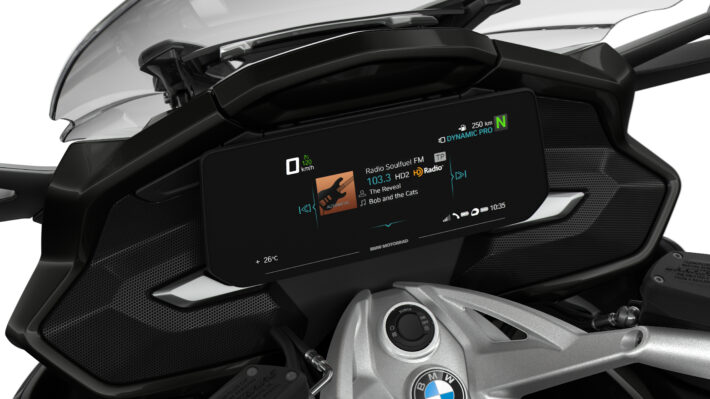
Once onto the M40, it’s time to sit back, relax, and check out the surroundings. The 16 comes, of course, with a barn-door spec fairing, and electrically-adjustable windscreen, together with an enormous 10.25” widescreen colour dashboard. There’s a built-in stereo even on this standard GT, with speakers either side of the screen, and a panoply of controls, switches and buttons to access all the tech.
My old brain needs to work at some of this stuff these days, but the essentials are all at hand: cruise control (not radar-assisted on this bike, which suits me actually), and the handy BMW controller wheel to scroll through options. Add in the menu button to flick through the trip computer readout (‘fuel range remaining’ is the main one on a job like this I find) and I’m basically all set.
I’m a bit of a Luddite when it comes to linking phones to bikes. Partly it’s laziness, and partly because I’m on and off so many different machines that I’ve developed an independent setup which works on everything, from ancient Japanese classics to electric scooters and everything inbetween.
That means an Ultimate Addons phone holder quick-mounted onto the handlebars, with a charging cable, my big old iPhone 13 Pro Max running Google Maps and Spotify, with the Bluetooth linked to my helmet intercom. Add in some touchscreen-compatible gloves, and I have all I need in terms of navigation, tunes and comms without troubling the bike itself.
No doubt if I had the K1600 GT as a full time machine, I’d work out how to integrate it all properly, but not right now. As it happens, BMW’s put a lot of effort in, with a special secure cubby hole above the dash to hold your phone. It has a charging socket, and a cooling fan to keep the mobile safe and sound, and the giant colour dashboard links to BMW’s own app for navigation display and all the other functions. There’s no Apple or Google car play functions though, sadly.
The other tech feature to mention is the extra control panel on the left hand fairing lower. There are four numbered buttons which you can customise with your favourite functions, and which have been set to adjust the heated grips and seat – a really useful little extra setup. With the perfect temperature dialled into hands and backside, plus my KEIS heated jacket plugged in, I’m as snug as a bug in a rug on the Beemer all the way north.
A great chassis, and plenty of comfort then – but it’s the engine which really makes the K1600 stand out. If BMW had built that K-series chassis, added all the touring kit, then fitted a standard-issue 150bhp 1100cc inline-four, it would have been fine of course, and done 90 per cent of the same sort of work. But fitting a full-fat straight six is a work of genius, and transforms the entire motive experience.
That begins when you click on the keyless ignition and press the starter button: the engine barks into life sounding more like an angry race car than a comfy touring bike. The cold running circuit holds the revs high and the rasping rort from the dual end cans is intoxicating. Once the temperature picks up, it soon transforms back into a subtle seductive purr, and that dual nature continues when you ride it.
Trundle around at low revs, short-shifting up the box with the excellent up/down quickshifter and the K1600 is a genuine pussycat: smooth, sophisticated and classy, like a 7-series limousine.
But give it a big handful of throttle and revs, and it’s like flipping a switch. The angry exhaust and intake roars return, and the world goes into a fast reverse. The electric suspension firms up, and together with the Duolever front end gives a really stable platform for wild acceleration.
Change up on the rev limiter through the lower gears and the experience is sublime, a really sporty, aggressive response, again more akin to a track-friendly machine than a luxury touring barge. Incredible stuff – and the only complaint I can bring is that the fuel consumption plummets when you start to sample the 1600’s wilder side.
I was going fairly steady on the motorway ride north, cruising a little over the recommended rates of progress, and the average was around 40mpg. Still impressive considering the performance, and the size of the bike, plus my full loading with locks, cameras and kit.
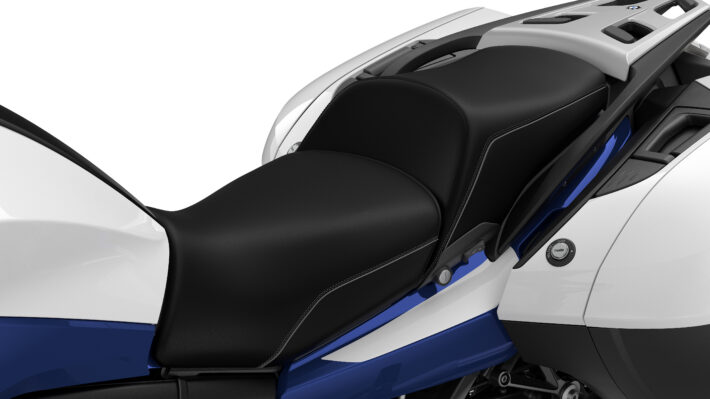
The rest of the motorway trip north passes without much in the way of comment. I stop off for a few hours at a job in Oulton Park, near Manchester, and am still fairly fresh. This bike has a fancy Option 719 heated seat fitted, which has a bit more padding, so things are even better than stock. I’ve managed to make one tank of fuel last from London to Cheshire: around 220 miles, which is good work from the 26.5 litre tank. A quick refill before heading back to the M6, and I’m set till (almost) Glasgow again.
We’re into the best part of the journey now, in terms of scenery. The section of the M6 after Lancaster, towards Shap summit and through the eastern skirt of the Lake District is gorgeous on a sunny day, which I’ve lucked into today.
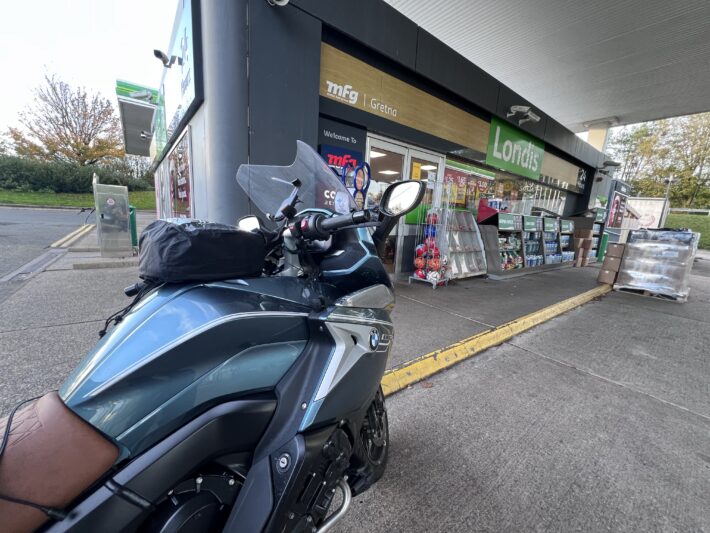
It’s late October and there was a storm when I left London, but it’s passed now, and I bask in the afternoon sunshine as I approach Carlisle, before the second hit of scenery through the Southern Uplands of the Scottish Borders. I’m on the M74 now, and take the chance to stretch my legs at Gretna Green services, topping up the tank once more. I’ve still got 100 miles-odd range, but filling up now will take me right to my mum’s house with no more juice needed.
The last hundred-odd miles from the Scottish Border to my childhood home town are easy enough, but I’m on the weary side now. Even the ultimate luxury touring experience of a K1600 GT takes a lot of mental effort on a fast, minimal-stop 500-mile journey.
The sun has dipped and I’m now relying on the BMW’s superb LED headlights , but there’s a bit of grime built up on the windscreen, and my eyes are tiring. I get to Glasgow and am stunned by a huge rush-hour traffic jam: the M8 motorway is undergoing massive roadworks, with a contraflow, narrow lanes, average speed cameras all snarling the place up.
Again, the heavyweight tourer isn’t really in its element, but does a remarkable job of splitting the crawling traffic, and as an aside, the effort needed to wrangle my way through wakes me up again like a double-shotted espresso…
Pulling into my mum’s driveway, the stand flips down, the big six-cylinder motor cuts, and I’m here. It’s not quite an ‘ultimate’ ride: around 475 miles in a day won’t win many internet bragging points. But the K1600 GT has made a cracking job of it, schlepping me and a load of kit the length of the country with almost no fuss at all. I’ve got a couple of niggles: the tyre pressure warning system flashed up a low-pressure alert for the rear tyre at one point, giving me a near-heart attack, before going away again.
A false alarm as it turned out: the tyre was fine and the pressure was spot-on. The only other quibble is the fuel consumption again: sitting at a ‘sensible’ high motorway speed, the mpg readout drifted around 40-42mpg. That’s not horrible, considering the big motor, but I’d done the same journey on a Yamaha Tracer 900 earlier in the year, with the same sort of velocities, and it managed 48mpg. The result is a tank range around 235 miles, despite the large 26.5 litre capacity around the same as on the Yamaha with its 19 litre tank.
Over the next week or so, I put in some relaxed miles around the Clyde coast and Glasgow, and the K1600 impresses even more. Once I unload all my kit, dropping around 50 kilos of load, the performance sharpens up, and the GT is even sportier. Pottering around seaside back roads and up into the hills behind Glasgow, the big K lives up to its luxurious character again too.
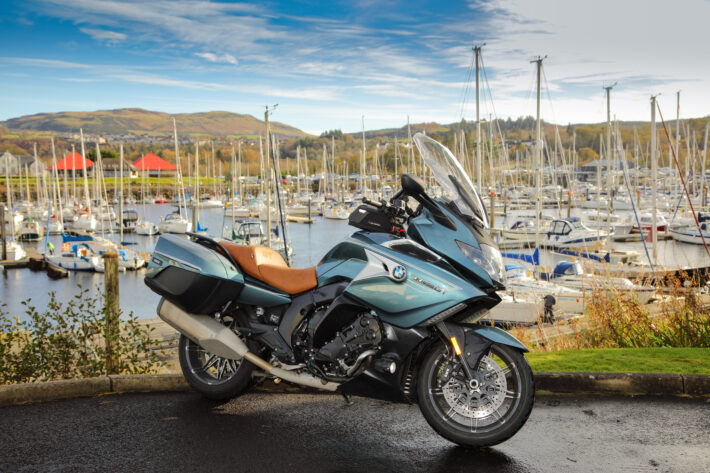
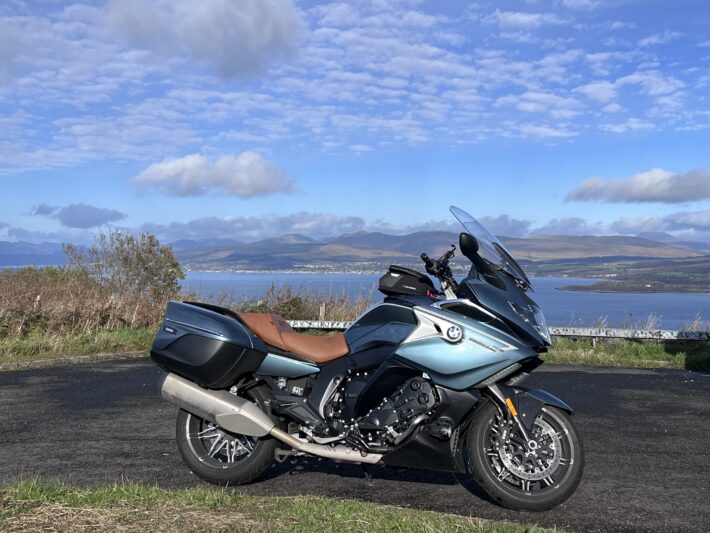
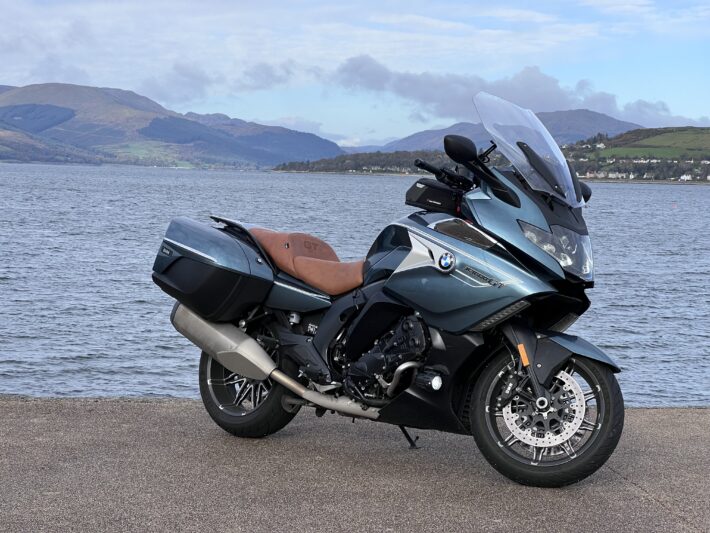
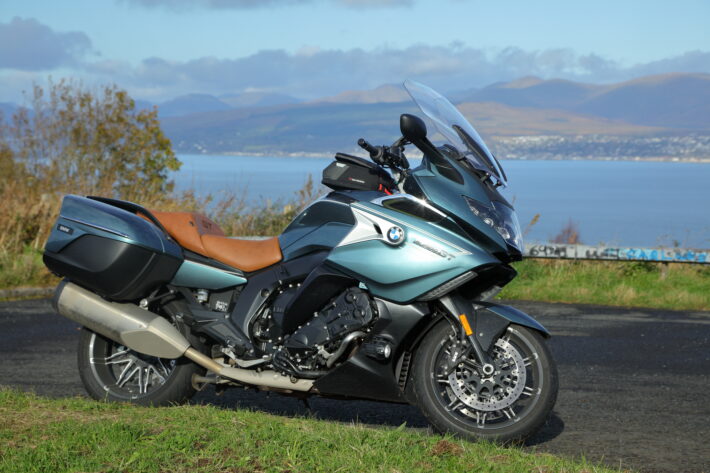
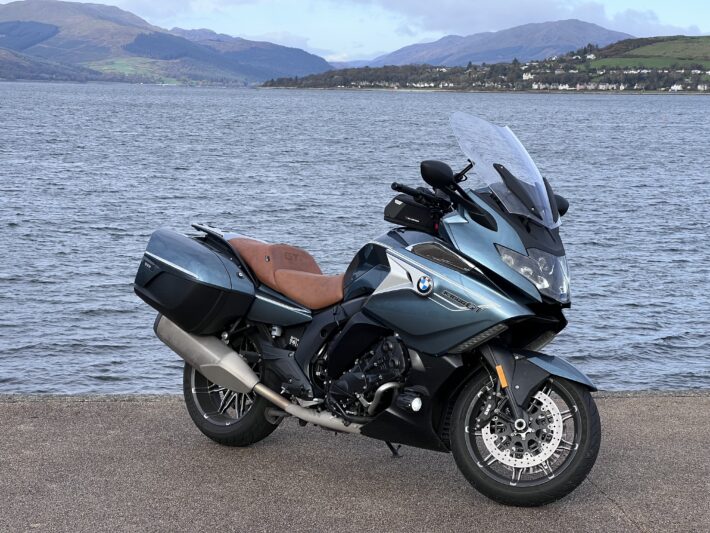
It also looks stunning, parked up in the sunshine with the sweet Scottish scenery behind. When it’s time to go home, the GT makes life easy once more. A straight shot south, a couple of fuel stops and I’m home in under six hours.
So – should you make some space in your life for this fast touring motorbike? I reckon so, especially if you’re a fan of ‘ultimates’, and looking for something unique. Sure, a BMW R1300 GS or RT would do the same sort of touring job, and perhaps be more suitable for other uses.
The K1600 is big, beefy, expensive and complex. But that six-cylinder engine is a really intense ‘unique selling point’, and genuinely has to be sampled to be appreciated.
More info on the K1600 GT: www.bmw-motorrad.co.uk
BMW K1600 tech highlights
ENGINE
Incredible inline-six cylinder engine is essentially the same as on the original K1600 GT released in 2010. It’s actually a 1650, with a 1,649cc capacity from a 72mm bore and 67.5mm stroke, and puts out a cool 160bhp at a relaxed 6,750rpm. BMW made its reputation in the car world with its amazing straight-six engines, and the K1600 lump does share some characteristics with one of the firm’s four-wheel powertrains – particularly the use of a single throttle body.
That 100bhp/litre output is also more like a car performance figure than you have with a typical bike engine (if the K1600 was tuned to the same level as an M1000RR it would make 345bhp, which would have made my trip up the M6 significantly more lively.)
The real achievement with the K16 motor is packaging though: the firm has made a 1.6 inline-six which is just 555mm wide and weighs in at 102kg including the transmission. It’s a big motor, but only around 65mm wider than the firm’s old K1300 inline-four.
That’s down to the relatively narrow bore and long stroke of course, and those basic dimensions are also part of what’s restricting the peak power output (long stroke engines can’t rev as high, and high revs make high power). There are also problems associated with the longer crankshaft on an inline-six: they can’t rev as highly as a shorter, stiffer four-cylinder crank without resonance and vibration problems.
All of which means that our 345bhp M1000RR-tune inline-six isn’t a real possibility, sadly.
The motor also uses a dry sump lubrication system, so there’s no oil sump below the cases. That means the engine can be mounted lower in the chassis, lowering the centre of gravity nicely. A straight six with a 120-degree crank has perfect primary and secondary balance, so there’s no need for balance shafts or the like to smooth out any vibes either.
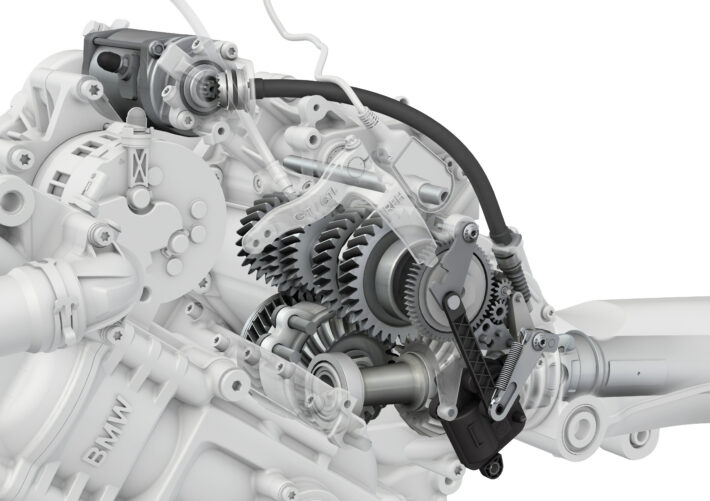
The K1600 also includes a reverse gear: the starter motor engages into the final drive and gently moves the bike back when you push the reverse button on the bars.
FRAME
Seen in isolation, the K1600 frame is a weird-looking piece of kit, partly down to the Duolever front suspension setup, and partly because it has to suit the wide engine. The twin spars sit above the cylinder head rather than running round the block itself.
The main frame is made of cast aluminium and weighs just 16kg, while the extruded aluminium fabricated rear subframe is just 4kg overall. There’s also a magnesium alloy bracket for the headlight/cockpit/front fairing supports.
SUSPENSION
BMW’s used its ‘Duolever’ front suspension setup, which is based on the Hossack suspension system invented in the UK. There’s a large cast aluminium front wheel carrier, which mounts to a pair of wishbone linkages, suspended by a central monoshock mounted in front of the steering head.
A scissors-type steering linkage turns the whole carrier on spherical bearings. It’s the system first used on the K1200 and K1300 models, and works well on big bikes like this.
Out back is the familiar Paralever single-sided swingarm suspension with shaft drive, and monoshock suspension. The shock absorbers at both ends use BMW’s latest Dynamic ESA semi-active suspension setup.
2025 K1600 GT SPEC HIGHLIGHTS
Revised six-cylinder in-line engine according to EU-5 regulations with new BMS-O engine control.
Two knock sensors and four lambda probes instead of previously two.
Power 118 kW(160bhp) at 6,750rpm (previously 7,750rpm).
Torque: 180Nm at 5,250 rpm (previously 175Nm).
Exemplary emission values, smooth running and performance.
Even more powerful acceleration across the entire speed range
due to increased torque.
Knock sensors for optimised riding capability.
Engine drag torque control (MSR) as standard.
Dynamic ESA “Next Generation” electronic suspension with fully
automatic load compensation as standard.
New full LED adaptive headlight as standard.
Connectivity: New multifunctional instrument cluster with
10.25 inch full-colour TFT display and numerous features such as easy-to-use telephony with extended smartphone connection as standard.
Smartphone compartment with USB-C charging option as standard.
Four freely assignable favourite buttons as standard.
New audio system 2.0 as optional equipment.
Intelligent eCall emergency call equipment standard (in all markets where permitted).
2025 BMW K1600 GT specifications
Price: from £21,460
Engine: DOHC 24v inline-six, l/c, 1,649cc
Bore x stroke: 72×67.5mm
Compression ratio: 12.2:1
Carburation: ride-by-wire fuel injection, single 52mm throttle body
Max power (claimed) 160.5bhp@6,750rpm
Max torque (claimed) 180Nm@5,250rpm
Transmission: six speed gearbox, wet clutch, shaft final drive
Frame: die-cast aluminium twin spar, extruded aluminium rear subframe
Front suspension: BMW Motorrad Duolever (double trailing arm), central spring strut, 115mm travel. Dynamic ESA semi-active suspension
Rear suspension: cast aluminium single-sided swingarm, semi-active controlled monoshock, 135mm travel
Brakes: dual 320mm discs, four-piston calipers (front), 320mm disc, twin-piston caliper (rear)
Wheels/tyres: cast aluminium wheels, Metzeler Roadtec 02 120/70 17 front, 190/55 17 rear
Rake/trail: NA/NA
Wheelbase: 1,618mm
Seat height: 810mm standard, adjustable to 830mm, or 780mm with optional seat.
Kerb weight: 343kg
Fuel capacity: 26.5 litres
Disclaimer: the sole purpose of this article is to provide guidance on the issues covered. This article is not intended to give legal advice, and, accordingly, it should not be relied upon. It should not be regarded as a comprehensive statement of the law and/or market practice in this area. We make no claims as to the completeness or accuracy of the information contained herein or in the links which were live at the date of publication.
You should not act upon (or should refrain from acting upon) information in this publication without first seeking specific legal and/or specialist advice. Arthur J. Gallagher Insurance Brokers Limited trading as Devitt accepts no liability for any inaccuracy, omission or mistake in this publication, nor will we be responsible for any loss which may be suffered as a result of any person relying on the information contained herein.