

The nights are drawing in, the mercury is dropping – and the worst time of year for your battery is just around the corner. Winter is when bike batteries start to give up: here’s a quick roundup on bike battery technology, and how to keep running through the dark months…
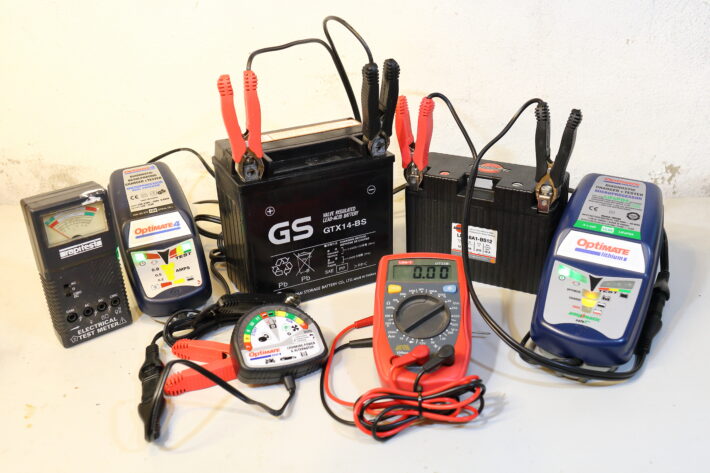
Unless you ride a classic bike with a kickstart, a flat battery will put a stop to any riding plans. We spoke to the battery saving experts at top smart charger manufacturer OptiMate why batteries go flat, how to fix them and what can be done to prevent it happening in the first place.
The first question is – why does my battery go flat if I’m not riding my bike? Does it just hate me? Well, as it turns out, no, it’s just chemistry. Most modern motorcycles will have a Gel or AGM lead-acid battery, which are often described as ‘maintenance free’.
That’s because, unlike old-fashioned batteries, they don’t need to be regularly topped-up with distilled water and recharged like in the good old days (they were actually not good).
However, even these fancy modern units still need some basic care, because batteries like to be fully charged all the time. Leave your bike parked for an extended period, (weeks, months or years), and the chemicals inside the battery will gradually deteriorate.
If the battery is three-four years old, this will happen more quickly, since the chemicals have lost some of their vitality through age.
To start a motorcycle engine from cold, a regular 12V motorcycle battery actually needs to be holding 12.4V to 12.8V to cope with the intense load demanded.
Once its resting voltage drops below 12V it will struggle and by the time it falls below 10V it is considered deeply discharged.
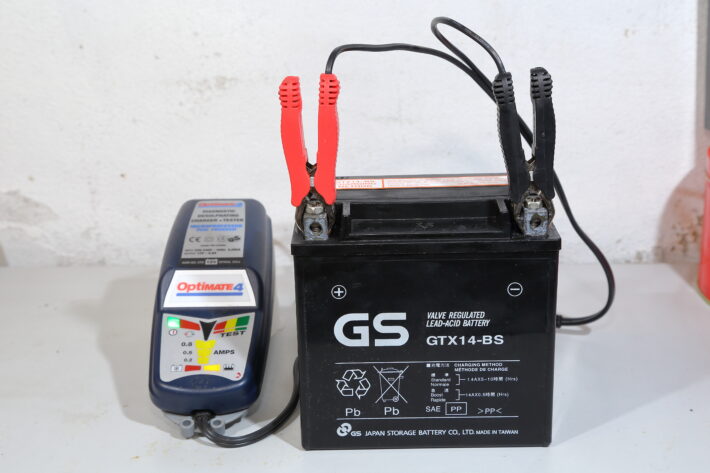
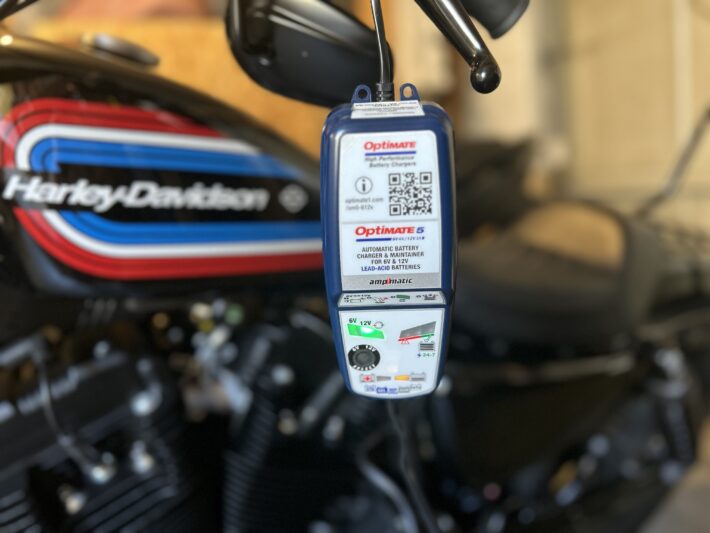
Put simply, unless you use your bike regularly or you connect it to a smart charger, like an OptiMate, the battery may well go flat through natural discharge after as little as couple of weeks.
Basic checks
There are some simple jobs you can also do to keep your electrics working: loose wiring is a common problem, so make sure the connections to the battery itself are tight. Look for corrosion or dirt on the terminals too: poor contact here can prevent starting. Some Vaseline on the terminals will prevent corrosion building up.
To go much further, you’ll really need an electric meter – they’re cheap to buy and easy to use, and nowhere near as scary as they might seem. Using a meter set to measure DC voltage is essential for basic checks of the 12 volt system. Step one is to check that your battery is sound.
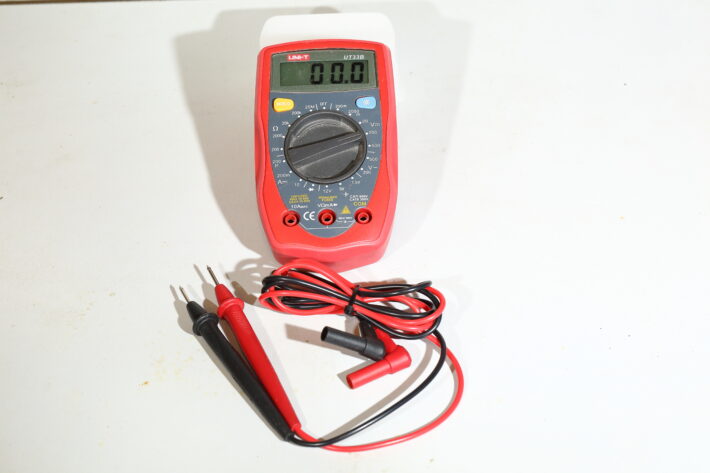
We do that by measuring the amount of volts it’s putting out, with an electrical meter like the one shown here. The first check is with the bike turned off. Remove the seat, or whatever you need to do to get to the battery. Then, if you have a multimeter, set it to the voltage scale, making sure you’re on DC, and in the correct scale for 12 volts. On our digital meter, that was the ‘DC’ 20v” setting.
Find the positive and negative terminals (red and black), and connect your meter to the battery. With everything turned off, a lead acid battery in decent order should give out about 12 volts.
Next, turn on the bike, and if you can, stick the headlights on. Now, a healthy battery will drop a volt or two, but a weak one will drop even further. Watch your meter closely, and press the starter button.
The enormous power surge to the starter motor will drop the voltage right down momentarily, even a good battery will sink to about 8-9 volts. Any less, and your battery might be on the way out – give it a bit of a charge and see if matters improve.
That animal, sulphate
Regular lead acid batteries use three basic components to create electricity; lead plates, plus sulphuric acid and water (electrolyte). When the battery is left inactive for long periods, the electrolyte starts to break down into its components and the sulphur ions form crystals, which stick to the lead plates.
This is called sulphation and the crystals coating the lead plates prevent the battery from holding a charge. If you’ve ever recharged a battery, only for it to go flat as soon as you try to use it, that’s a symptom of sulphation.
Intelligent chargers, like the OptiMate Silver and Gold series, can often reverse this process. They break down the lead sulphate crystals with high voltage pulses, allowing them to mix with the water and return to sulphuric acid. Otherwise, it’s time for a new battery.
The lithium difference
Lithium (Li-ion) starter batteries provide a higher Cold Cranking Amps (CCA) output than lead acid batteries of a similar size. In other words, you can use a smaller lithium battery to start a motorcycle.
They are increasingly popular on new motorcycles, such as the BMW R1300 GS and 2026 Suzuki Hayabusa, where they save vital kilogrammes and take up less space. However, these smaller lithium batteries have a lower ampere-hour capacity than the equivalent lead acid version, which means they will drain faster when connected to a bike.
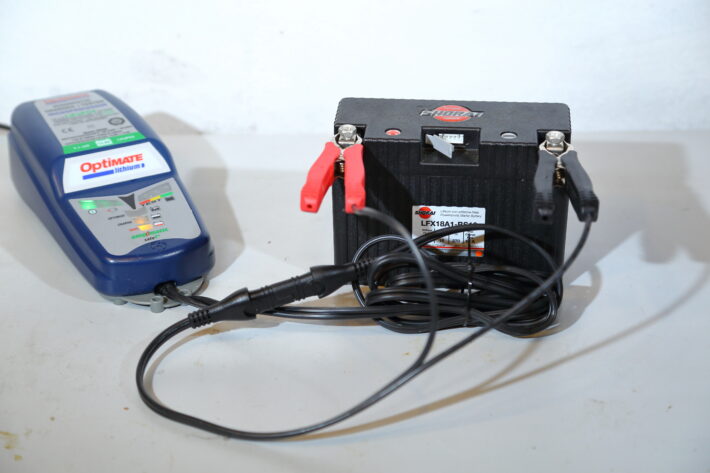
There are two important things to remember when faced with a discharged lithium battery though – never attempt to jump-start a bike fitted with a lithium battery – the shock could destroy it. And you need a battery charger specifically designed for lithium batteries.
Traditional chargers deliver high current at low voltage and then taper off, which is the opposite of what a lithium battery requires. They need a low voltage to start, followed by a controlled low current charge until reaching 12.8V.
If you have a couple of bikes, and need both technologies, OptiMate can help: the firm makes a range of Duo chargers that automatically detect whether the battery is lead acid or lithium and charge it accordingly – smart!
Know your charging system
The other part of the electrical system is the charging circuit. When the engine is running, it spins a magnetic rotor inside coils of wire, which generates electrical charge. This device, called the alternator, sends electricity to a unit called a regulator/rectifier, which converts high-voltage, alternating current into around 12-15 volts of direct current.
That then charges your battery and powers the bike’s electrical systems. To check the charging system, we need to measure the voltage at the battery using the meter, with the engine running.
A healthy battery with a healthy charging system should sit around 14.5 volts. If it’s a little below this at idle, rev the motor a bit, and see if the voltage increases with the revs, as the alternator spins up and charges more.
The bike’s 12 volt battery relies on the alternator to generate enough power to recharge it while you’re riding, otherwise the lights and indicators will dim and eventually there won’t be enough charge to produce a spark in the engine or fire the fuel injectors.
A flat battery when you return after a ride is a typical symptom of a problem with the alternator.
A faulty rectifier will allow too much voltage from the alternator to reach the battery, causing it to overheat and eventually fail. If the headlight gets much brighter as you rev the motor, you should get your bike checked at a dealer.
Whatever you ride, superbike or scooter, custom or classic, some basic maintenance will extend the life of your battery and ensure your machine starts on the button.
More info on OptiMate battery chargers at www.optimate.co.uk
Disclaimer: the sole purpose of this article is to provide guidance on the issues covered. This article is not intended to give legal advice, and, accordingly, it should not be relied upon. It should not be regarded as a comprehensive statement of the law and/or market practice in this area. We make no claims as to the completeness or accuracy of the information contained herein or in the links which were live at the date of publication.
You should not act upon (or should refrain from acting upon) information in this publication without first seeking specific legal and/or specialist advice. Arthur J. Gallagher Insurance Brokers Limited trading as Devitt accepts no liability for any inaccuracy, omission or mistake in this publication, nor will we be responsible for any loss which may be suffered as a result of any person relying on the information contained herein.