
The new Norton Manx R superbike is one of the most eagerly-awaited new bikes in years. Our man Alan Dowds went to Spain to ride it – here’s how he got on…
I started riding bikes on the road at the end of the 1980s – which is a surprisingly long time ago now, and makes me pretty ancient. But even these old bones missed the final days of the legendary British Motorcycle Industry.
The big three – BSA, Norton and Triumph – together with a host of other brands, had built motorcycling in the early days, and kept it going well after WW2. But by the 1970s, industrial decline in this country, together with the unstoppable rise of Japanese manufacturing, had rendered them moot.
When I bought my first big bike after passing my test in 1989, it was a Kawasaki, made in Kobe. The idea of riding something produced in Birmingham or Wolverhampton was out of the question. Japanese bikes ruled the roost, with power, handling, reliability and style that Midlands-made machines couldn’t hope to match.
In the decades since, we’ve had Triumph of course, and John Bloor’s revival of that hallowed name has been amazing. The Hinckley firm has built a massive global brand since 1990 which achieved what seemed impossible before – matching the best from Japan.
And now we’ve got Norton. That marque has had a torrid time since the 1970s, passing through a series of unreliable, unsuitable hands, and there’s been no real serious motorcycle production under that name – until now.
Because it was bought out by massive Indian firm TVS back in 2020, and has since been completely relaunched, with a new factory in Solihull, R&D facilities in Italy and India, backup manufacturing plants in India, and the deep pockets needed to properly rebuild a great name like Norton.
It’s been six years since TVS took over, but the new generation of bikes is on its way now, and the first new model – the Manx R – is parked up in front of me in the car park at Monteblanco circuit, near Seville in Spain. I’m here with a load of other global journalists and social media influencers to actually ride a new Norton bike, for the very first time.
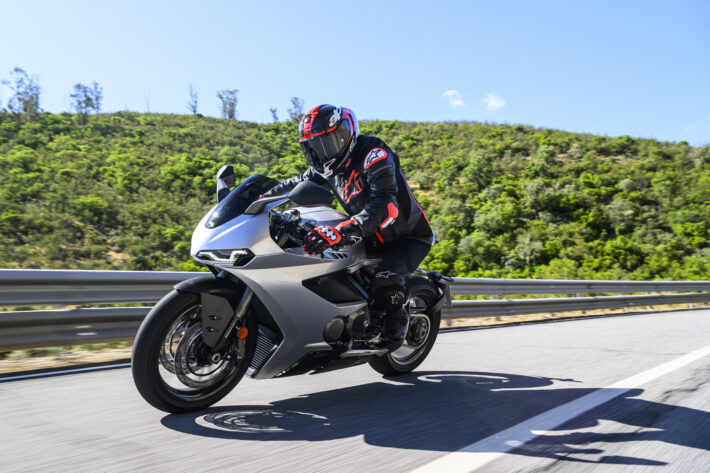
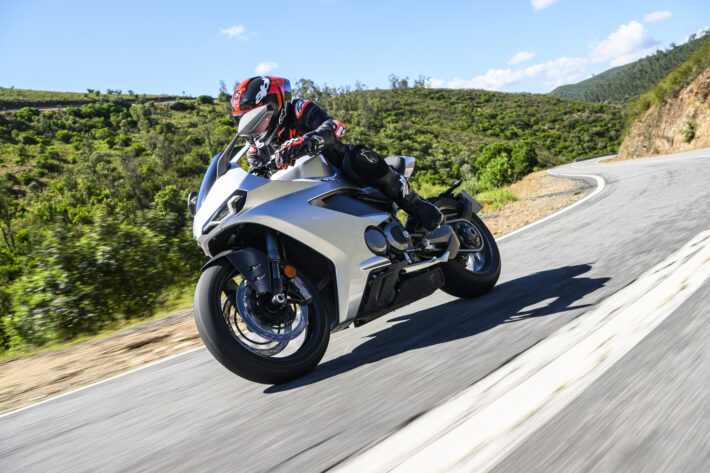
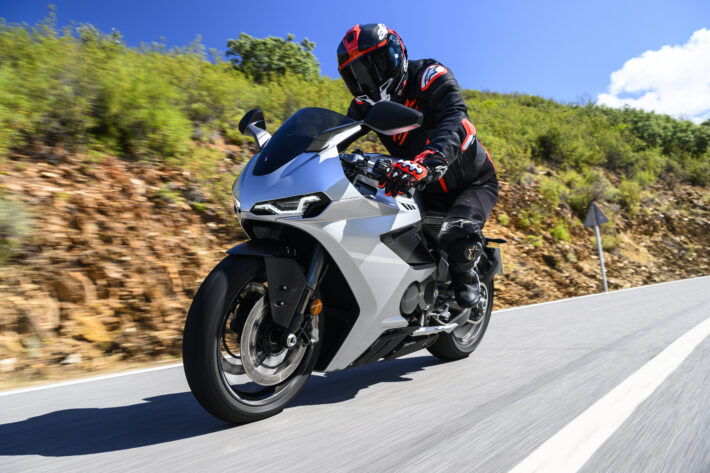
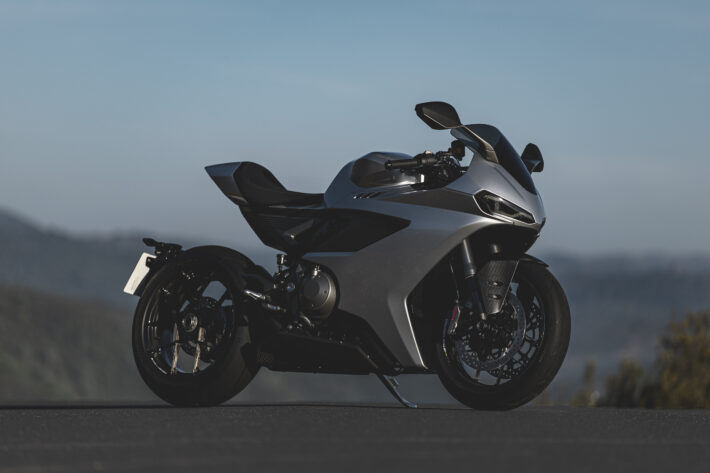
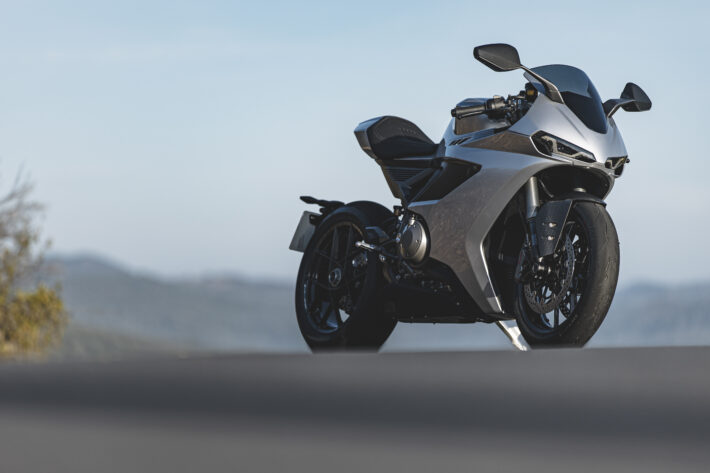
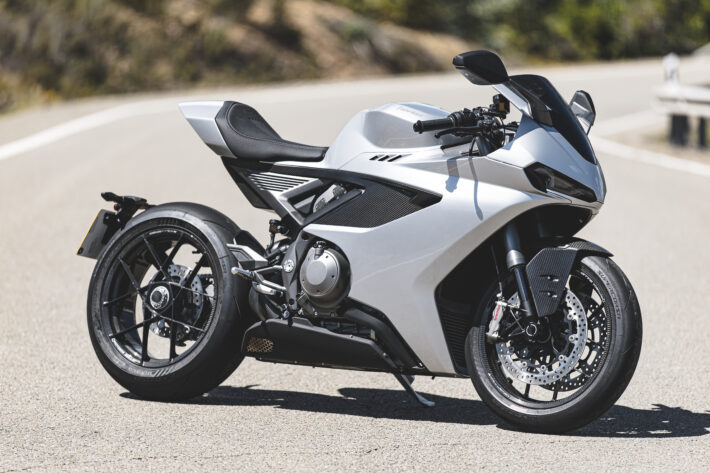
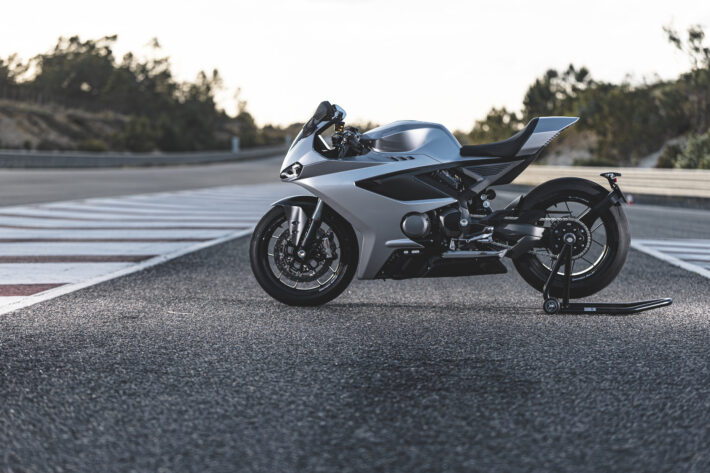
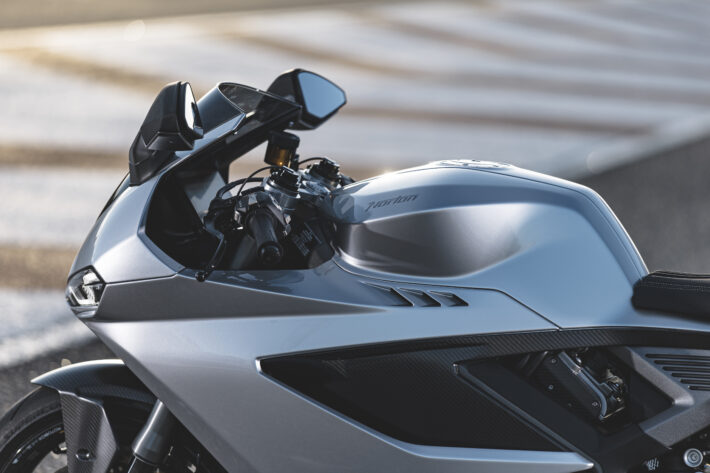
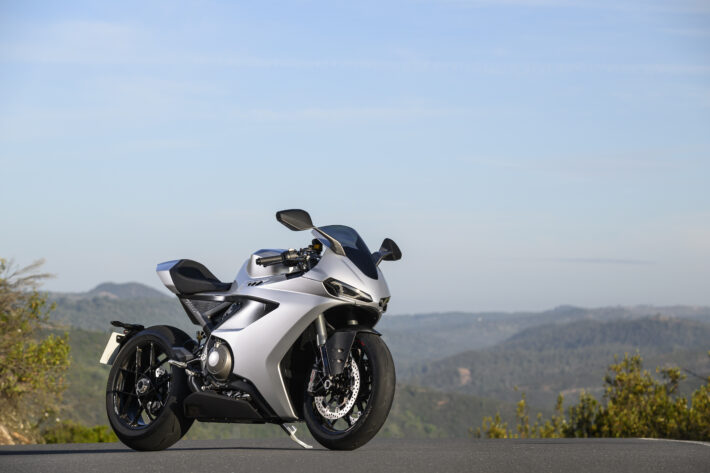
We’ve seen the Manx R before, at shows, in pre-production form. But this is our first chance to see, touch, feel and hear a final production-ready bike close up. It’s a slightly weird-looking beastie, there’s little argument about that, though it is growing on me the more I see of it.
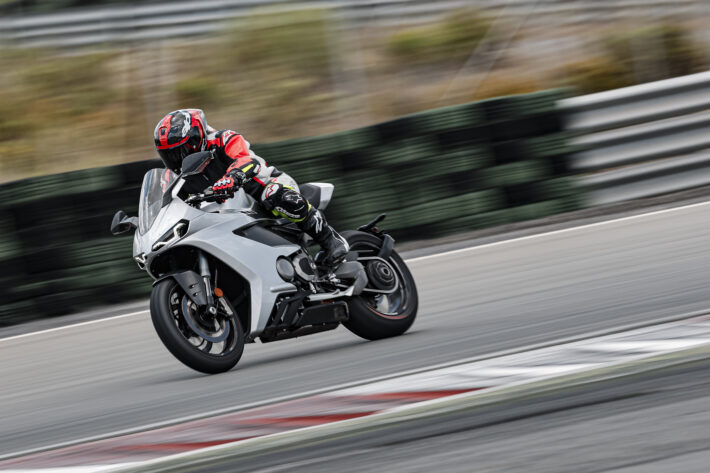
The Norton designer, Simon Skinner, explained part of the uncanny appearance to us earlier: there are no visible fairing fasteners on the bodywork, at all. The fixings are hidden by the seat and the undertray above the rear wheel, and that contributes to the smooth, almost A.I. looks.
It also gives a ‘car’ feel to the styling: cars don’t have nice stainless Allen headed bolts, Dzus fasteners or the like holding the panels in place. Bikes like the Ducati Panigale and BMW M1000 RR only have a few fairing fasteners these days, but the complete lack of them definitely jars a little here.
There are some lovely touches mind: the switchgear is a work of art: rather than just phone up a component supply firm and order ten thousand units of ‘bike switchgear set, premium, type F’, we have completely bespoke parts, with metallic buttons finished in attractive colours and custom ridged, tactile surfaces. Added to the frankly enormous 8” touchscreen dash display, and you have a really high end ‘rider interface’ setup.
But we’re not here to critique the Manx R’s looks – we’re here to ride the thing. And we’ve got a full day of road and track sessions, kicking off with a morning road ride. I get changed into my comfy old two-piece Alpinestars leathers, pop on my Supertech lid and boots, and line up behind the lead rider for our morning spin. There’s no key, and the dash takes a few seconds to go through its warm-up process, a little like an old TV set…
But a quick press of the button initiates the auto-starting process, and the big 1200cc V-four engine braaaps into life below me, then settles into a fast warm-up idle. The seat is a little on the tall side for my stumpy 30” legs, but the riding position is decent enough: sportsbike-committed of course, with some weight on the wrists, but not horribly so.
Sidestand up, once I can reach it with my new Supertech R boots on, into first, and we’re away. The bars and levers have a slightly chunky feel, but it’s high quality stuff, and that massive dashboard is clear and easy to read. Pootling out of the circuit access road, and through some urban routes, and the Norton behaves perfectly well.
The front end feels a bit heavy, as if the tyre is a little soft, but I soon adapt, and get into the Manx R groove. We’re on the Signature variant of the bike, which is the top-spec option, using Rotobox carbon fibre wheels and Marzocchi semi-active suspension.
The suspension package is a premium one, with internal linear potentiometer in the front fork for better tracking of fork position and acceleration, so allowing (in theory) better semi-active control.
That should shine on the roads in particular, where potholes, ruts, camber, surface changes and other inconsistencies are more common than on track. And, indeed, the Manx feels great on the Spanish asphalt round here, with plush, comfortable wheel control, and stable handling.
Out of town and into the hills, and our lead rider lifts the pace a bit. I’m still clearing the metaphorical sleep from my eyes, but as soon as I give the Manx a bit of throttle, it responds nicely. Of course, a full 1200cc V-four should have A Lot of power these days, and it is a very fast machine.
Get into the higher reaches of the rev range and it pulls like the proverbial train. The quickshifter is good both up and down, and the gearshift itself works well, though it wouldn’t go into neutral at a standstill without a bit of a fight.
The engine isn’t perfect mind, there’s a bit of a pause in proceedings around 4k if you let the revs drop too much, perhaps going into a tightening bend into the wrong gear. It’s not horrendous, and once you hit 6,000rpm it starts to sing again, but it’s a little surprising on so big an engine.
What’s not surprising is how good the brakes are. Norton’s fitted the best current Brembo road bike stoppers, with Hypure calipers on 320mm discs. They’re superb brakes on the road (and even better on track, as I discovered in the afternoon), with stacks of power and a lovely feel. Top marks to the Italian stopper-meisters I say!
We have a few hours on the road with the Manx R, including a couple of photo stops, and it’s great fun. We don’t often get to ride a full litre superbike on the road during press launches these days, and the route near Seville is lovely, with plenty of quiet, well-surfaced, twisty tarmac.
The Norton chassis package is polished, with a stable, civilised feel, albeit with that slow-speed steering still a bit heavy. The Pirelli tyres are faultless though, and you don’t really notice the slightly chunky weight of the bike when on the move.
My main concern on the road though is with Norton’s positioning of the Manx R. The firm says it’s supposed to be a premium, luxury street bike rather than a ‘mere’ race replica with winglets and track performance above all else. The term ‘GT’ is mentioned, rather like a classic four-door supercar aimed at high-speed blasts to the Cote d’Azur of a weekend with the Louis Vuitton bags in the boot and a V12 under the bonnet.
And that’s fine – but on a road bike I want dull things like a decent space under the seat for my Litelok D-lock and a set of waterproofs. I’ll need to take the odd pillion for more than half a mile in comfort.
And I’d like some sort of ability to carry some kit with me – even an overnight bag for a lad’s weekend away, or somewhere to stash the laptop and a change of clothes for an occasional commute or work trip. There’s nothing luxurious about lugging a big rucksack on your back down the M20 to Folkestone of a Friday evening.
And as it is, the Manx R has none of that stuff: it’s every bit as impractical as a Ducati Panigale V4 S or a BMW M1000 RR. Had the Solihull firm made the Manx with a bigger pillion seat, a larger fairing, a rear subframe that looks like it could take some luggage – something like a sportier, classier Honda VFR1200, say – then I’d take the supposed GT intent a bit more seriously.
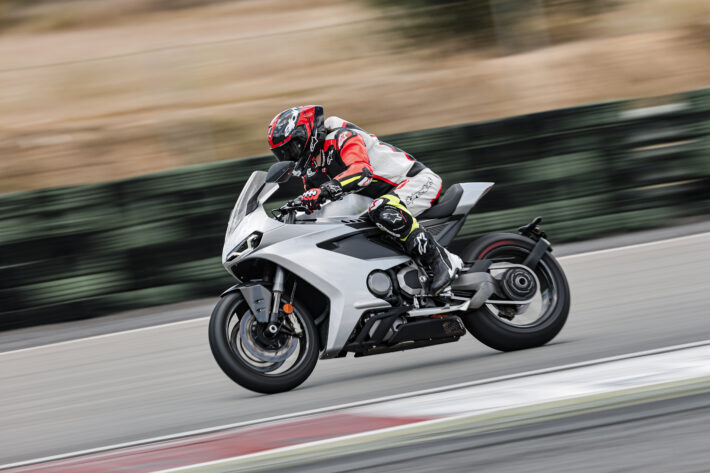
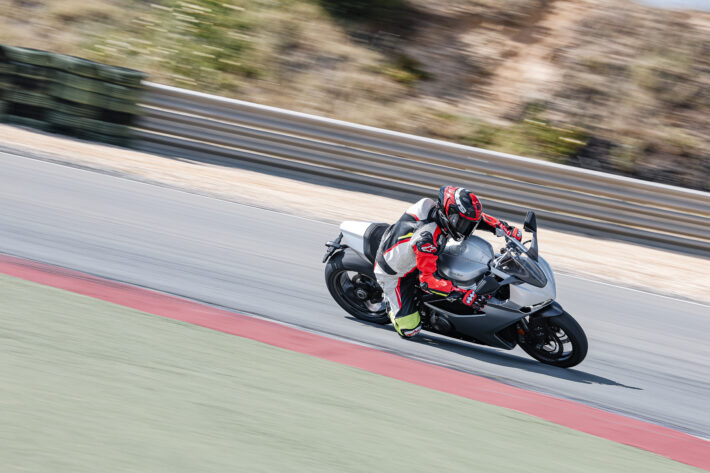
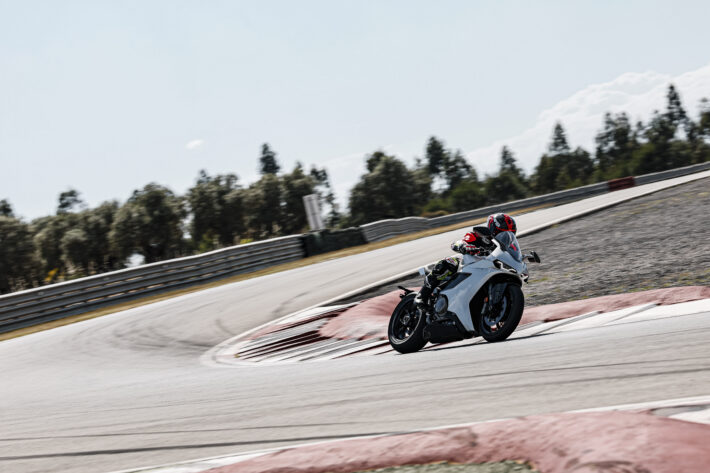
We’re back at the track now though, and my desires for expanding soft luggage and high bars evaporate once more, because we have the chance for a blast around Monteblanco circuit. Sadly, there’s not a lot of track time on the schedule: just two 20 minute sessions for each rider. And it’s my first visit here, meaning the first session will be spent finding my way round the technical, twisty track.
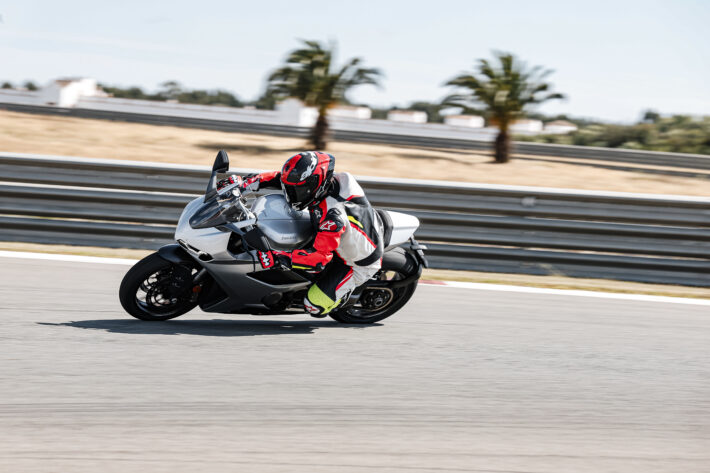
The Norton makes it easy though. Put a bit of extra effort into muscling it through the slower turns, make sure you keep the revs up, and you can batter round at a decent cruising speed with no fuss. Go a bit quicker, and you’re giggling into your lid at the top-end rush down the main straight, followed by the brick-wall stopping power from the Brembo Hypure calipers.
The electronics provide a comforting safety net too: the IMU-assisted traction control, wheelie control and ABS are ever-present and there’s the odd hiccup from the throttle when the traction cuts in a little early in the standard sport mode.
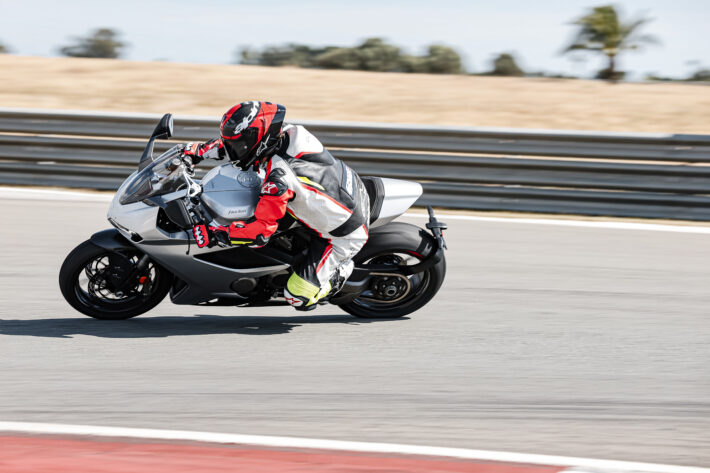
But dial in the customisable ‘Track’ modes and you can turn it all right down to suit your needs: traction and wheelie on minimum worked well for me on the final session (as an aside the electronic modes are easy to fettle, and stay where you put them when you turn the bike off, rather than putting all the safety stuff back on again).
The Pirelli Supercorsa rubber is amazing too of course, with ample grip and feedback – though the weight and power of the Norton on the abrasive Monteblanco surface means they’re rougher than Tarzan’s feet by the end of the sessions.
The day is over then, and as I pack up my sweaty Alpinestars airbag and race leathers, I consider the Manx R once more. As we said at the start, Norton as a firm had fallen a long way since the 1970s, and its journey back has been difficult indeed.
It would have been an incredible result had its first modern bike been able to best the likes of Ducati’s Panigale, BMW’s M1000 RR or Honda’s CBR1000 RR Fireblade. And it hasn’t really done that: the existing litre superbikes are astonishing pieces of moto-engineering, which top the Norton both on paper and in reality.
But what the new Anglo-Indian brand has done is make a really interesting, sorted big sportsbike, that is a genuine alternative to the options already out there. The pricing is very attainable as well: the entry level base model costs a little over £20k, with manual suspension and cast wheels.
The posher versions add the electronic suspension and lighter wheels, up to the £25k Apex and £39k Signature variants, but that starting price will surely tempt plenty of buyers out there to have a look.
Back home in London, on the weekend after the launch, if you’d given me the choice of a current Japanese/European superbike, or the Norton, for a sunny ride out to Box Hill, I’d have chosen the Manx R every time – and you can’t really say much better than that.
Norton Manx R Tech Specs
Price: £20,250
Engine: DOHC 16v, 72° V-four, l/c, 1200cc
Bore x stroke: 82×56.8mm
Compression ratio: 14:1
Carburation: Ride-by-wire fuel injection with eight injectors, separate throttle drive for front and rear cylinder banks.
Electronic rider aids: IMU-assisted suite with traction control, wheelie control, rear wheel slide control, launch control, power modes, up/down shifter.
Max power (claimed) 206bhp@11,500rpm
Max torque (claimed) 130Nm@9,000rpm
Transmission: six speed gearbox, cable operated wet slipper/assist clutch, chain final drive
Frame: die-cast aluminium, machined as single part
Front suspension: fully-adjustable 45mm Marzocchi USD front fork, manual-adjustable
Rear suspension: single-sided swingarm, fully-adjustable Marzocchi monoshock, manual adjustment
Brakes: dual 320mm discs, four-piston radial-mount Brembo Hypure calipers (front), 245mm disc, dual-piston caliper (rear), Bosch cornering ABS with hill hold
Wheels/tyres: cast aluminium/Pirelli Diablo Supercorsa SP-V4, 120/70 17 front, 200/55 17 rear
Rake/trail: 24.1°/94.5mm
Wheelbase: 1,435mm
Seat height: 840mm
Kerb weight: 210kg (wet no fuel)
Fuel capacity: 14.5 litres
Equipment: 8” HD colour TFT LCD dash with smartphone Bluetooth and wifi connectivity, multimedia, navigation, GoPro camera control. Keyless ignition, LED lighting, cruise control
VARIANT SPEC DIFFERENCES
Manx R Apex £24,750 – as stock except:
- 207kg wet no fuel
- Electronically-adjustable semi-active Marzocchi suspension
- Two-seat configuration (rider and pillion)
- Lightweight composite bodywork
- OZ Racing forged aluminium wheels
Manx R Signature £38,750 – as Apex except:
- 203kg wet no fuel
- Single seat
- Lightweight carbon fibre bodywork
- Rotobox Bullet Pro carbon fibre wheels
- Signature lighting and dash start-up sequences
Disclaimer: the sole purpose of this article is to provide guidance on the issues covered. This article is not intended to give legal advice, and, accordingly, it should not be relied upon. It should not be regarded as a comprehensive statement of the law and/or market practice in this area. We make no claims as to the completeness or accuracy of the information contained herein or in the links which were live at the date of publication.
You should not act upon (or should refrain from acting upon) information in this publication without first seeking specific legal and/or specialist advice. Arthur J. Gallagher Insurance Brokers Limited trading as Devitt accepts no liability for any inaccuracy, omission or mistake in this publication, nor will we be responsible for any loss which may be suffered as a result of any person relying on the information contained herein.