
The original Ducati DesertX appeared nearly five years ago, in 2021, and was one of the firm’s more critically-acclaimed hits. It looked great, with a sweet blend of modern and retro styling and tapped perfectly into a neat part of Ducati’s heritage: the Cagiva era of the 1980s.
Back then, Ducati was actually owned by Claudio Castiglioni’s Cagiva firm, and its air-cooled two-valve desmodromic V-twin engines featured in a range of Cagiva machines – including the 900 SS-powered Elefant that won the Dakar Rally in 1990 and 1994.
Fast forward thirty-odd years, and Ducati came up with a bike that echoed the styling of the Cagiva Lucky Explorer Dakar race bike, sponsored by cigarette brand Lucky Strike and ridden by genuine Dakar legend, Italian racer Edi Orioli.
So the styling was near-perfect (though it didn’t have the full distinctive Lucky Strike circles…) – but the rest of the bike was great too. It was based around the firm’s mid-power V-twin platform of the time, which was the 937cc Testastretta 11° unit seen on the likes of the Multistrada and Hypermotard 950 models, in a trademark steel tube trellis frame, with long-travel off-road suspension and dirt-friendly running gear.
A proper 21” front wheel, dual-sided aluminium swingarm and 230/220mm wheel travel front and rear made for a capable off-road tool, but extra kit like an optional eight litre rear fit saddle fuel tank marked it out a something a little bit special too.
It’s not been a massive seller in the vein of the Multistrada V2/V4 or BMW 1250 GS, but is more of a connoisseur’s choice in the rally sector. If a Yamaha Ténéré 700 is a bit mainstream for you, and a BMW F950 GS too clinical, the Ducati DesertX offers something much classier and exotic, yet still capable. It was great to ride, on and off-road, as well.
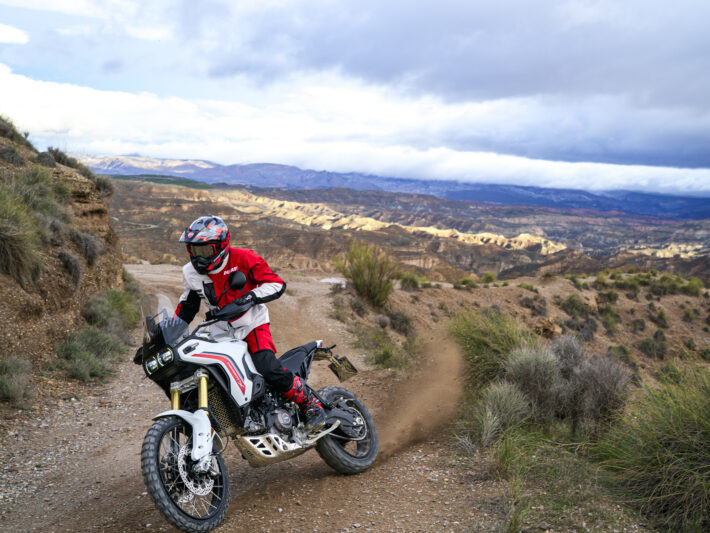
And now, of course, there’s a second generation version for 2026, with a full modern revamp and the latest engine and chassis tech from Bologna. This has been forced on the firm to a certain extent of course: the old 937cc Testatretta 11° engine couldn’t pass the latest Euro 5+ emissions regulations, and it’s been phased out across the board.
Ducati’s replaced it in the Multistrada, Hypermotard, Monster and Streetfighter V-twin models with the new 890cc V2 engine, a thoroughly modern motor, albeit one which has dropped the desmodromic valve operation which Ducati made its name with (and is still used on its highest-performing sporty track and race bikes).
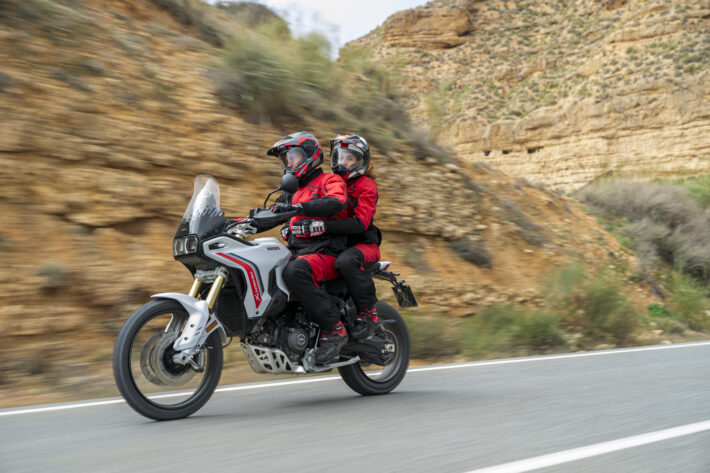
It is, as Ducati continues to remind us, pretty light, indeed it’s the lightest four-valve V-twin unit the firm has produced to date, which makes up for its moderate power figure: the version in the DesertX makes 110bhp at 9,000rpm, which is on par with the old bike’s numbers (other versions on the Panigale V2, Hypermotard and Streetfighter V2 make 120bhp, the Multistrada V2 115bhp).
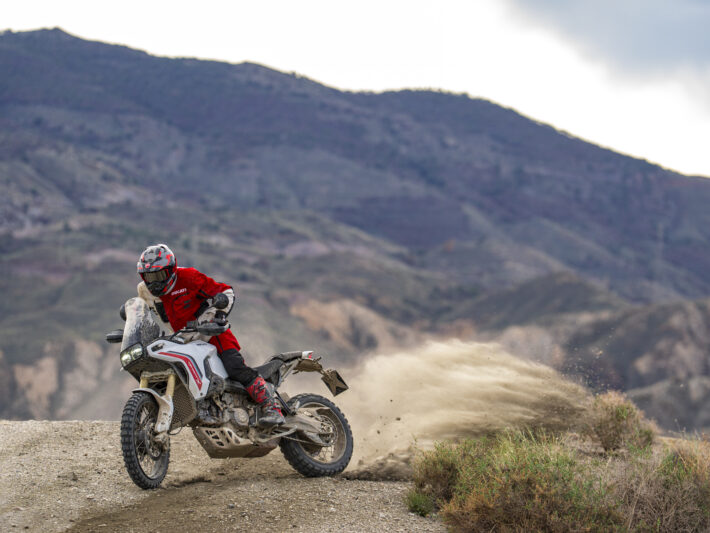
One major upside of the non-desmo valvegear and new engine design is increased maintenance intervals: valve checks are at nearly 28,000 miles and oil changes are at around 9,000 miles/two years (45,000km and 15,000km). Ducati also says the ride-by-wire, DOHC 8v liquid-cooled powerplant makes major torque down low, thanks in part to its variable intake valve timing setup.
Peak torque is a solid 92Nm (68ft lb) and the firm says you can access more than 70 per cent of that by 3,000rpm. The DesertX unit also has specially selected ratios in the gearbox – they’re shorter in the first four gears for better acceleration and off-road use, with a longer sixth ratio to reduce engine revs while cruising, giving the best of both worlds.
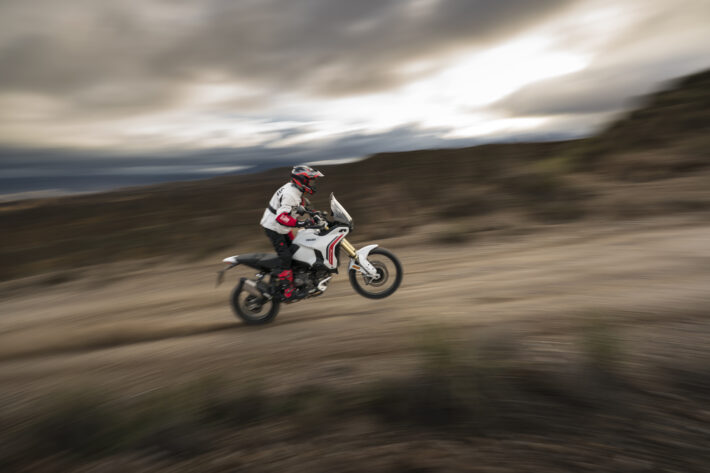
Along with the new engine is a new frame philosophy: the old steel tube trellis unit has been swapped for an aluminium cast monocoque component to suit the rest of the modern range. It’s super light and stiff, and incorporates the airbox and filter housing, with cunning design that makes filter access easier, so it can be cleaned after an off-road session without too much grief.
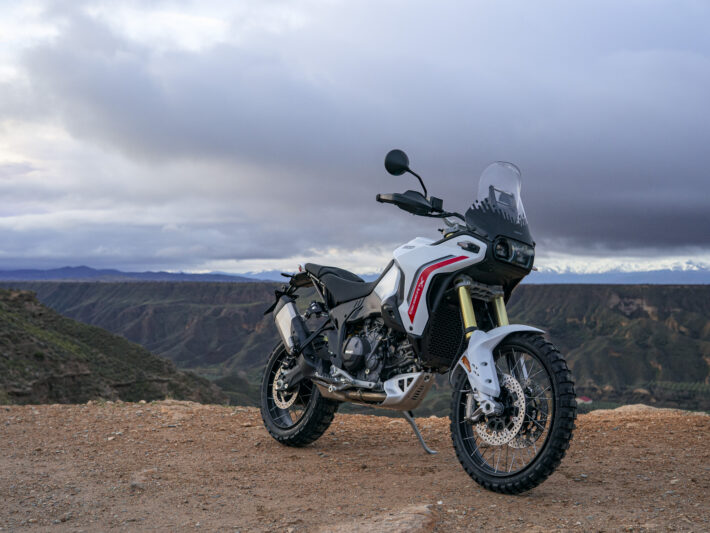
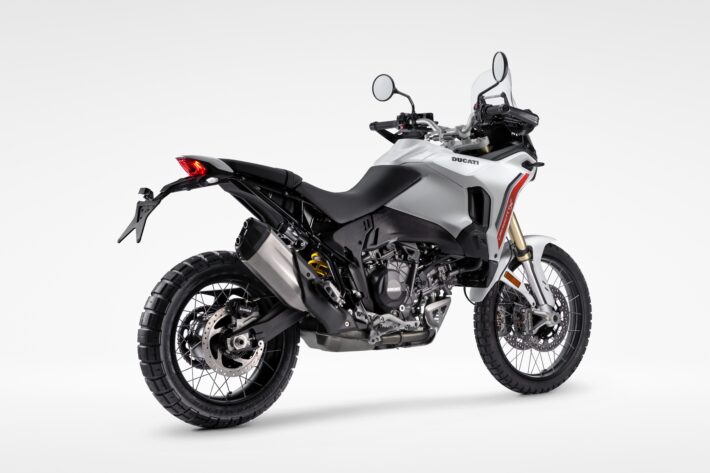
Purists may complain about the replacement of a classy steel tube trellis main frame with a rather soul-less computer-designed aluminium casting, but on the DesertX there is a hat-tip to the past, with a trellis design on the welded rear subframe (though it’s begging to be powder-coated red rather than subtle black we reckon).
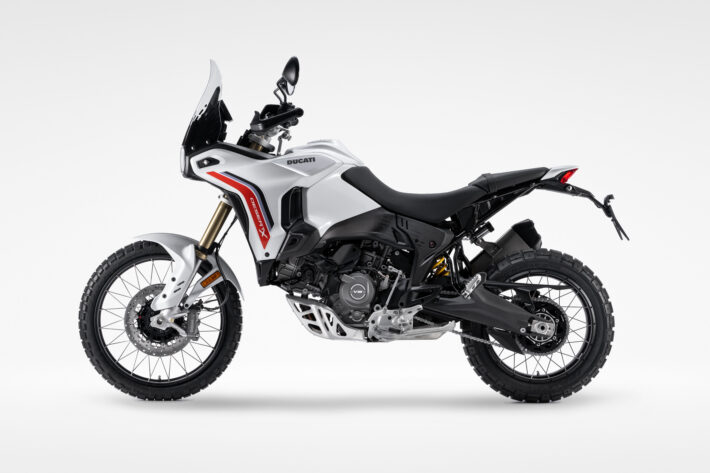
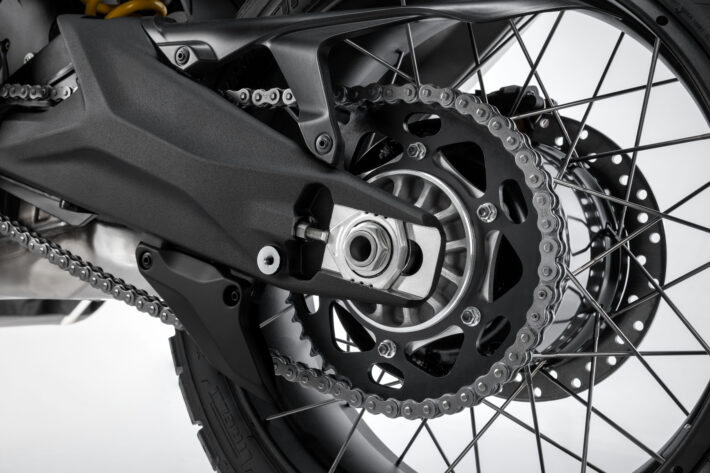
The rear swingarm is a proper piece of kit mind: a beefy-yet-sinuous asymmetric cast aluminium dual-sided part that’s unique to the DesertX and built tough for off-road antics. The new chassis design and engine has saved a bit of weight: the new bike is claimed at 209kg wet with no fuel, while the old bike was 202kg dry or 223kg wet.
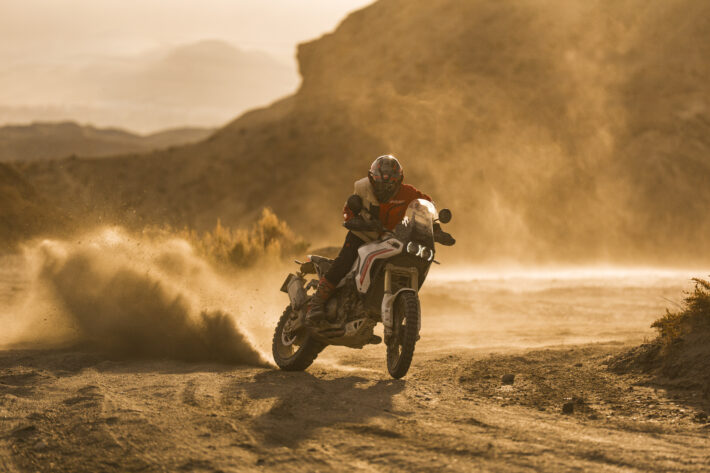
The running gear is largely on par with the original bike: beefy 46mm USD KYB front forks and a KYB rear monoshock, both fully adjustable with a remote preload adjuster on the shock, and plenty of wheel travel: 230mm front and 220mm rear. Ducati says the units are improved designs though, with better performance, especially off-road.
Wheels are proper off-road parts too, with a 21-inch front and 18-inch rear wire-cross spoked tubeless rims, which come with Pirelli Scorpion Rally STR adventure touring rubber in 90/90 21 and 150/70 18 sizes. Ducati says they can also take more hardcore dirt fitments, and there are factory homologated options for that in the Pirelli Scorpion lineup.
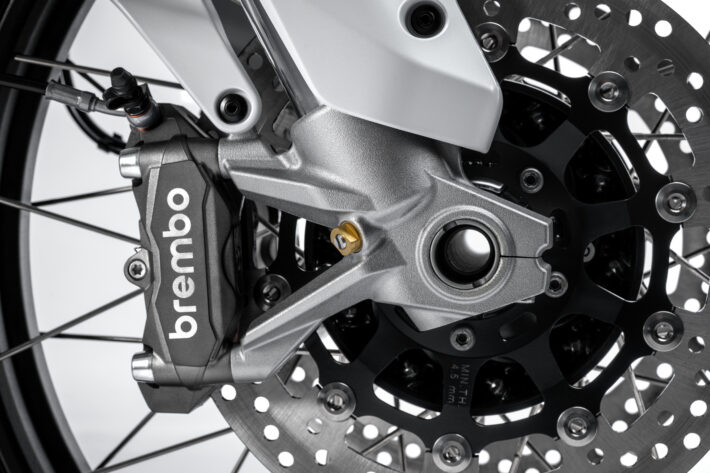
Brakes are by Brembo, with monobloc M4.32 radial four-piston calipers and a pair of 305mm discs up front, controlled by an axial master cylinder and assisted with switchable cornering ABS. This is a specific off-road setup of course, with four levels of adjustment.
Levels 1 and 2 are designed for specific off-road use, with level 1 dedicated to faster riders and level 2 allowing less experienced riders to become familiar with typical off-road manoeuvres, while safely reducing braking distance on dirt roads. Levels 3 and 4 are optimised for road riding, offering maximum safety without ever being invasive.
The ABS can also be disabled completely for off-road use, in Enduro and Rally riding modes only.
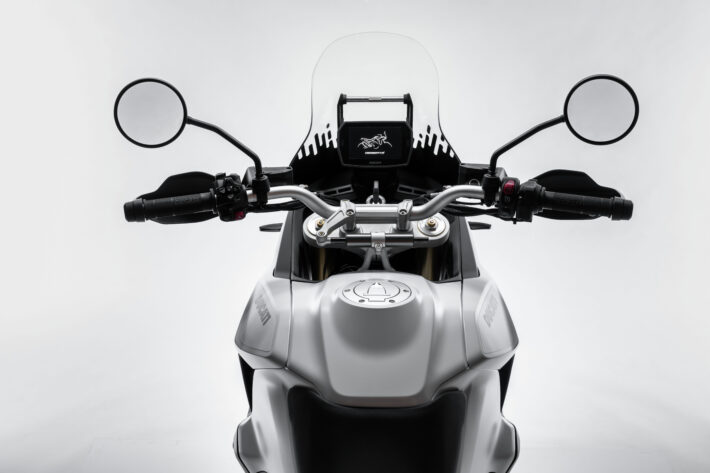
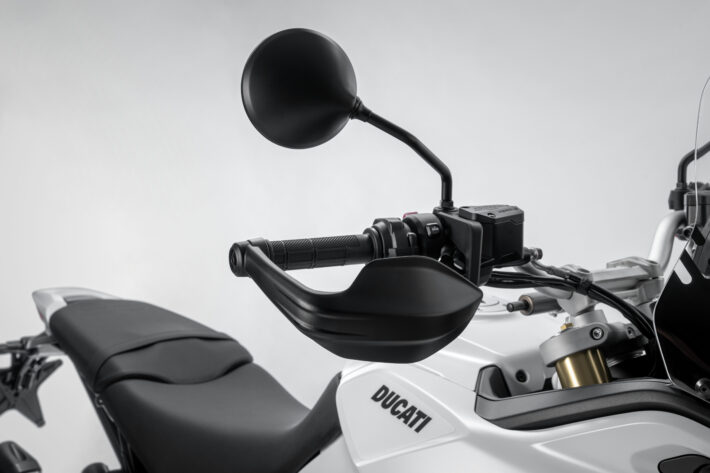
Speaking of the electronics, you do of course get the latest suite of road/dirt assistance from Ducati, which features six-axis IMU assisted cornering traction control, wheelie control, engine brake control, and six preset riding modes including those two offroad modes: Enduro and Rally. There’s a neat 5” colour LCD dash packed with info, and the expected stuff like LED lighting, up/down quickshifter, cruise control and optional tyre pressure monitoring setup.
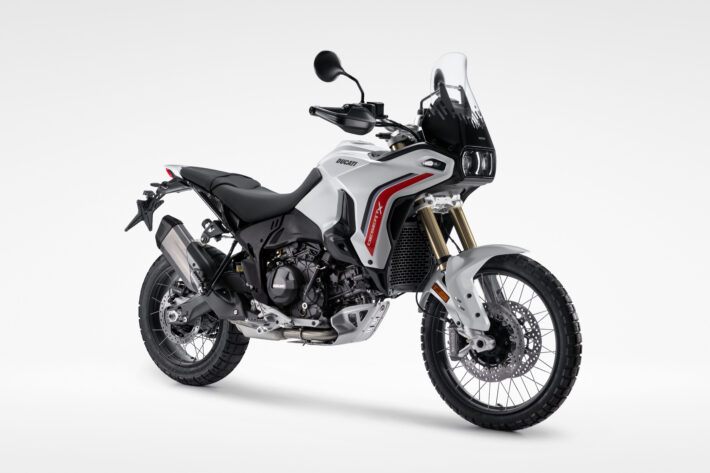
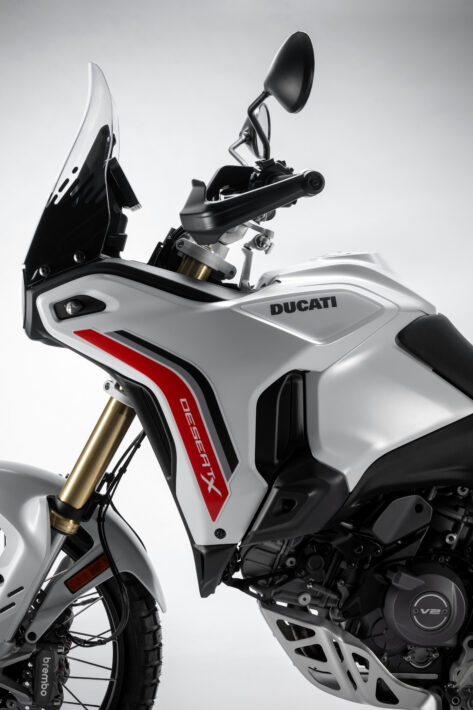
Design-wise, Ducati’s not drifted too far from the original DesertX style, which is good news we reckon. The brilliant white paint is classy stuff, and the graphics add subtle red and grey highlights. Those trademark dual headlights are a great touch, blending modernity from the bright LED segments and classic round rally headlight styling from the good old days.
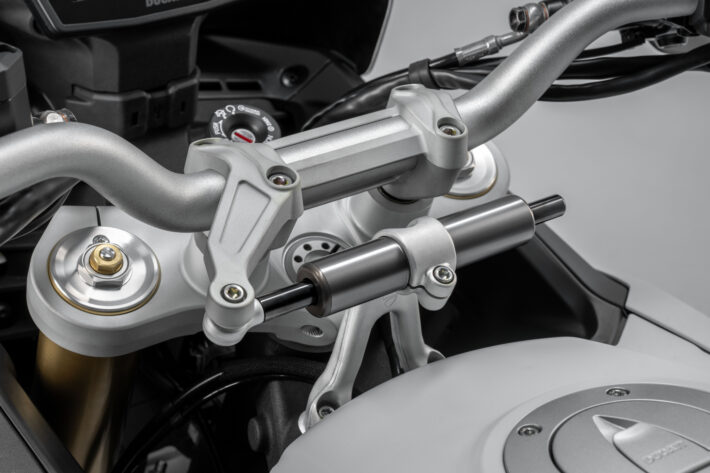
And the bodywork has been tweaked too: the 18-litre fuel tank (down from 21 litres on the old bike) is a new polymer unit that’s slimmer and lighter than before and claims to give a better fit for riders, with easier movement in the saddle. The riding position overall has been fettled, with wider bars more forward bars and seat, and the pegs moved further back.
Seat height at 880mm is a little imposing as standard if you’re on the stumpy side, but there are lowered seat and suspension options that can get it down to 840mm.
The tail unit is slim and stylish with the trellis subframe, but is also a solid base for pillion, luggage and the optional rear saddle fuel tank accessory, with adds an extra eight litres of petrol to the standard 18 litre capacity.
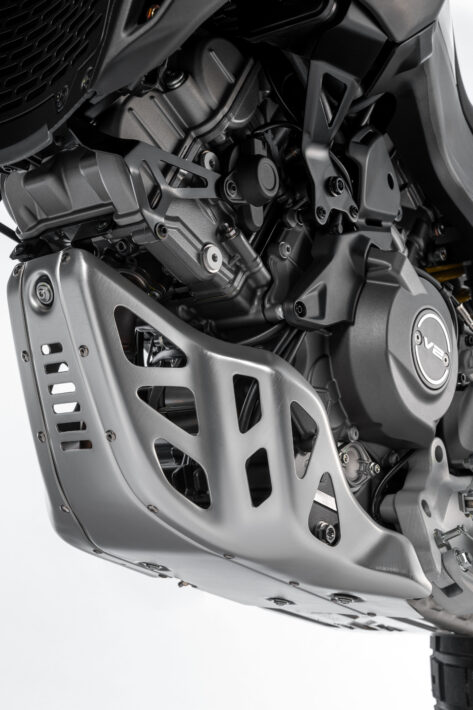
Ducati offers aluminium hard case fitments, as well as soft luggage options from Mosko Moto, and other options include a titanium Termignoni pipe, crash bars, add-on Multimedia Bluetooth module and navigation integration.
The new second generation DesertX will be in the shops for April, and there’s a tempting introductory launch price for the UK: just £14,995 for orders placed before 30th June, 2026. More info: www.ducati.com
2026 Ducati DesertX Tech Highlights
Main Standard Equipment
V2 engine, 890cc
Max power: 110bhp@9,000 rpm
Max torque: 92Nm@7,000 rpm
Wet weight no fuel: 209 kg
18L polymer fuel tank
Dedicated monocoque chassis
Dedicated trellis subframe
46 mm KYB upside-down fork, fully adjustable with independent settings on both legs, 230mm wheel travel
KYB monoshock, fully adjustable with remote preload adjustment, 220mm wheel travel
Dedicated double-sided swingarm with progressive link
2.15” x 21” tubeless spoked wheels at the front and 4.5” x 18” at the rear
Front braking system with Brembo M4.32 radial calipers and dual 305 mm discs
Pirelli Scorpion Rally Street 90/90 and 150/70 tyres
Latest-generation electronic package with 6-axis Inertial Measurement Unit (6D IMU): switchable ABS with four
levels of cornering functionality; Ducati Traction Control (DTC); Ducati Wheelie Control (DWC); Ducati Quick Shift
(DQS) 2.0; Engine Brake Control (EBC)
New petal-shaped joystick
New 5″ full-TFT dashboard with 16:9 aspect ratio and 800 x 400 resolution
Riding Modes (Sport, Touring, Urban, Wet, Enduro, Rally)
Full-LED headlights with DRL and dynamic turn indicators, ready for Ducati Multimedia System (DMS), turn-by-turn navigation, cruise control, Ducati brake light EVO
2026 Ducati DesertX specs
Engine: Ducati V2 engine: 90° V2, four valves per cylinder, intake variable valves timing system, liquid cooled, 890cc
Bore x stroke 96mm x 61.5mm
Compression ratio: 13.1:1
Fuel injection: electronic fuel injection system, 52mm throttle body, one injector per cylinder, ride-by-wire
Peak power: 110.3bhp (81.1kW)@9,000 rpm
Peak torque: 92Nm@7,000rpm
Clutch: Hydraulically-controlled slipper wet clutch.
Frame: Aluminium monocoque frame
Front suspension: Fully adjustable 46mm USD KYB fork, 230mm travel
Rear suspension: fully-adjustable KYB rear shock with remote preload adjuster, dual-sided aluminium swingarm, 220mm travel
Wheels: wire cross-spoked tubeless, 2.15 x 21 4.50 x 18
Tyres: Pirelli Scorpion Rally STR 90/90 21 150/70 18
Brakes: Dual 305mm semi-floating discs, radially mounted Brembo Monobloc four-piston two pad calipers (front), single 265mm disc, Brembo dual-piston caliper (rear). Cornering ABS.
Dash: Digital unit with 5″ TFT display 800×480 resolution
Kerb weight: 209kg, wet with no fuel
Seat height: 880mm standard, with high/low seat accessories can be 840, 860 or 890mm
Wheelbase: 1,615mm
Rake/Trail: 27°/114mm
Fuel capacity: 18 litres
Rider aids: Riding Modes, Power Modes, Ducati Traction Control (DTC), Ducati Wheelie Control (DWC), Engine Brake Control (EBC), Bosch Cornering ABS, Ducati Brake Light (DBL)
Standard equipment: Ducati Quick Shift (DQS) up/down 2.0, lithium-ion battery, quick adjustment buttons, coming home lights, cruise control, TFT colour display, full LED lighting system, daytime running light (DRL), dynamic turn indicators, self-cancelling turn indicators, Two USB ports.
Also ready for anti-theft alarm, additional LED lights, tyre pressure monitoring system (TPMS), Ducati Multimedia System (DMS), heated grips, turn-by-turn navigation system
Warranty: 48 months, unlimited mileage
Service intervals: 12 months 15,000 km (9,000 mi), valve check 45,000 km (28,000 mi)