
Triumph’s 400 singles are its smallest entry-level road bikes, but the British firm also offers a sweet range of ‘first big bikes’ aimed at both A2 licence holders (with 48bhp restrictor kits), and full power riders looking for something a bit less mental than a 180bhp Speed Triple 1200 or Rocket 3.
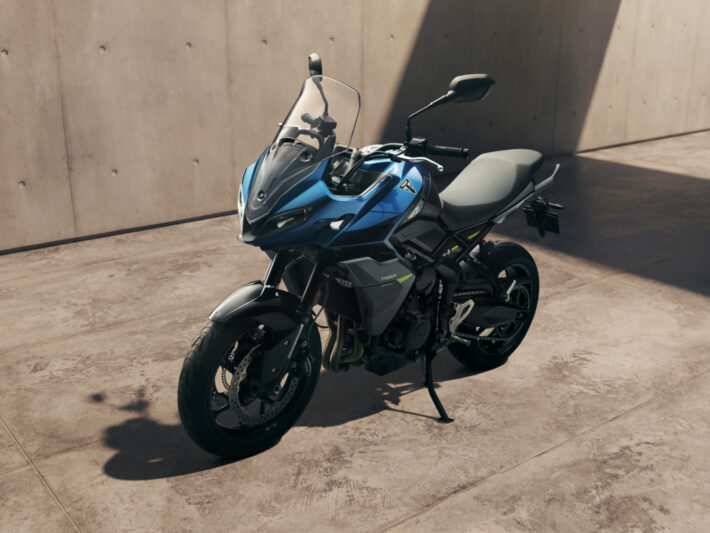
You can go for one of the 900 twins from the retro range, like the Bonneville, Scrambler or Speed Twin, but the 660 triples arguably offer the best blend of performance, handling and practicality for most riders. When they were launched, the Triumph Trident 660 and Tiger Sport 660s used a bespoke variant of Hinckley’s long-serving three-cylinder middleweight engine, in sensible, usable chassis setups.
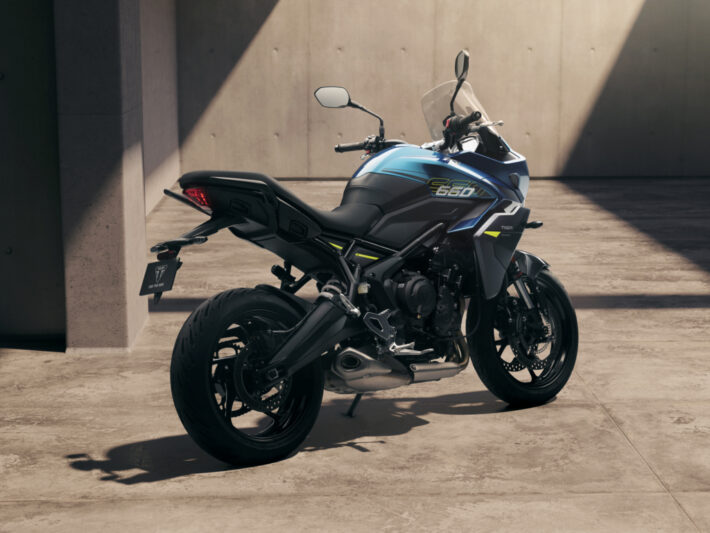
The performance was decent if a little steady, with around 80bhp from the engine. And parts like the steel tube frame and twin-piston sliding calipers, which were fitted to keep the price down, meant they were a little heavy and down a tad on ultimate chassis prowess.
No-one cared very much though, and the 660s have been a big hit sales-wise for Triumph. Now, for 2026, the firm has given them a pretty serious tune-up, as well as adding new bodywork, a bigger fuel tank on the Tiger, and a refresh on the running gear.
Starting with the engine, which is always our favourite bit, the big change is a fundamental re-jigging of the intake system. The original 660s used a single throttle body, with one butterfly valve controlling the air going into all three cylinders. That’s a common setup in low- and medium-performance cars, going way back to the days of carburettors, when even giant American V-8 engines had one single carburettor, but it’s unusual on bikes.
The reasons are simple enough: bikes have small engine capacities and need to rev higher than the larger, slow-revving engines in cars to make power. Having a throttle body or carb for each cylinder improves airflow, particularly at higher revs, and means more peak power. The original 660s were tuned for midrange, with peak power around 80bhp at 10,250rpm and peak torque of 64Nm at 6,250rpm – plenty enough for the job in hand but nothing spectacular.
The 2026 bikes get new individual throttle bodies for each cylinder though, and the result is a significant jump in peak power and torque – each figure made at higher revs. Both the Trident and Tiger Sport 660 now make 95bhp at 11,250rpm, a thousand revs higher than before, and torque is up to 68Nm at 8,250rpm, 2,000rpm higher than the previous unit.
Triumph says though that the new engine remains flexible, with more than 80 per cent of the peak torque available between 3,000 and 12,000rpm – it’s not produced a screaming rev-happy monster…
The triple throttle valves are 44mm in diameter, and the new setup is matched to a bigger airbox with enhanced gas flow plus deeper intake sound. The cylinder head has been tweaked too with bigger exhaust valves and higher-lift camshafts, and there’s new fuel ECU mapping to suit all of those changes.
That extra power means more heat, so the cooling system is revamped, with a bigger radiator and fan, repositioned in front of the motor to get rid of it. New gearbox input and output shafts, revised gearing and final drive, and a new three-into-one exhaust system rounds off the powertrain mods – so it seems like owners of the older bikes won’t have any simple way to bolt on them extra 15 ponies…
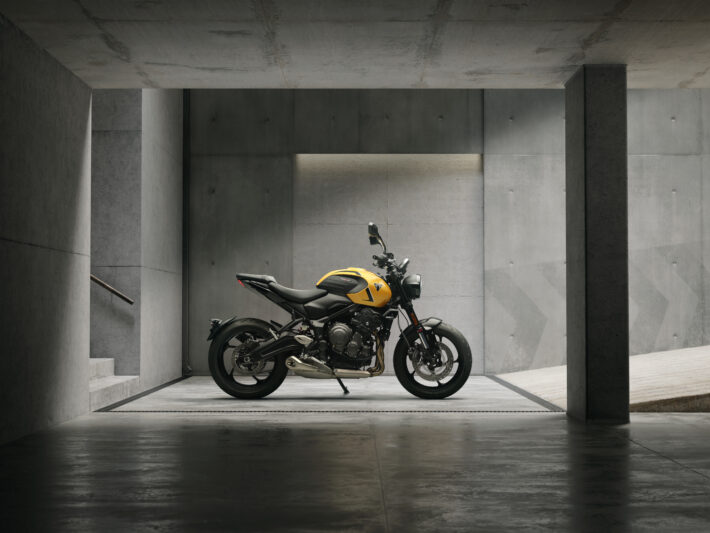
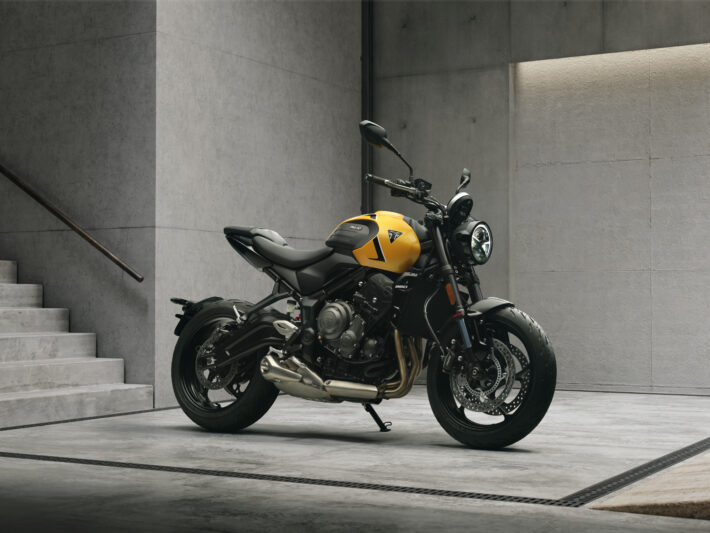
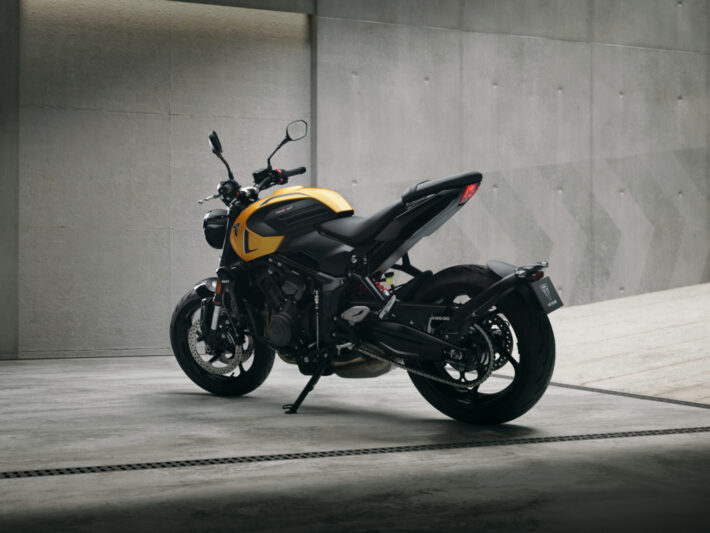
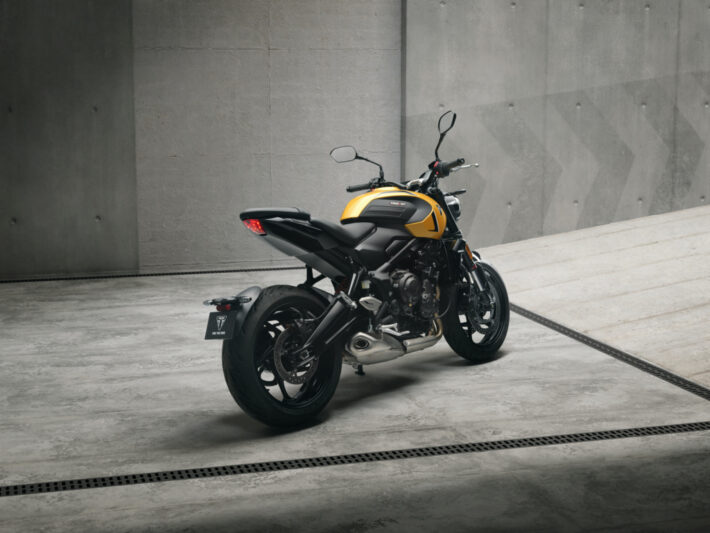
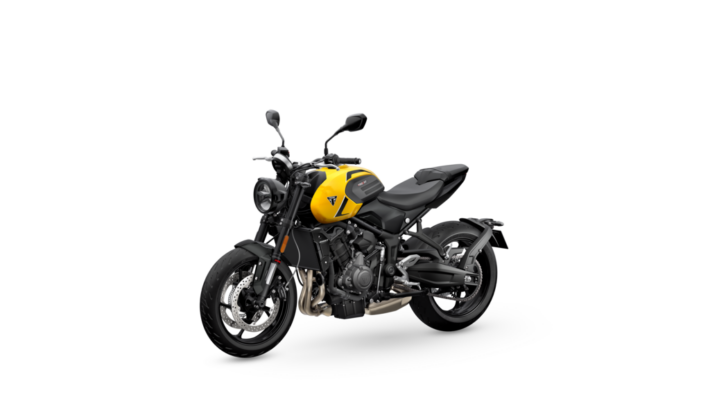
Away from the engine, there are some other neat updates to chassis, bodywork and styling. The Trident sees a revised frame and new Showa rear monoshock with preload/rebound adjustment matched to the same Showa 41mm USD big piston forks at the front.
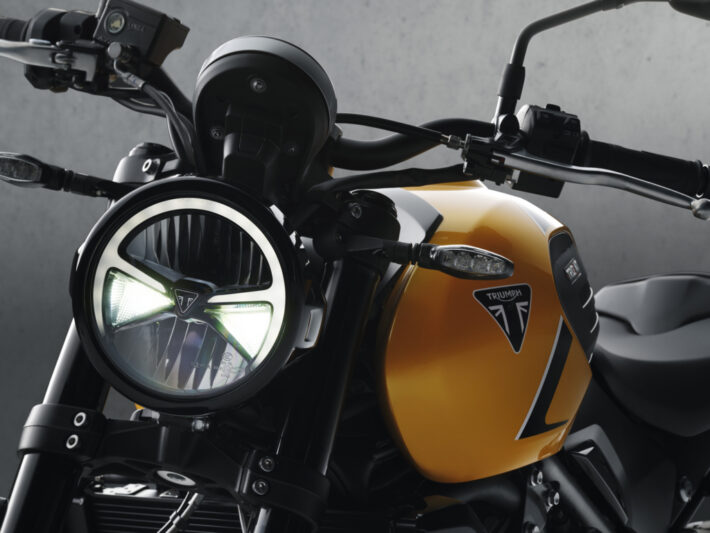
Lightweight cast aluminium wheels wear Michelin Road 5 tyres and there are the same overall brake specs as before: dual 310mm discs with twin-piston Nissin calipers up front. The bars are wider for 2026, together with new bodywork: a redesigned wider fuel tank, two-piece seat, optional single seat cowl, and a heap of minor tweaks.
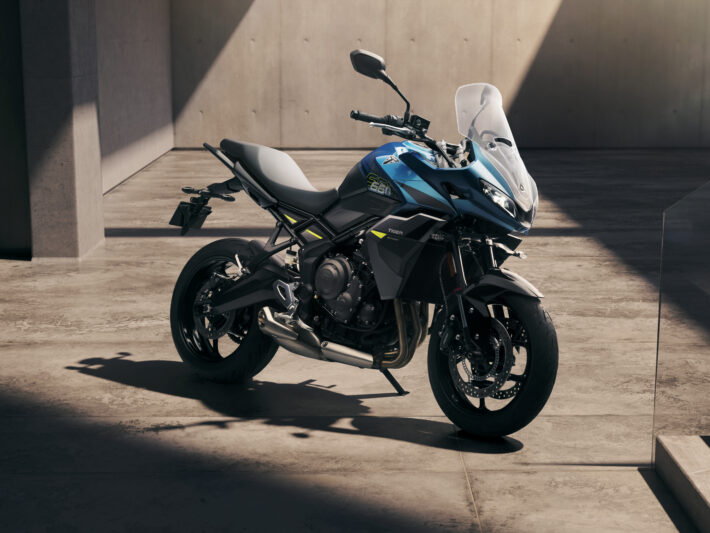
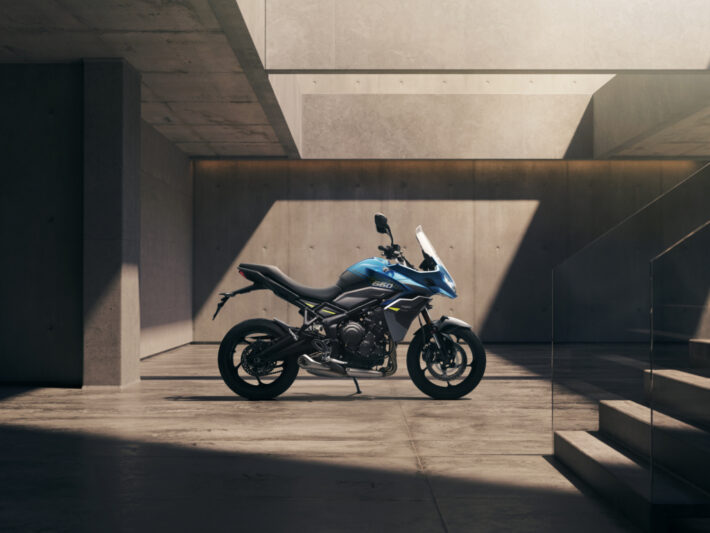
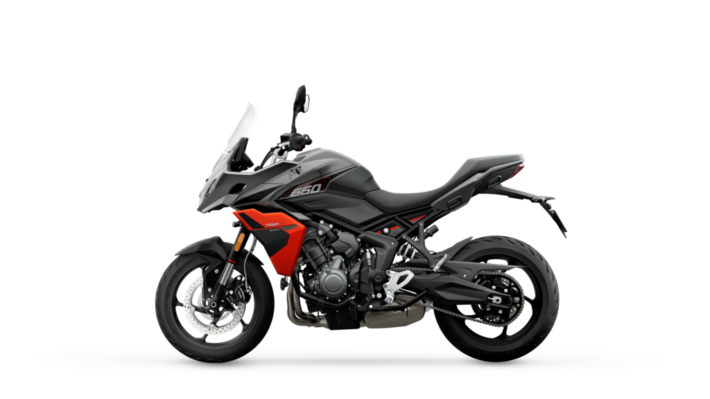
The Tiger Sport 660 has similar revisions to the Trident: same engine upgrades, restyled bodywork, and tweaked main frame. It already had higher-spec suspension compared with the Trident, so that stays the same, with remote hydraulic preload adjustment on the rear shock and longer travel (150mm) at both ends.
There is a welcome upgrade on the fuel capacity though – now up 1.4 litres to 18.6 litres from 17.2 litres. We hope this is a growing trend – nothing irks us more than seeing bikes with 14 litre tanks that need filled up every time you go for a decent blast…
Both bikes keep the very decent tech levels that Triumph’s getting a reputation for: IMU-assisted cornering ABS and traction control, rider power modes, colour dashboards, Bluetooth link, up/down quickshifter, LED lighting, and cruise control all as standard on both machines. The only downside we can see is an extra 5kg mass on both bikes for this year: the Trident 660 is up to 195kg wet and the Tiger Sport 660 is 211kg.
So – some welcome updates for two popular bikes. And they come with the usual Triumph benefits: Hinckley says they offer a class-leading 10,000-mile service interval, the lowest workshop time in the category, and competitively priced parts.
Every bike also comes with a two-year unlimited mileage warranty, covering not only the motorcycle but any genuine Triumph accessories purchased with it.
The new Trident 660 is available from £8,095 on the road, and the Tiger Sport 660 from £9,295 on the road. Both models will be in the shops in March.
2026 TRIDENT 660 specs
| ENGINE AND TRANSMISSION | |
| Type | Liquid cooled, inline 3-cylinder,12 valve, DOHC, 240° Firing order |
| Capacity | 660cc |
| Bore | 74.0mm |
| Stroke | 51.1mm |
| Compression | 12:1 |
| Max Power EC | 95 PS / 95 bhp (70 kW) @ 11,250 rpm |
| Max Torque EC | 68 Nm @ 8,250 rpm |
| System | Multipoint sequential electronic fuel injection with electronic throttle control. 3 rider modes (Rain, Road, Sport) |
| Exhaust | Stainless steel 3 into 1 header system with low single sided stainless steel silencer |
| Final Drive | X-ring chain |
| Clutch | Wet, multi-plate, slip & assist |
| Gearbox | 6 speed |
| CHASSIS | |
| Frame | Tubular perimeter frame, steel |
| Swingarm | Twin-sided, fabricated pressed, steel |
| Front Wheel | Cast, aluminium alloy, 5 spoke, 17 x 3.5 in |
| Rear Wheel | Cast, aluminium alloy, 5 spoke, 17 x 5.5 in |
| Front Tyre | 120/70 R 17 |
| Rear Tyre | 180/55 R 17 |
| Front Suspension | Showa 41mm USD separate function big piston (SFF-BP) forks, 120mm wheel travel |
| Rear Suspension | Showa monoshock rear shock, with preload & rebound adjustment, 130mm wheel travel |
| Front Brakes | Twin 310mm fixed discs, 2 piston sliding calipers, OCABS |
| Rear Brakes | Single 255mm fixed disc, single piston sliding caliper, OCABS |
| Instrument Display and Functions | LCD Multifunction Instruments with integrated colour TFT screen |
DIMENSIONS & WEIGHTS |
|
| Length | 2024 mm |
| Width Handlebars | 815 mm |
| Height Without Mirror | 1088 mm |
| Seat Height | 810 mm |
| Wheelbase | 1402 mm |
| Rake | 24.5 ° |
| Trail | 108 mm |
| Wet Weight | 195 kg |
| Tank Capacity | 14 litres |
| SERVICE | |
| Service Interval | 10,000 miles (16,000km)/12 months (whichever comes first) |
| CONSUMPTION AND EMISSIONS | |
| Fuel Consumption | 4.9 l/100km (57.6 mpg) |