

You might be wondering, “What is a café racer bike?” and it’s not an unusual question, as we don’t see too many of them on our roads these days. But the café racer motorbike is one of the more instantly recognisable motorbike styles, famed for its minimalist design and retro-inspired appearance.
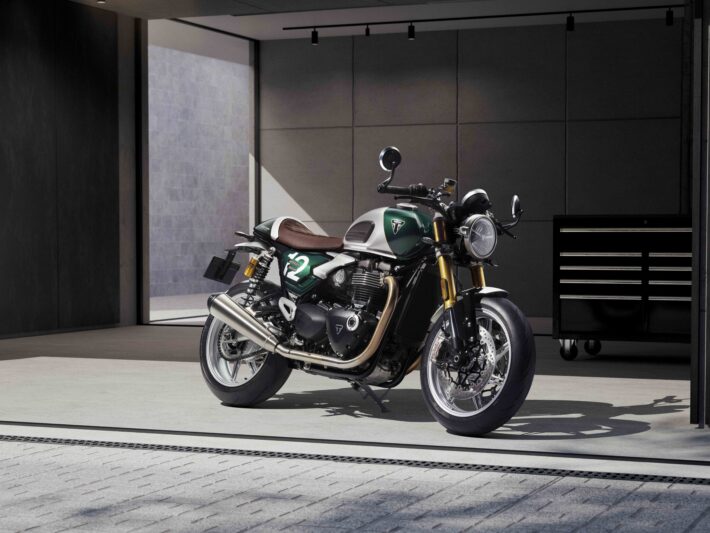
The style is widely believed to have originated in Britain during the 1950s and 1960s, when riders modified standard motorbikes to improve performance and give them a sharper, stripped-back appearance.
If you happen to see one now, you might notice that modern café racer bikes blend classic styling with contemporary engineering, in turn making them appealing to both new and experienced riders. An important detail to note is that the term ‘café racer’ refers to a style of motorbike; it isn’t a specific manufacturer or model.
What Is a Café Racer Bike?
Unlike standard road bikes or tourers, builders design café racer bikes around one main idea: creating more with less. A café racer bike is a lightweight motorbike designed primarily for road riding, with a sporty riding position that leans the rider forward rather than sitting upright.
In comparison to other motorbike styles, a café racer bike can typically be identified by the following:
- Classic styling and minimalist bodywork, with little to no extra panels or fairings.
- A forward-leaning position, designed for a sportier ride.
- Origins in modified standard motorbikes, where riders adapted production bikes to improve the bike’s overall performance and handling.
The purpose of café racer bikes isn’t for riders chasing raw power or seeking the adrenaline rush. It’s about balance, bringing together classic aesthetics, agility, and a tangible connection between rider and machine in one build.
What is a café racer bike beyond the machine itself? It’s as much of a culture as it is a motorbike style, with the term “café racer” describing the community of riders, builders, and enthusiasts who’ve shaped it, as well as the bike.
The History of the Café Racer
Café racers emerged in the 1950s and 1960s, during the post-war era. The style became especially popular among young motorcyclists who sought faster, more stylish bikes than what was widely available at the time. Café racer bikes began showing up at transport cafés dotted along Britain’s arterial roads, and these cafés became the informal meeting spots for young motorcyclists who’d gather to talk bikes and music, and to often race one another. This transport café culture played a part in shaping the look and attitude of the style.

Riders stripped their bikes down to the bones, removing unnecessary weight and tuning their engines to increase the overall speed and achieve sharper handling. As the story goes, many riders sought to reach a certain speed, often cited as 100mph, and get back to the starting line before a record finished playing on the café jukebox. Riders called this a “record race,” and the name has remained part of café racer folklore ever since.
Most accounts attribute the name “café racer” to the motorbike riders who built and rode bikes for quick trips to and from cafés. The riders became associated with the “rocker” subculture, often easy to spot because of their iconic leather jackets and pared-back bikes.
That same spirit still shapes the style today. Many modern retro motorbikes borrow directly from the café racer look, blending vintage-inspired design with contemporary engineering.
What Makes a Motorbike a Café Racer?
Knowing exactly what a café racer bike is comes down to recognising a shared set of unique design features, and once you know what to look for, you’ll have a much better chance of spotting them out and about. Although manufacturers don’t include every one of the following elements on every model, most café racer bikes share a similar set of design features:
- Low, narrow handlebars, often clip-ons, that are angled for a sportier, more engaged ride.
- A slim, sculpted fuel tank.
- A single seat or seat cowl in place of a two-up setup.
- Rear-set foot pegs to support a sportier riding position.
- Minimal bodywork and stripped-back overall styling.
- An overall lightweight aesthetic, even when the engineering itself is more contemporary and advanced.
- Simple instrumentation to keep the dashboard uncluttered.
- A suspension setup and road-focused tyres, built to grip and perform on tarmac rather than rougher terrain.
Keep in mind that modern manufacturers often reinterpret the café racer style in their own way, and not every one of the aforementioned features is needed for it to be considered a café racer bike.
Are Café Racer Motorbikes Good for Beginners?
Certain café racer bikes may be better suited to new riders, and others to more experienced riders; it depends on the specific model. If you’re in the market for a café racer, considering the following may help you find the suitable bike:
- Engine size and power output vary considerably across the café racer range.
- Rider confidence and training should play a part in the decision, not just the bike’s styling.
- Weight, seat height, and riding position differ between models, and some may feel less forgiving than others.
- Several manufacturers offer learner-friendly café racers and often build them on smaller-capacity platforms, giving newer riders a practical starting point.
Choose a motorbike that matches your experience level and licence entitlement, then look at café racers within that category, rather than setting your sights on a specific model or make. Lastly, don’t forget to check how your chosen bike’s engine size and specification may alter your motorbike insurance options before committing to the purchase.
Standard Motorbikes vs Café Racer
Café racers and standard motorbikes are both designed primarily for road use, but as mentioned, they differ in styling, riding position, and the overall riding experience. Café racer bikes tend to place greater emphasis on classic aesthetics and sporty ergonomics, while standard motorbikes are generally built to balance rider comfort, practicality, and versatility.
Now that we’ve discussed the differences, here’s how they play out across some of the areas riders tend to care most about:
| Café Racer | Standard Motorbike | |
| Riding position | Lower, more forward-leaning position with low or clip-on handlebars for a sportier feel | Upright, neutral riding position with higher handlebars for comfort and easier control |
| Styling | Retro-inspired design with minimalist bodywork, a sculpted fuel tank, and a stripped-back appearance | More conventional styling that prioritises practicality and everyday usability |
| Comfort | Often firmer seats and a more committed riding position, which may be less comfortable on longer journeys | Typically, a more relaxed seating position, better suited to commuting and longer rides |
| Handling | Responsive, agile handling with a focus on enjoyable road riding and cornering | Predictable, confidence-inspiring handling suited to a wide range of conditions and experience levels |
| Practicality | May offer limited luggage options and fewer passenger-focused features | Often better suited to everyday riding, carrying luggage, and accommodating a passenger |
| Intended Use | Suited to leisure riding, weekend trips, and riders who value classic styling and rider engagement | An all-rounder for commuting, leisure riding, longer journeys, and everyday use |
Today’s factory-built café racers tend to close that practicality gap compared with older custom builds, though the focus generally remains on styling and rider engagement rather than everyday convenience.
Scramblers vs Café Racers
Another way to answer what a café racer bike is, is to compare it with a scrambler bike, a style it’s sometimes confused with. Both bikes draw inspiration from classic motorbikes, though they were originally built for different purposes. Café racers focus on road performance and sport styling, while builders modify scramblers to make them more versatile and capable of handling a wider variety of surfaces.
| Café racer | Scrambler | |
| Riding position | Lower, more forward-leaning position with low or clip-on handlebars | More upright position with wider handlebars for comfort and control on uneven terrain |
| Suspension | Lower, firmer suspension for responsive handling on paved roads | Longer suspension travel to absorb bumps on rough roads and light off-road riding |
| Tyres | Road-focused tyres for grip and handling on tarmac | Dual-purpose or block-pattern tyres for grip on both paved roads and loose surfaces |
| Intended terrain | Primarily road riding, commuting, weekend rides, and twisty routes | Road riding with the ability to tackle gravel roads, country lanes, and light off-road trails |
| Styling | Minimalist bodywork, low handlebars, sculpted fuel tank, single-seat styling, and a sleek, retro-inspired appearance | Taller stance, wider handlebars, raised exhausts, and a rugged, adventure-inspired look |
| Everyday Practicality | Engaging road handling and distinctive styling, but may be less comfortable on longer journeys | Generally, it’s a more relaxed riding position and greater versatility for commuting and mixed conditions |
Many modern motorbikes combine styling cues from both categories, so it’s not always straightforward to fit every model into one classification.
Modifying your Café Racer
Personalisation remains a huge part of café racer culture, and it’s one of the main reasons the style has been popular with riders who want something distinctive and that shows their personality. Common areas riders focus on are:
- Cosmetic modifications: such as paintwork, seat units, or bodywork changes.
- Performance upgrades: including engine tuning or exhaust changes.
- Comfort improvements: such as adjusted seating or handlebar positions.
- Lighting and accessories: including upgraded indicators and auxiliary lighting.
Remember to carry out all modifications safely and in line with UK road regulations. Declare modifications to your insurer where required; failing to do so may affect your motorbike insurance cover.
Protect Your Café Racer with Motorbike Insurance from Devitt
Created between the 1950s and 1960s, café racer bikes combine classic styling with an engaging riding experience, which is part of what makes them stand out on the road. Whether you ride a factory model or a custom build, suitable motorbike insurance cover can help protect your bike against the unexpected.
Devitt has been providing riders with motorbike insurance for over 90 years, and our motorbike insurance policies can also help to provide cover for café racer owners too. You can explore motorbike insurance options with Devitt or contact our team to help find cover that suits your bike.
Disclaimer: the sole purpose of this article is to provide guidance on the issues covered. This article is not intended to give legal advice, and, accordingly, it should not be relied upon. It should not be regarded as a comprehensive statement of the law and/or market practice in this area. We make no claims as to the completeness or accuracy of the information contained herein or in the links which were live at the date of publication.
You should not act upon (or should refrain from acting upon) information in this publication without first seeking specific legal and/or specialist advice. Arthur J. Gallagher Insurance Brokers Limited trading as Devitt accepts no liability for any inaccuracy, omission or mistake in this publication, nor will we be responsible for any loss which may be suffered as a result of any person relying on the information contained herein.