

When you ride with other motorcyclists, clear communication makes a group journey easier to organise and more enjoyable. From sharing navigation updates to warning other riders about hazards, motorcycle to motorcycle communication matters whether you’re on a short group ride or a long touring trip.
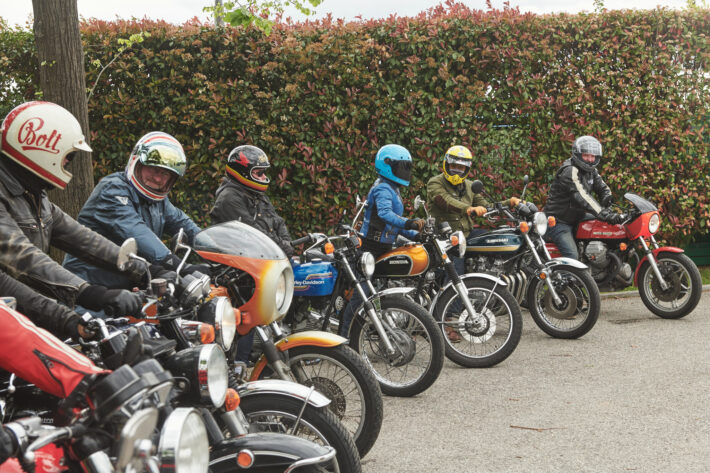
Traditional hand signals remain a practical way of communicating between riders, particularly when everyone is within clear sight of one another. Modern motorcycle-to-motorcycle communication systems offer another option, letting riders speak to one another without relying solely on visual signals or pulling over to talk.
So, what’s the most suitable approach for your group? That depends on how you ride, your typical group size, journey length, whether you ride with a passenger, and your budget. In this guide, we’ll cover how to communicate on a motorcycle, the main motorbike communication system options available, and what to consider before purchasing.
Why Is Motorcycle-to-Motorcycle Communication Important?
Good communication isn’t only about both personal and group safety; it also helps a group coordinate its journey and respond to changing road conditions along the route. A motorbike communication system helps when several riders are travelling together over longer distances.
For example, riders may use motorcycle-to-motorcycle communication to:
- Share route and navigation information.
- Warn other riders about hazards, traffic, or changing road conditions.
- Communicate when fuel or rest stops are required.
- Help a group stay together during a longer journey, especially if the route is unfamiliar or busy, it’s dark, or you’re riding in poor weather conditions.
- Improving coordination during overtakes or changes in direction.
- Alert other riders if someone needs help or to stop.
Communication is particularly useful during touring trips, charity rides, and organised motorcycle club events. That said, a communication system should complement safe riding practices, not distract you from riding.
Before setting off, agree on how the group intends to communicate. This might include commonly understood hand signals, planned meeting points, and what to do if riders become separated.
Ways to Communicate While Riding
Riders communicate on a motorcycle in several ways, ranging from traditional hand signals to Bluetooth intercoms, mesh communication systems, and pre-planned route stops. Many riders use a combination of methods rather than relying on just one; for example, using a motorbike communication system for conversation and navigation, and falling back on hand signals for immediate hazards or if the technology fails.

Your group size, journey type, and whether you’re riding with a passenger all shape which communication method could be most suitable to you.
Here’s how the main options compare, and below that is a more detailed look into each method:
| Communication method | Range | Ease of use | Riders supported | Typical use | Advantages | Limitations |
| Hand signals | Visual | Simple | Riders within sight | Hazards, turns, slowing, and stopping | No technology required making it useful as a backup | Less useful when riders are separated |
| Bluetooth intercoms | Varies by system | Generally easy once paired | Usually suited to individuals, passengers, and smaller groups | Conversation, navigation, and commuting | Supports voice communication, GPS (global positioning system), music, and phone connectivity | Range and rider capacity vary between systems |
| Mesh communication systems | Varies by system and environment | May require an initial setup | Designed for larger groups | Touring and organised rides | Connects multiple riders and may reconnect riders who move back in range | More technology and potentially higher costs |
| Passenger intercoms | Varies by system | Easy once installed | Rider and pillion | Useful for navigation, comfort breaks, and hazard awareness | Clear communication between rider and passenger | Designed primarily for rider and passenger use |
| Pre-planned route stops | N/A | Simple | Any group size | Longer journeys and group rides | Reduces the needs for constant communication, and useful in the event of separation | No live communication while riding |
How Do Motorcycle Communication Systems Work?
Most systems used for motorcycle-to-motorcycle communication attach to the outside of a motorcycle helmet, with speakers and a microphone fitted inside.
A Bluetooth connection links your system with another compatible device, such as another rider’s intercom, a passenger’s communication system, or a smartphone. Depending on the equipment, this may enable voice communications, GPS navigation, music, and phone calls.
Mesh systems take a different approach to connect multiple riders. Rather than relying only on a direct connection between two devices, mesh technology creates a network between all participating devices. If a rider temporarily moves outside the connection range, some systems reconnect them automatically once they’re back in range.
Exact features and connection methods may vary between manufacturers, so it’s recommended to check the exact specifications before committing to purchasing.
Bluetooth vs Mesh Motorcycle Communication
Bluetooth and mesh are the two most common technologies used for motorcycle-to-motorcycle communication. Here’s how they compare:
| Device Feature | Bluetooth | Mesh |
| Rider Capacity | Often suited to individuals, passengers, and smaller groups | Larger riding groups |
| Connection Stability | Devices typically need to be paired | Participating devices form a group network |
| Range | Varies according to the system and conditions | Reconnects riders when they re-enter range |
| Ease of Joining a Group | May involve pairing individual devices | Some systems make group connection simpler |
| Use Cases | Commuting, short rides, and connecting to GPS or music | Touring, larger groups, and organised rides |
It is important to be aware that compatibility varies between manufacturers and systems. Before purchasing, it’s a good idea to check that your chosen system is compatible with the equipment used by other riders in your group, particularly if you’re riding with people who already own a different brand.
What Features Should You Look for in a Motorcycle Communication System?
Choosing a suitable setup for motorcycle-to-motorcycle communication comes down to matching features to how and where you ride. Here’s what to weigh up:
- Audio quality, particularly at higher speeds.
- Wind noise reduction.
- Battery life, especially for longer touring trips.
- Waterproof or weather-resistant design.
- Number of riders the system connects.
- Ease of installation.
- Smartphone connectivity.
- Voice control functionality.
- Firmware updates, which help to keep the system running smoothly.
Not every feature matters to every rider, so focus on the functions that count most for your preferred and most frequent riding styles.
How to Choose the Most Suitable Motorcycle Intercom
Not sure where to start? Choosing a suitable motorcycle intercom comes down to a handful of factors relating to how and with whom you typically ride, such as:
- Typical group size.
- Riding frequency.
- Touring versus commuting.
- Helmet compatibility.
- Ease of operation while wearing protective gloves.
- Battery performance.
There’s no single top motorcycle intercom that suits every rider; the suitable option for you depends on your individual needs. Comparing specifications, checking reviews, and, where possible, trying a system before committing to a purchase should help you find one that works for you.
Still working out how to communicate on a motorcycle as part of a group? Start with your most common riding scenario, whether that’s commuting, touring, or riding with a passenger, and let that narrow down the options.
Helmet Compatibility and Installation
Manufacturers design motorcycle-to-motorcycle communication systems to fit many, but not all, motorcycle helmets. Before buying, check:
- Speaker recesses.
- Microphone placement.
- Clamp versus adhesive mounting.
- Compatibility with full-face, modular, and open-face helmets.
- Whether the system affects comfort or the helmet’s safe fit.
Following both the helmet manufacturer’s installation guidance and the communication system manufacturer’s installation guidance helps confirm the system is fitted correctly, without affecting how the helmet performs or its independent safety ratings.
For information on motorcycle helmet laws, read our guide.
Tips for Communicating Safely on a Motorcycle
Motorcycle-to-motorcycle communication should never distract you from operating your motorcycle safely. Your personal safety should remain the priority. Here are a few tips to help:
- Keep conversations brief and relevant while riding.
- Avoid adjusting settings while the motorcycle is moving, where possible.
- Agree on communication protocols before setting off.
- Use hand signals as a backup if the technology fails.
- Pull over safely if a longer discussion is needed.
Whichever method of motorcycle-to-motorcycle communication you use, staying focused on the road ahead is paramount.
Stay Safe on Every Ride with Motorcycle Insurance from Devitt
Choosing a suitable method for motorcycle-to-motorcycle communication comes down to your group size, journey type, and budget, whether that’s hand signals, a Bluetooth intercom, or a mesh communication system for larger touring groups.
Checking helmet compatibility and agreeing on communication protocols before setting off can help keep the group connected, while safe riding should always remain the priority. Combining a motorbike communication system with established group riding etiquette and hand signals should help keep riders connected and coordinated throughout the journey.
At Devitt, we’ve been providing motorcycle insurance for over 90 years, and understand the needs of group riders, tourers, and everyone in between. If you’re planning your next ride, explore our motorcycle insurance options and request a quote.
Disclaimer: the sole purpose of this article is to provide guidance on the issues covered. This article is not intended to give legal advice, and, accordingly, it should not be relied upon. It should not be regarded as a comprehensive statement of the law and/or market practice in this area. We make no claims as to the completeness or accuracy of the information contained herein or in the links which were live at the date of publication.
You should not act upon (or should refrain from acting upon) information in this publication without first seeking specific legal and/or specialist advice. Arthur J. Gallagher Insurance Brokers Limited trading as Devitt accepts no liability for any inaccuracy, omission or mistake in this publication, nor will we be responsible for any loss which may be suffered as a result of any person relying on the information contained herein.